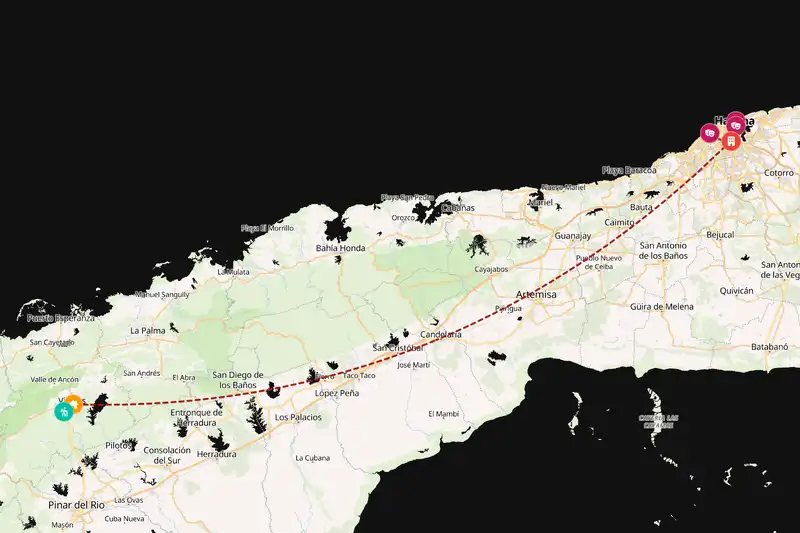
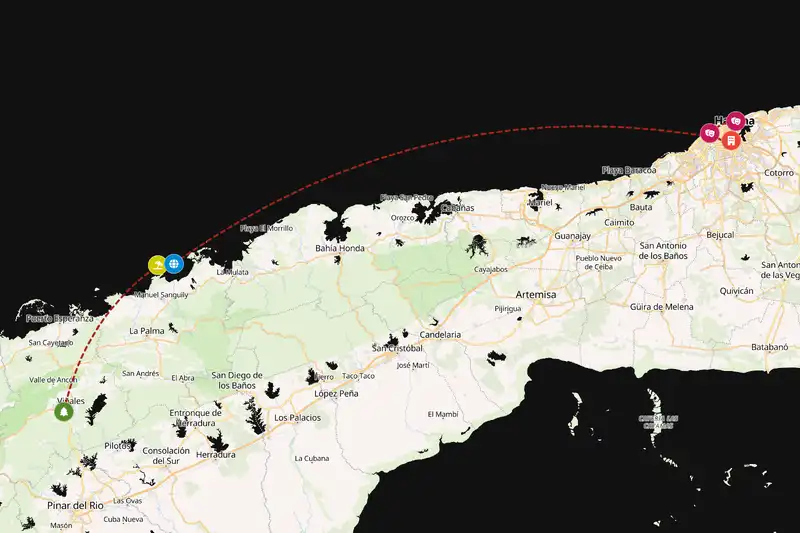
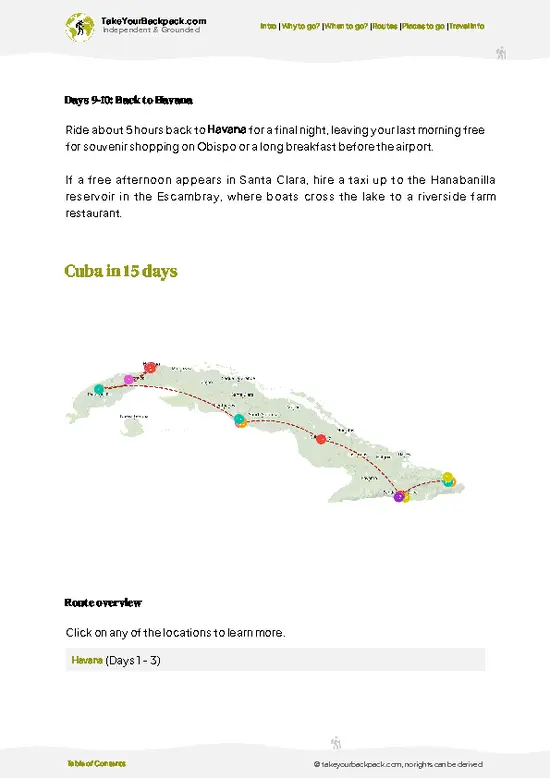
This fifteen-day line across Cuba suits travelers with two weeks who want the full length of the island: tobacco valleys in the west, colonial towns in the middle, Afro-Caribbean music and rainforest in the east. The pace is steady with real rest days, but the distances are big, so expect three long bus days separated by two- and three-night stays. You will use Víazul buses and shared colectivo taxis between cities, bici-taxis and your own feet inside them, and one domestic flight from Santiago back to Havana at the end.
Days 1-3: Havana
Start with three nights in
Havana, because the capital needs time to stop feeling chaotic and start making sense. Give your first morning to the
Museo de la Revolución, set in the former presidential palace, where the bullet holes from the 1957 attack on Batista are still in the walls and the Granma yacht sits in a glass pavilion out back. Cross the harbor in the late afternoon to the
Castillo de los Tres Reyes del Morro and stay for sunset over the Malecón …
read more 👉This fifteen-day line across Cuba suits travelers with two weeks who want the full length of the island: tobacco valleys in the west, colonial towns in the middle, Afro-Caribbean music and rainforest in the east. The pace is steady with real rest days, but the distances are big, so expect three long bus days separated by two- and three-night stays. You will use Víazul buses and shared colectivo taxis between cities, bici-taxis and your own feet inside them, and one domestic flight from Santiago back to Havana at the end.
Days 1-3: Havana
Start with three nights in Havana, because the capital needs time to stop feeling chaotic and start making sense. Give your first morning to the Museo de la Revolución, set in the former presidential palace, where the bullet holes from the 1957 attack on Batista are still in the walls and the Granma yacht sits in a glass pavilion out back. Cross the harbor in the late afternoon to the Castillo de los Tres Reyes del Morro and stay for sunset over the Malecón from its ramparts. On day two, go deeper into the city’s soundtrack at the small Museo Nacional de la Música, with its collection of batá drums and old instruments, then walk to the Museo del Ron Havana Club near the port for a short tour that ends with a tasting. Save a Thursday to Sunday night for the Fábrica de Arte Cubano, a converted cooking-oil factory in Vedado where gallery rooms, live bands and a dance floor run until the early hours, with entry around US$2 to 3.Days 4-5: Las Terrazas and Viñales
Book a colectivo taxi rather than the bus on day four so you can stop in Las Terrazas, a hillside community built during a 1960s reforestation project in the Sierra del Rosario. Swim in the river pools at Baños del San Juan, then continue about 2 hours west to Viñales for two nights in a casa particular (US$20 to 35 a room). Your full day belongs to the Viñales Valley on foot or horseback: red-soil tracks between limestone mogotes, a stop at a tobacco farm where a farmer rolls a cigar in front of you, and a long lunch on a farm terrace. The surrounding Viñales National Park protects these karst hills, and a local guide (US$15 to 25 for a half day) will find caves and viewpoints you would never locate alone.Days 6-8: Trinidad and La Boca
Day six is the first long haul: the direct Víazul or a colectivo from Viñales to Trinidad takes 8 to 10 hours, so bring snacks and a downloaded playlist. The reward is three unhurried nights in the best-preserved colonial town in the country, all cobbles, pastel facades and live son music on the steps beside the church at night. Spend a morning inside the Museo Romántico, a 19th-century sugar baron’s mansion on Plaza Mayor, then climb the bell tower of the former convent that houses the Museo Nacional de la Lucha Contra Bandidos for the classic view over terracotta roofs toward the Escambray. Your second full day should be split: morning in the hills at Topes de Collantes, where trails drop through pine and coffee plantations to waterfall pools, and late afternoon at La Boca, a fishing village about 5 kilometers from town with a rocky little beach and almost no tour buses.Days 9-10: Camagüey
A 5-hour ride east brings you to Camagüey, which almost no two-week itinerary gives enough time to. Its streets were laid out as a deliberate tangle, so you will get lost within ten minutes, and that is the point. Two nights let you ride a bici-taxi between the city’s many churches, find the huge clay tinajones once used to store rainwater, and sit in Plaza del Carmen among Martha Jiménez’s life-size bronze figures of locals gossiping. Prices here sit noticeably below Trinidad’s, both for rooms and for meals in paladares.Days 11-12: Santiago de Cuba
The 6- to 7-hour bus to Santiago de Cuba lands you in a hotter, hillier, louder city with deep Afro-Cuban and Haitian roots. Head straight for the Casa de la Trova on your first evening for live son in a cramped upstairs room. Next morning, take a taxi 10 kilometers to the San Pedro de la Roca Castle, Santiago de Cuba, a terraced 17th-century fortress clinging to the cliffs at the bay mouth, then drop down to Playa Siboney, a modest local beach where Santiago families spend their weekends.Days 13-14: Baracoa
The 5-hour ride to Baracoa crosses La Farola, a mountain road that switchbacks through the Sierra del Purial before falling to the coast. Baracoa was cut off by land until that road opened, and it still runs on its own clock: cacao, coconut, river swims. Spend one day climbing El Yunque, the flat-topped mountain behind town (around 4 to 5 hours return with a guide, steep and muddy near the top), and the other at Playa Maguana, about 20 kilometers northwest, where a few shacks fry fresh fish under the palms.Day 15: Back to Santiago and Havana
Catch the early bus back to Santiago and fly to Havana in the afternoon (about 2 hours, versus 15 or more by bus) to connect with your international flight. Leave a buffer: domestic schedules in Cuba shift often, and that final evening in Havana is your safety margin.
I would send a friend to the mouth of the Río Yumurí, about 30 kilometers east of Baracoa, and tell them to pay a local boatman to row upriver into the gorge and pack a swimsuit for the deep green pools there.

 Best Backpacking