×
Honduras🇭🇳 | 15 days itinerary

A Complete 15-Day Plan for Honduras

By Johan Kruseman 🇳🇱 | Updated May 7, 2026
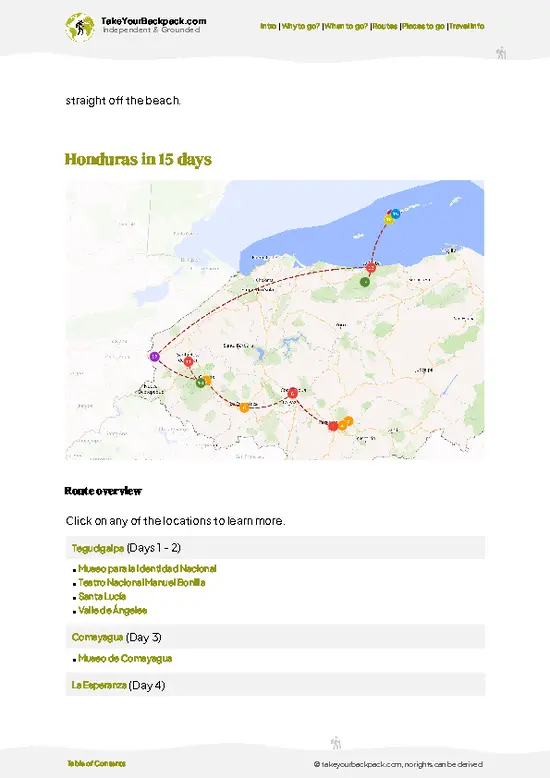
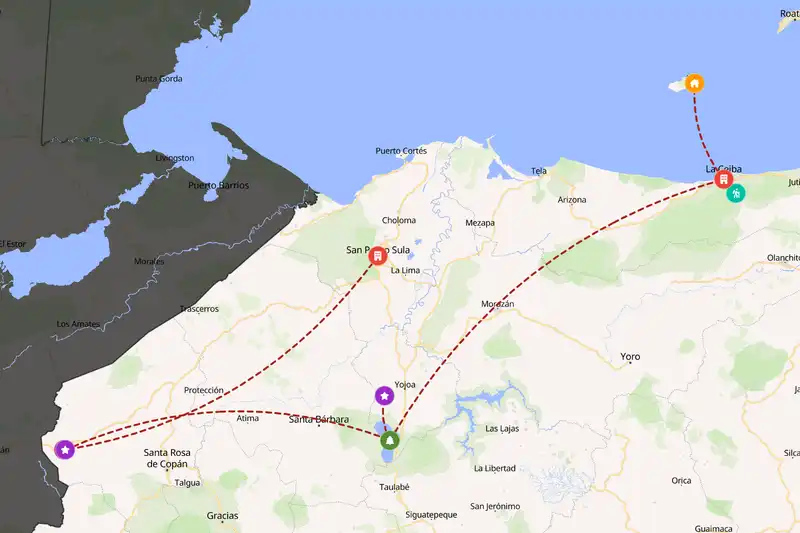
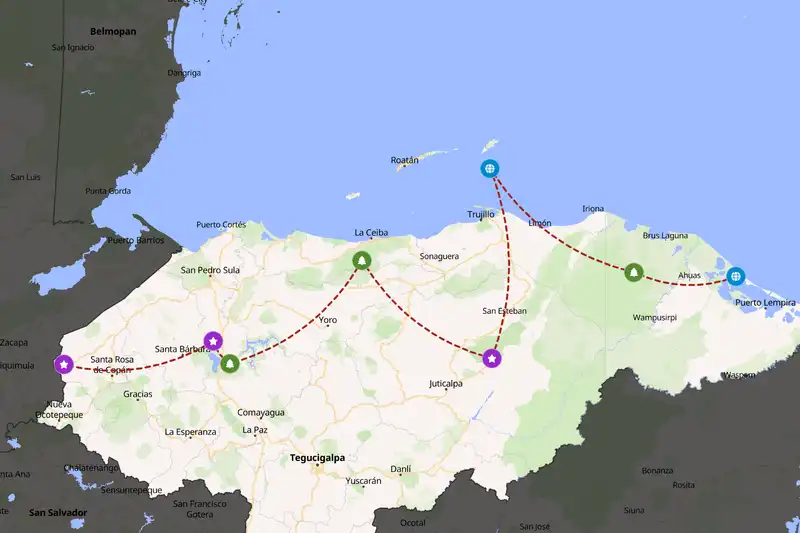
This 15-day route is for travelers who want to really dig into Honduras: ruins, highland towns, capital-city culture, cloud forests, and both mainland and island Caribbean coasts, at a steady but not rushed pace. You’ll move by a mix of intercity buses, shared shuttles, one domestic flight or ferry, and a few short taxis, with rest days built in so the trip feels like a journey, not a checklist.

Days 1-3: Tegucigalpa, La Tigra & Valle de Angeles

Begin in Tegucigalpa, where you can ground yourself in the country’s modern story before heading out to the quieter corners. Spend time at the Museo para la Identidad Nacional, which does a solid job of walking you through Honduras’ history and culture in a way that makes everything you’ll see later feel more connected, and add the Museo de la República (Casa Presidencial Histórica if you’re into political history and old architecture. Use a full day for La Tigra National Park, where cool air, cloud forest trails, and birdlife give you a nature hit … read more 👉
This 15-day route is for travelers who want to really dig into Honduras: ruins, highland towns, capital-city culture, cloud forests, and both mainland and island Caribbean coasts, at a steady but not rushed pace. You’ll move by a mix of intercity buses, shared shuttles, one domestic flight or ferry, and a few short taxis, with rest days built in so the trip feels like a journey, not a checklist.

Days 1-3: Tegucigalpa, La Tigra & Valle de Angeles

Begin in Tegucigalpa, where you can ground yourself in the country’s modern story before heading out to the quieter corners. Spend time at the Museo para la Identidad Nacional, which does a solid job of walking you through Honduras’ history and culture in a way that makes everything you’ll see later feel more connected, and add the Museo de la República (Casa Presidencial Histórica if you’re into political history and old architecture. Use a full day for La Tigra National Park, where cool air, cloud forest trails, and birdlife give you a nature hit without leaving the central region, then wind down in the nearby town of Valle de Angeles, whose small streets, craft shops, and cafés make it an easy place to stroll and decompress after the city.

Days 4-6: Comayagua & Lake Yojoa

Travel by road to Comayagua, a former capital with a compact historic center that rewards slow wandering. Visit the Museo de Comayagua to get a feel for the city’s colonial past, then spend your evenings people-watching around the main square and sampling local snacks from small eateries. From there, continue to Lake Yojoa, where you can split your time between lakeside relaxation and light adventure: use one day to explore the Lake Yojoa area itself by boat or shoreline walks, and another to visit the Pulhapanzak Waterfalls, where the roar of the falls and the lush surroundings give you that classic Central American “jungle and water” combo without needing a multi-day trek.

Days 7-9: Santa Rosa de Copán, Gracias & Celaque National Park

Head west to Santa Rosa de Copán, easing into coffee-country life with a day of café-hopping and, if possible, a visit to a nearby coffee farm to see how the region’s beans are grown and processed. Then move on to Gracias, a smaller highland town that feels like a natural base for exploring the surrounding mountains. Dedicate a full day to Celaque National Park, choosing a route that matches your fitness but still gets you into the cloud forest, where mossy trees, cool air, and distant views make the effort worthwhile; having two nights in Gracias means you can hike hard one day and keep the other lighter, wandering town streets and soaking in the slower pace.

Days 10-12: Copán Ruinas & Mayan Legacy

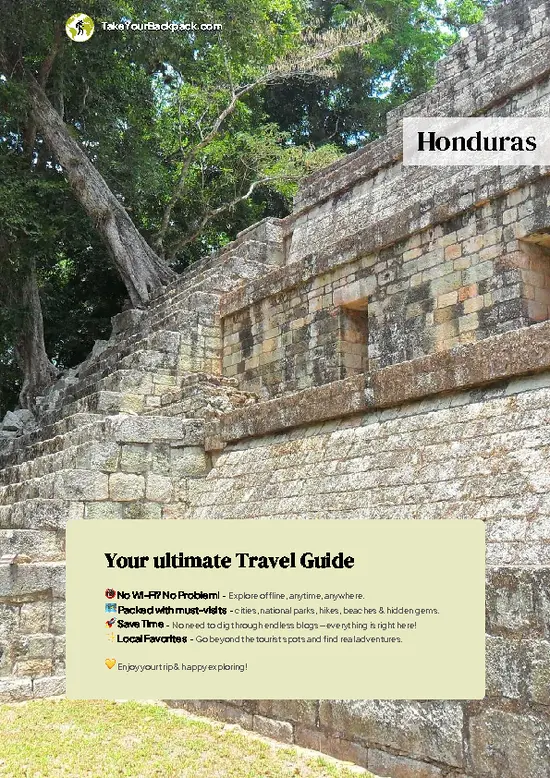
Continue to Copán Ruinas, shifting the focus back to archaeology and ancient culture. Spend a full day at the Copán Ruinas Archaeological Site, taking your time with the plazas, ball courts, and intricately carved stelae that make this one of the most detailed Mayan sites anywhere, and then dive deeper at the Museo de Escultura Maya de Copán, where the reconstructed temple facades and original sculptures help you imagine the city in its prime. If you still have energy for more context, add the Museo de Arqueología de Copán for a quieter, artifact-focused visit, then use your evenings in town for slow dinners and conversations that stretch late into the night in small cafés and bars.

Days 13-15: La Ceiba, Pico Bonito & Roatan

Make your way to La Ceiba, the springboard to Honduras’ northern wilds, and give yourself a full day in Pico Bonito National Park to walk rainforest trails, swim in clear pools, and listen to the constant background soundtrack of birds and rushing water. If you want one more big hike, tackle the Pico Bonito Trail or the El Bejuco Waterfall Trail, choosing based on how your legs are feeling after the highlands; either way, you’ll get that deep-green, humid jungle experience that contrasts sharply with the drier western mountains. Finish the trip with a hop over to Roatan, where you can spend your last full day unwinding on West Bay Beach or simply wandering the island, letting the reef, warm water, and slow evenings act as a soft landing before you head home.

What I love most about this long route is the whiplash-in-a-good-way feeling of watching the sun set over coffee hills in Santa Rosa de Copán one week and then floating above coral off Roatan the next, all within the same trip.
Loading the map 🌍
film
0
0
0a
Tegucigalpa
Ulices Posso
film
1
1
1a
Museo para la Identidad Nacional
film
2
2
2a
La Tigra
Michelle Maradiaga
film
3
3
3a
Comayagua
film
4
4
4a
Lake Yojoa
film
5
5
5a
Pulhapanzak Waterfalls
Fco. Javier Brau Zapata
film
6
6
6a
Gracias
Luiz Al Serrano
film
7
7
7a
Copán Ruinas
Decloux Simon
film
8
8
8a
Museo de Escultura Maya de Copán
film
9
9
9a
Museo de Arqueología de Copán
film
10
10
10a
La Ceiba
film
11
11
11a
Pico Bonito
Jeremy Giron
film
12
12
12a
El Bejuco Waterfall Trail
film
13
13
13a
Roatan
film
14
14
14a
West Bay Beach
Axel Escobar

✈️ The backpacker research shortcutHonduras Travel Guide

An offline-friendly backpacking guide with optimized travel routes, ranked highlights, transport advice, and the best areas to stay.
example page 0 from our offline Travel Guide for Hondurasexample page 1 from our offline Travel Guide for Hondurasexample page 2 from our offline Travel Guide for Hondurasexample page 3 from our offline Travel Guide for Hondurasexample page 4 from our offline Travel Guide for Hondurasexample page 5 from our offline Travel Guide for Honduras
The digital guide (291 pages) contains:
84 highlights, ranked by travel appeal
Optimized 5, 10 & 15-day travel routes
Best neighborhoods to stay
How to get around
Offline-friendly for travel without Wi-Fi
👉 See all 30+ guide features

📅 Plan smarter in minutes, not weeks
Month by month travel advice
Festivals & national holidays
Budget expectations

🗺️ Go to the right places, skip the overrated ones
Honest pros & cons of destinations
Top hikes, parks & viewpoints
Lesser-known places most travelers miss
Clear “worth it vs skip it” guidance

🛏️ Travel smoothly without rookie mistakes
Best areas to stay
Transport systems explained simply
Common scams & safety advice
SIM cards, money & practical tips

🌍 Understand the country, not just visit it
Culture & traditions
52 Essential phrases & customs
Festivals worth planning around
Traveler-friendly historical context
Insights that make places more meaningful

📱 Built for real travel conditions
Fully downloadable PDF
Works completely offline
Optimized for phone use
Useful in remote areas & buses
Everything in one place
Save weeks of stressful planning
Get instant access to the full guide directly. 30-day money-back guarantee.


Sent to your inbox immediately after payment • 100% Secure Checkout
Best Backpacking Travel Advisor 2025 tourism awardBest Backpacking
Travel Advisor
2025
What others say about Take Your Backpack Guides:
⭐⭐⭐⭐⭐
Fantastic, amazing amount of information!
⭐⭐⭐⭐⭐
My goodness this is amazing, it's what I've been looking for hats off too you!
⭐⭐⭐⭐⭐
I think this is absolutely BRILLIANT
⭐⭐⭐⭐
Very complete and informative. It's still missing places, but I gotta to commend you
⭐⭐⭐⭐⭐
This is truly amazing, thank you, can't wait to explore it with my kids!
⭐⭐⭐⭐⭐
Awesome resource, thank you!
⭐⭐⭐⭐⭐
This is amazing! Can't wait to explore the ones I haven't seen
⭐⭐⭐⭐
I love this! Well done, great idea.
⭐⭐⭐⭐⭐
Thanks for taking the time to make this gem!
⭐⭐⭐⭐⭐
This might be the best website I've ever seen.
⭐⭐⭐⭐⭐
Congratulations, and thank you so much for your work; it's incredibly valuable.
⭐⭐⭐⭐
In all seriousness I think you did a great job pointing out the important spots
⭐⭐⭐⭐⭐
10/10 very good
⭐⭐⭐⭐⭐
As someone who's only just starting to visit regularly this is awesome, thank you.
⭐⭐⭐⭐
Thank you very much! I'm going to visit my dad, it's going to be very useful!
⭐⭐⭐⭐⭐
This is really cool! We'll be travelling for the first time and this definitely come in handy.
⭐⭐⭐⭐⭐
You are now our minister of culture, congratulations 👨‍💼
⭐⭐⭐⭐⭐
Just wanted to tell you that this is a pearl! Going to follow your recommendations.
⭐⭐⭐⭐⭐
This is so cool. I'll definitely be using the resource for my travels soon.
⭐⭐⭐⭐⭐
This is very impressive! Good work.
⭐⭐⭐⭐⭐
This is an amazing and informative site. Very well done!

🧭 RouteGot More or Less Time?

Travel Honduras your way — from a quick highlights trip to a slow-paced adventure.

🙋 FAQCommon Questions

Short answer: yes, but it rewards people who are organized and a bit street-smart. Honduras is not the easiest country in Central America, but it’s absolutely doable for independent backpackers who’ve handled places like Guatemala or Nicaragua.

The main backpacker circuits (Bay Islands, Copán Ruinas, La Ceiba, Utila, Roatán, Lago de Yojoa) have hostels, shuttles, and tour operators used to foreigners. English is common on the islands and in tourist businesses; elsewhere, basic Spanish makes your life much easier and cheaper.

The real challenge is managing safety and logistics. You need to:
- Stick to known neighborhoods in big cities (Tegucigalpa, San Pedro Sula) and treat them as transit hubs, not sightseeing bases.
- Avoid walking around at night in cities; use registered taxis or rideshare where available.
- Keep valuables minimal and low-profile; no flashy jewelry, no big cameras dangling.
- Ask hostel staff which bus terminals and routes are safest and at what times.

If you’re a first-time backpacker, Honduras is easier if you follow the classic routes and use hostels that help with transport. If you’ve traveled independently in Latin America before, Honduras feels like a slightly rougher, cheaper version of its neighbors with huge rewards in nature and diving.
For a solid first trip, 10–14 days is the sweet spot. That gives you time for islands, ruins, and some jungle or lake time without sprinting.

Rough breakdowns that actually work on the ground:
- 7 days (fast track): Fly into San Pedro Sula → Copán Ruinas (2–3 days) → Lago de Yojoa (2 days) → La Ceiba (1 night) → quick hop to Utila (2–3 days if you cut something). This is tight but doable if you’re focused.
- 10–14 days (ideal): Copán Ruinas (2–3 days) → Lago de Yojoa (2–3 days) → La Ceiba/Cayos Cochinos or Pico Bonito (2–3 days) → Utila or Roatán (4–5 days, especially if you’re diving or doing a course).
- 3+ weeks (slow and happy): Add extra time on the Bay Islands for advanced diving, more hiking around Gracias and Celaque National Park, or a deeper dive into the Moskitia region if you’re experienced and comfortable with remote travel.

If you only have a week, pick one main focus: either ruins + inland nature (Copán + Yojoa) or pure island time (Utila/Roatán). Trying to do everything in 7 days just means you’ll spend half your trip on buses and boats.
You can absolutely get around Honduras without a car; most backpackers do. The key is knowing which transport type fits which leg of your trip.

Main options:
- Local buses (“rapiditos” and chicken buses): Cheapest way to move between towns and within cities. They’re crowded, slow, and not the safest late at night, but during the day on common routes they’re standard backpacker fare.
- First-class / intercity buses: Companies run more comfortable, safer buses between big hubs like Tegucigalpa, San Pedro Sula, La Ceiba, and sometimes Copán. These are worth the extra money for long stretches.
- Tourist shuttles: Common on the backpacker routes (e.g., Copán Ruinas ↔ Antigua, La Ceiba ↔ Utila ferry connections). More expensive than local buses but faster, safer, and easier if your Spanish is basic.
- Ferries: Essential for the Bay Islands. The La Ceiba–Utila and La Ceiba–Roatán ferries are the standard routes. Seas can be rough; motion sickness pills are not optional if you’re prone.
- Taxis and moto-taxis: Cheap in cities and small towns. Always agree on the price before getting in, and avoid shared taxis at night.

You don’t need a car, and in cities you’re often better off without one due to traffic, parking, and security. Just plan travel days carefully, aim to arrive before dark, and let hostel staff help you choose the safest routes and departure times.
For a budget backpacker, these are the places that actually earn their spot on your itinerary:

1. Copán Ruinas
Small, relaxed town with cobblestone streets and one of the most impressive Maya sites in Central America. The ruins are compact but rich in detail—intricate stelae, hieroglyphic stairway, and a jungle setting with macaws flying overhead. The town itself has good hostels, cheap eats, and easy day trips to hot springs and coffee farms.

2. Utila (Bay Islands)
If you dive or want to learn, Utila is one of the best-value places in the world to get certified. The island is built around backpackers: dive shops with free or discounted dorms, cheap baleadas, and a social scene that’s lively without being only about partying. Even if you don’t dive, you can snorkel, kayak, or just live the flip-flop life for a few days.

3. Roatán (Bay Islands, selectively)
Roatán is pricier than Utila but has better beaches and more developed infrastructure. If you’re willing to spend a bit more, West End and West Bay deliver clear water, good snorkeling right off the beach, and solid diving. It’s worth it if you want a slightly more polished island experience.

4. Lago de Yojoa
A freshwater lake ringed by hills, coffee farms, and caves. It’s a great budget base for hiking, birdwatching, waterfall chasing, and brewery visits. You can stay at a backpacker-friendly lodge or hostel and do day trips to nearby national parks like Cerro Azul Meámbar.

5. La Ceiba & Pico Bonito area
La Ceiba itself is more of a staging point, but the surrounding area is gold for nature lovers: whitewater rafting on the Río Cangrejal, canyoning, waterfall hikes, and access to Pico Bonito National Park. It’s also your main jumping-off point for the Bay Islands and Cayos Cochinos.

6. Gracias & Celaque National Park (if you like hiking)
A colonial town with a laid-back feel and access to serious hiking in Celaque, home to Honduras’ highest peak. This is for people who enjoy quieter, less touristy spots and don’t mind basic infrastructure in exchange for real mountain time.
If you’re short on time or cash, you can skip a few places without feeling like you missed the core of Honduras.

1. Tegucigalpa (as a destination)
Use it as a transit hub if you must, but don’t burn days here. It’s spread out, traffic-heavy, and not particularly rewarding for backpackers compared to what you could be doing elsewhere. If you overnight, stay in a reputable area, grab a meal, and move on.

2. San Pedro Sula (beyond logistics)
Same story: it’s mainly a gateway city. You’ll likely pass through for buses or flights, but there’s no strong reason to linger when Copán, Yojoa, or the coast are waiting. Prioritize daytime arrivals and departures and treat it as functional, not a highlight.

3. Inland beach towns on the north coast (if you’re doing the islands)
If you’re already heading to Utila or Roatán, the mainland beaches near La Ceiba and Tela are skippable on a tight schedule. They’re fine, but the islands are better for snorkeling, diving, and clear water. Use your limited days for the islands and jungle instead.

4. Deep Moskitia (for most travelers)
La Moskitia is wild and remote, and that’s exactly why it’s expensive and logistically heavy. You need time, money, and a high tolerance for rough conditions. If you’re on a classic backpacker budget and schedule, it’s usually better to invest those days in diving, hiking, or ruins.

5. Trying to do both Utila and Roatán on a short trip
If you have under two weeks, pick one island. Hopping between them eats time and money, and they overlap in what they offer: diving, beaches, and island life. Utila is better for budget divers and social hostels; Roatán is better for beaches and a slightly more polished feel. Choose the one that fits your style and commit.

If you’re really squeezed, the core, high-value route is: Copán Ruinas → Lago de Yojoa → La Ceiba → one Bay Island. Everything else is optional seasoning.

🇭🇳 HondurasWhere to Go Next

Ready to build a truly unique trip? Predefined routes are perfect for first-time visitors, but there is so much more to discover. Whether you are chasing a city trip, pristine national parks, local food scenes, or quiet beaches, pick a category to design your own path.