Short version: yes, you can backpack Iraq independently, but it’s not a “show up and wing everything” country yet. It rewards people who prep a bit and stay flexible.
Federal Iraq (Baghdad, Najaf, Karbala, Samarra, Mosul, Anbar, etc.) is more intense than Iraqi Kurdistan (Erbil, Sulaymaniyah, Duhok). Kurdistan feels closer to Georgia or Armenia in difficulty: friendly, relatively relaxed, and easier for first-timers. Federal Iraq is more like early-days backpacking in Pakistan or Sudan: doable, but you need situational awareness and patience.
For budget travelers, the main challenges are:
-
Permits and checkpoints: You’ll hit a lot of checkpoints, especially around Baghdad, Samarra, and Mosul. Usually it’s just passport checks, but sometimes they’ll call your hotel to confirm your booking or ask where you’re going. Having hotel names and phone numbers saved offline helps.
-
Language barrier: English is limited outside big cities and Kurdistan. Basic Arabic phrases and offline translation apps make life much easier.
-
Information gaps: Bus times, shared taxis, and minivans are rarely online. You learn by asking around at stations or your guesthouse.
-
Safety perception: You’ll feel watched sometimes, but it’s usually curiosity and security culture, not hostility. Dress modestly, avoid political talk, and don’t photograph military or police.
If you’ve already backpacked places like Iran, Pakistan, or Egypt, Iraq will feel challenging but familiar. If this is your first “non-mainstream” destination, starting in Iraqi Kurdistan for a few days before heading south is the smoothest way to build confidence.
Independent travel is absolutely possible on a backpacker budget: cheap local food, shared taxis, and basic hotels keep costs down. Just accept that things will be slower, more bureaucratic, and occasionally confusing—and that’s part of the story you’re signing up for.
For a solid first trip, 10–14 days is the sweet spot for budget travelers. Less than a week and you’ll spend more time in transit than actually absorbing the place; more than three weeks and you’ll start repeating experiences unless you’re really into slow travel.
Rough time breakdowns that work well:
-
7 days (fast, highlight reel): - 2 days Baghdad (city, museums, river, street life)
- 2 days Najaf & Karbala (shrines and religious life, even if you’re not religious)
- 2 days Babylon & Hillah (day trip from Baghdad or overnight)
- 1 day Samarra
or extra day in Baghdad
This is rushed but doable if you’re comfortable with long travel days.
-
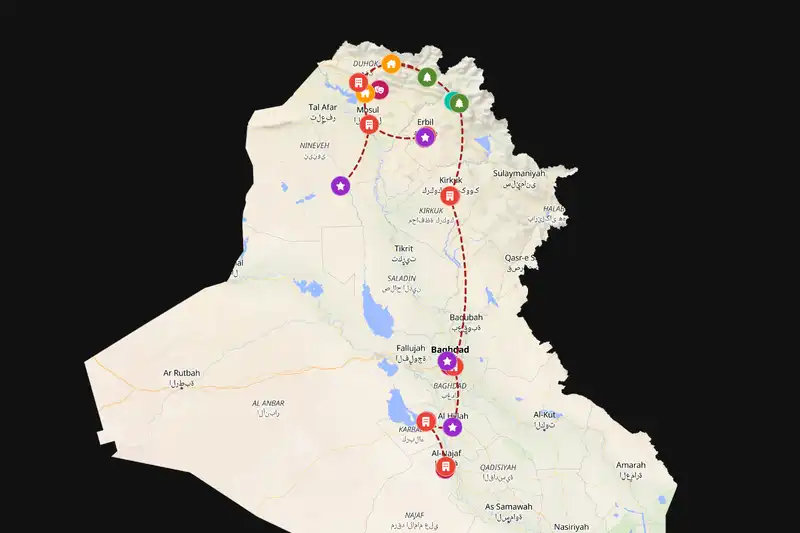
10–14 days (recommended): - 3 days Baghdad (including a day trip to Samarra if security allows)
- 2 days Najaf & Karbala
- 1–2 days Babylon & Hillah
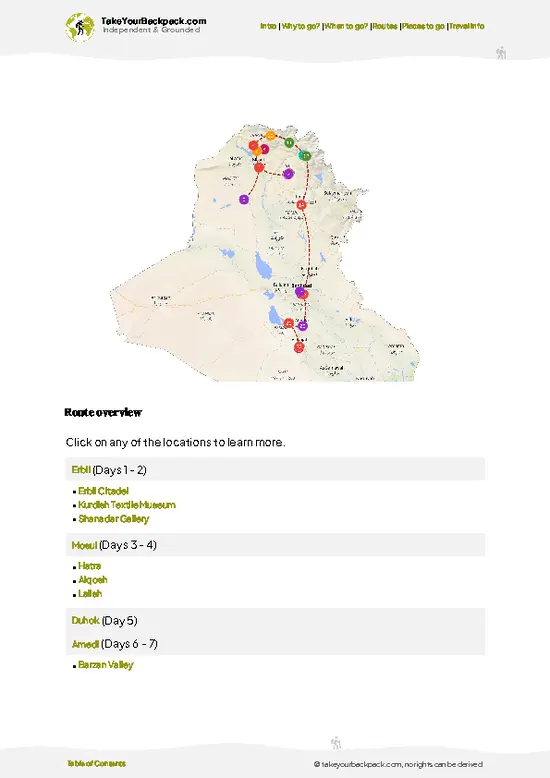
- 2–3 days Mosul & Hatra (if stable and accessible)
- 2–3 days in Iraqi Kurdistan (Erbil + day trip to nearby sites)
This gives you a mix of big-city chaos, religious centers, ancient ruins, and a softer landing in Kurdistan.
-
3+ weeks (deep dive): - Everything above, plus:
- Extra time in Kurdistan (Sulaymaniyah, Duhok, mountain villages)
- Southern Iraq (Basra, marshes around Chibayish if conditions allow)
- More slow days in Baghdad and Mosul to just wander, drink tea, and talk to people.
If you’re on a tight budget, longer stays in fewer places save money: weekly deals on rooms, fewer long-distance trips, and more time to find cheap local food spots. Iraq is not a place to cram 10 cities into 5 days; build in buffer days for checkpoint delays, bus schedule surprises, and the occasional “everything is closed this afternoon” moment.
You can absolutely get around Iraq without renting a car, but you’ll be living in the world of shared taxis, minibuses, and the occasional private hire when nothing else lines up.
Between cities:-
Shared taxis: The main backbone of intercity travel. You go to a taxi stand, say your destination, and wait until the car fills (usually 4 passengers). Prices are reasonable if you pay the local rate and don’t insist on the front seat.
-
Minibuses / coaches: Used on some popular routes, especially in Kurdistan and between big cities. They’re cheaper than shared taxis but slower and less predictable.
-
Domestic flights: Useful if you’re short on time and long on distance (e.g., Baghdad–Erbil or Baghdad–Basra), but not very budget-friendly compared to road transport.
Within cities:-
Taxis: Ubiquitous and relatively cheap. Meters are rare; agree a price before you get in. Having your destination written in Arabic helps.
-
Ride-hailing apps: In some big cities there are local equivalents to Uber, which can save you from haggling and help with language barriers.
-
Walking: In central areas of Baghdad, Najaf, Karbala, and Erbil, you’ll walk a lot. Sidewalks can be chaotic, but that’s part of the fun.
Where not having a car hurts:- Remote ruins (like some sites around Hatra or out-of-the-way monasteries) can be hard to reach without hiring a taxi for a half or full day.
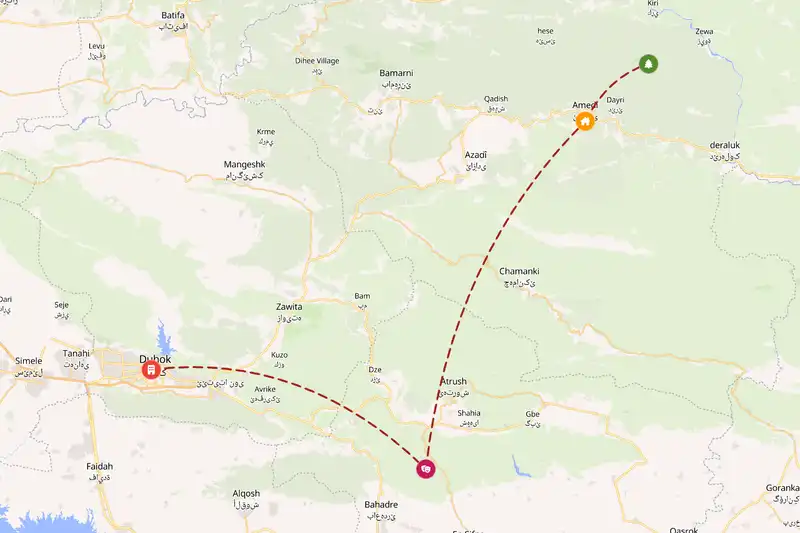
- Mountain villages in Kurdistan are reachable by shared taxis and minibuses, but connections can be sparse, especially on Fridays.
For a backpacker, the best strategy is:
- Use shared taxis and minibuses for all main routes.
- Budget for occasional private taxi hires to reach specific ruins or villages.
- Keep your days flexible; if a bus doesn’t run, you can usually find a shared taxi, but it might leave later than you hoped.
You don’t need a car, but you do need patience, a bit of Arabic or Kurdish, and a willingness to ask locals for help at every station.
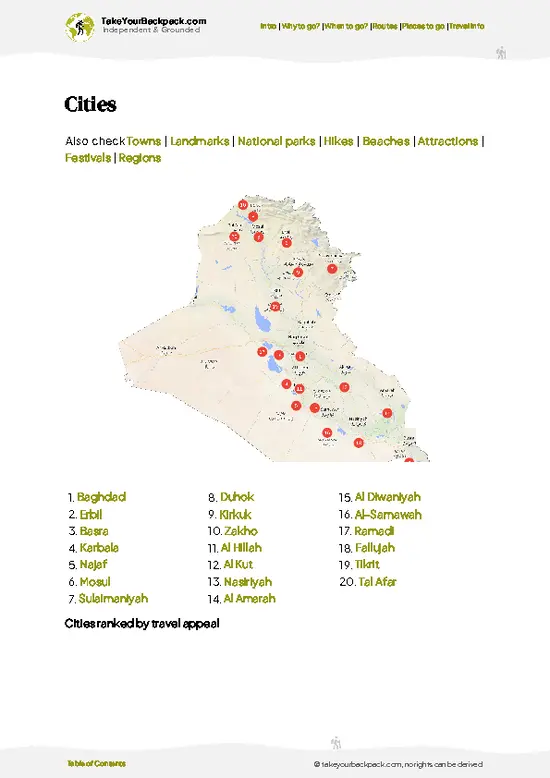
If you’re traveling on a backpacker budget and want maximum “only-in-Iraq” experiences per dollar, these are the heavy hitters.
Baghdad- The heart of the trip. Not pretty in a postcard way, but full of life.
- Walk the Tigris riverfront, explore old streets around Mutanabbi Street, browse bookstalls, and drink tea in old cafés.
- The museums and cultural sites give context to everything else you’ll see in the country.
Najaf & Karbala- Two of the most important Shia cities in the world, and you feel that immediately.
- Even if you’re not religious, the energy around the shrines, the crowds, and the night-time atmosphere are powerful.
- Budget tip: stay in a simple hotel near the shrines and just wander; food and tea are cheap and everywhere.
Babylon & Hillah- Babylon is one of those names you read in history books and then suddenly you’re walking through it.
- The site is a mix of ancient ruins and modern reconstructions, but the scale and setting are still impressive.
- Easy day trip from Baghdad or overnight in Hillah if you want a slower pace.
Samarra (when accessible)- The spiral minaret of the Great Mosque is one of the most distinctive structures in Iraq.
- Security can be tight and conditions change, but if it’s open and safe, it’s worth the effort.
Mosul & Hatra (when stable)- Mosul’s old city is a lesson in both destruction and rebuilding. It’s heavy, but important.
- Hatra, if accessible, is one of the most atmospheric ancient sites in the region: desert, ruins, and very few tourists.
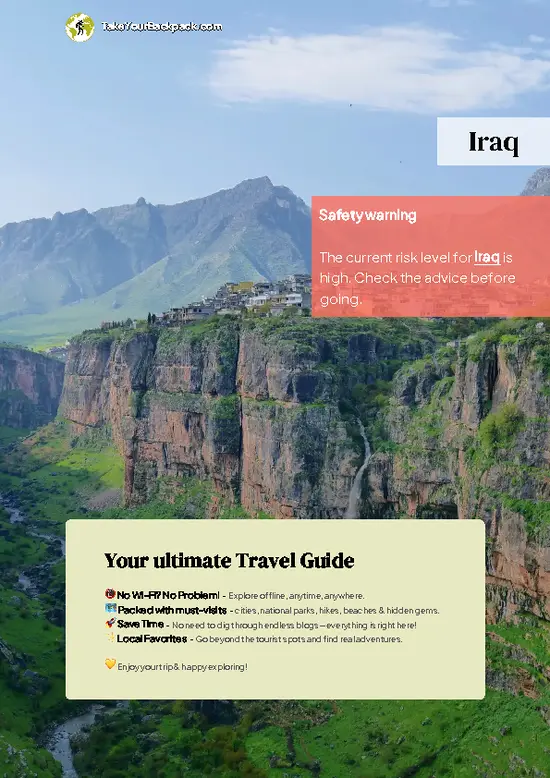
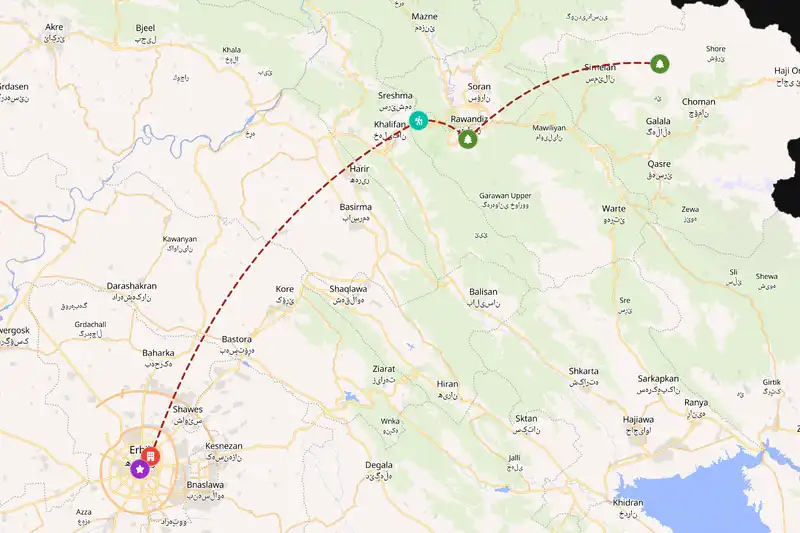
Iraqi Kurdistan (Erbil + at least one side trip)- Erbil’s citadel area, markets, and tea houses are a gentle introduction to Iraq.
- Add a day trip to nearby waterfalls, canyons, or villages for a taste of the mountains.
- For backpackers, Kurdistan is where you can breathe a bit, slow down, and still feel like you’re in Iraq, not a generic city.
If you have limited time, prioritize: Baghdad, Najaf/Karbala, Babylon, and at least a short hop into Kurdistan. That combo gives you history, religion, daily life, and a softer landing zone without blowing your budget.
If you’re short on time or cash, you don’t need to chase everything. Iraq is dense with history, but not every site adds something new for a backpacker.
What you can reasonably skip:-
Basra (on a first, short trip): Interesting port city with its own character, but it’s far south and adds long travel days. Unless you’re specifically drawn to the Shatt al-Arab and southern culture, save it for a longer second trip.
-
The marshes (if logistics are tight): The Mesopotamian marshes are unique, but reaching them, arranging a boat, and getting back eats time and money. If you only have 7–10 days, that time is usually better spent in Baghdad, Najaf/Karbala, or Mosul.
-
Too many minor ruins: After Babylon and (if possible) Hatra, additional small archaeological sites start to blur together unless you’re a hardcore history nerd. Each extra ruin often means a private taxi and more checkpoints.
-
Endless shrine-hopping: Najaf and Karbala already give you a deep dive into Shia religious life. Visiting every smaller shrine in every city adds more repetition than insight for most travelers.
-
Extra big-city sprawl: Secondary modern cities that don’t have major historical or cultural draws can feel like variations of the same traffic, malls, and concrete. If a place doesn’t clearly offer either a key site, a special atmosphere, or an easy route connection, it’s skippable.
How to prioritize when time is tight:- Under 7 days: Focus on Baghdad, Najaf/Karbala, and Babylon. Skip Basra, the marshes, and deep Kurdistan.
- 7–10 days: Add either Mosul
or a short Kurdistan segment, not both, unless you’re okay with a very fast pace.
- 10–14 days: You can do Baghdad, Najaf/Karbala, Babylon, Mosul/Hatra (if open), and Erbil. Still skip Basra and the marshes unless you cut something else.
The key is to trade breadth for depth: fewer cities, more time walking, talking, and drinking tea. Iraq rewards people who linger in a handful of places rather than racing to tick every name on the map.