×
Suriname🇸🇷 | 10 days itinerary

10 Days in Suriname

By Johan Kruseman 🇳🇱 | Updated May 4, 2026
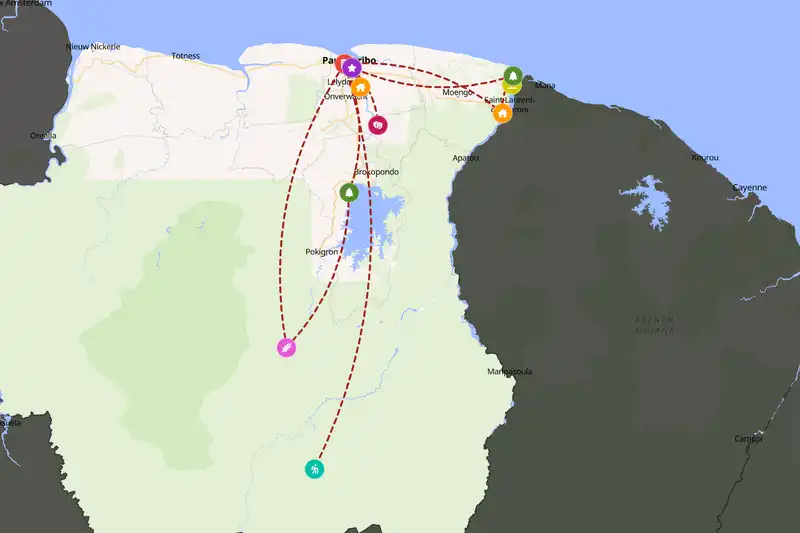
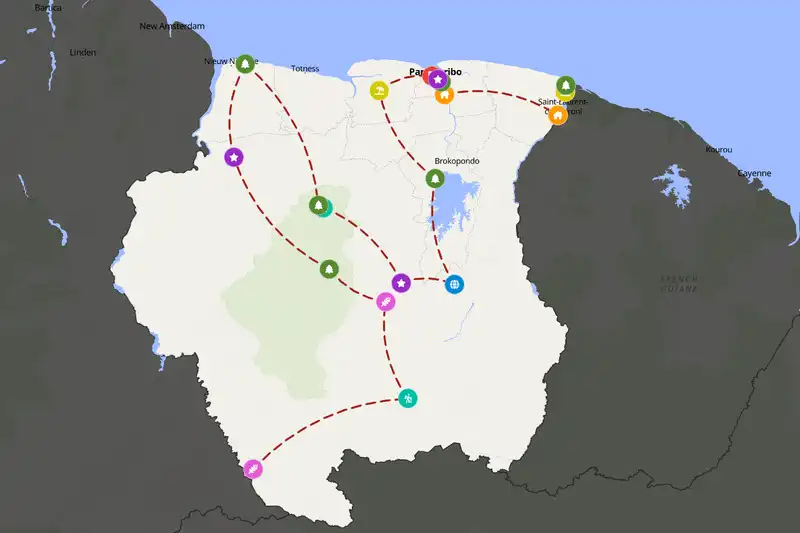
This 10-day route is for travelers who want a balanced mix of city life, coastal river towns, and accessible rainforest, moving at a moderate pace that still leaves room for hammocks and long conversations; you’ll rely on road transfers, shared boats, and a few organized excursions rather than hardcore expeditions. It’s ideal if you like variety—history, wildlife, and small-town character—without committing to multi-day deep-jungle treks.

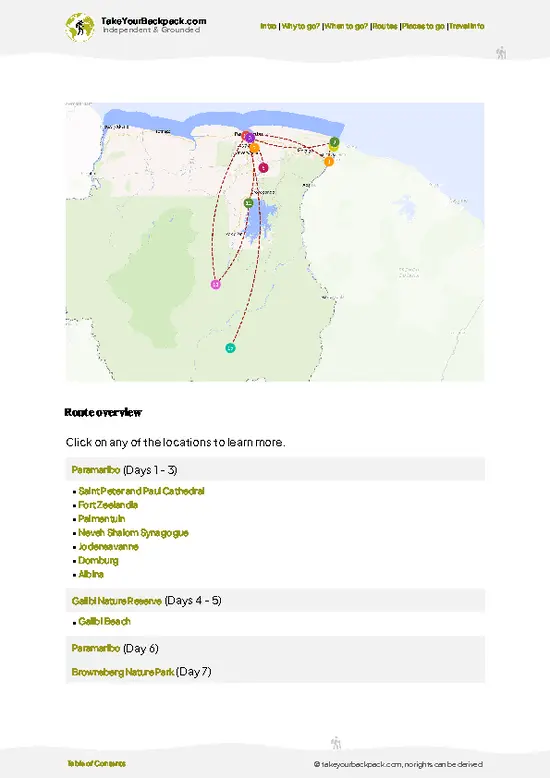
Days 1-3: Paramaribo’s cultural core and riverside rhythm

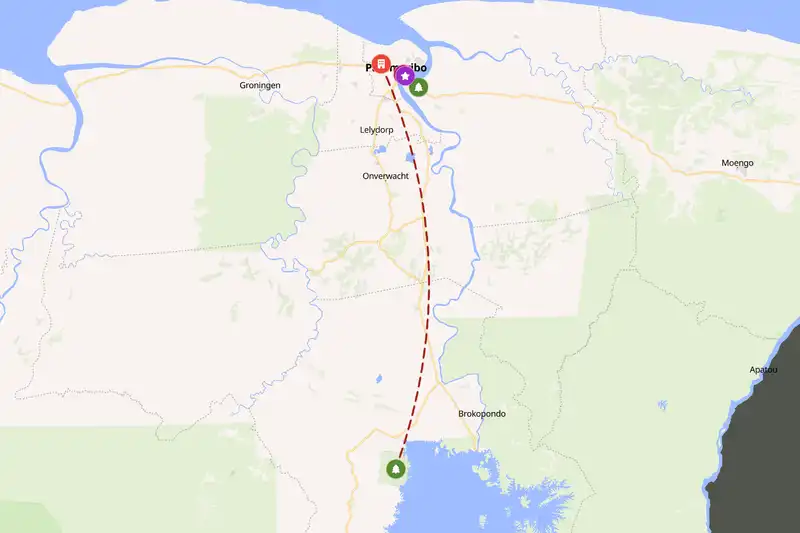
Begin with three nights in Paramaribo, using the city as your cultural classroom and logistical hub. Explore the wooden architecture and step inside the Saint Peter and Paul Cathedral, then walk down to Fort Zeelandia to anchor the colonial history you’ll keep bumping into across the country. Take time in the Palmentuin to slow down, then spend a half-day at the Surinaams Museum so the stories of Indigenous peoples, Maroon communities, and immigrant groups are in your head before you head upriver. … read more 👉
This 10-day route is for travelers who want a balanced mix of city life, coastal river towns, and accessible rainforest, moving at a moderate pace that still leaves room for hammocks and long conversations; you’ll rely on road transfers, shared boats, and a few organized excursions rather than hardcore expeditions. It’s ideal if you like variety—history, wildlife, and small-town character—without committing to multi-day deep-jungle treks.

Days 1-3: Paramaribo’s cultural core and riverside rhythm

Begin with three nights in Paramaribo, using the city as your cultural classroom and logistical hub. Explore the wooden architecture and step inside the Saint Peter and Paul Cathedral, then walk down to Fort Zeelandia to anchor the colonial history you’ll keep bumping into across the country. Take time in the Palmentuin to slow down, then spend a half-day at the Surinaams Museum so the stories of Indigenous peoples, Maroon communities, and immigrant groups are in your head before you head upriver. Round out your city time with visits to the Neveh Shalom Synagogue and Arya Dewaker Hindu Temple, which together show how many worlds fit into this small capital.

Days 4-5: Peperpot Nature Park and Domburg riverside escape

Shift gears with a short hop out of the city to Peperpot Nature Park, where old plantation structures sit beside bird-filled forest trails; base yourself nearby and give it a full day so you’re not rushing the early-morning wildlife hours. From there, continue by road to the small town of Domburg, a relaxed riverside spot that feels like Paramaribo’s laid-back cousin. Spend an afternoon and night here enjoying river views, local food stalls, and a slower pace that lets you catch your breath between city and jungle.

Days 6-7: Brownsberg Nature Park and lake vistas

Travel inland to Brownsberg Nature Park, trading asphalt for red dirt roads and cooler forest air. With two days here, you can hike to multiple viewpoints and waterfalls without stacking long treks back-to-back, and still have hammock time at the lodge. The views over the Brokopondo lake area at sunset are worth lingering for, and the extra night means you can adapt to weather rather than forcing every hike into a single day.

Days 8-10: Nieuw Nickerie and Bigi Pan wetlands

Head west by road to the agricultural town of Nieuw Nickerie, your base for exploring Suriname’s coastal wetlands. Use your first afternoon to walk the town and get a feel for life far from the capital, then dedicate a full day to a boat trip into Bigi Pan, where you’ll glide through shallow waters watching birdlife and wide skies instead of traffic lights. Spend your final night back in Nieuw Nickerie, letting the slower coastal rhythm wind you down before your return journey.

For an extra off-grid idea down the line, pencil in a future side trip to the remote village of Gakaba on the Marowijne River, where river rapids and traditional life replace any notion of a set itinerary.
Loading the map 🌍
film
0
0
0a
Paramaribo
film
1
1
1a
Saint Peter and Paul Cathedral
film
2
2
2a
Fort Zeelandia
film
3
3
3a
Palmentuin
film
4
4
4a
Surinaams Museum
film
5
5
5a
Neveh Shalom Synagogue
film
6
6
6a
Arya Dewaker Hindu Temple
film
7
7
7a
Peperpot Nature Park
Ivo Van Der Werk
film
8
8
8a
Domburg
film
9
9
9a
Brownsberg Nature Park

🛏️ Where to stay?The Route Breakdown

✈️ The backpacker research shortcutSuriname Travel Guide

An offline-friendly backpacking guide with optimized travel routes, ranked highlights, transport advice, and the best areas to stay.
example page 0 from our offline Travel Guide for Surinameexample page 1 from our offline Travel Guide for Surinameexample page 2 from our offline Travel Guide for Surinameexample page 3 from our offline Travel Guide for Surinameexample page 4 from our offline Travel Guide for Surinameexample page 5 from our offline Travel Guide for Suriname
The digital guide (180 pages) contains:
48 highlights, ranked by travel appeal
Optimized 5, 10 & 15-day travel routes
Best neighborhoods to stay
How to get around
Offline-friendly for travel without Wi-Fi
👉 See all 30+ guide features

📅 Plan smarter in minutes, not weeks
Month by month travel advice
Festivals & national holidays
Budget expectations

🗺️ Go to the right places, skip the overrated ones
Honest pros & cons of destinations
Top hikes, parks & viewpoints
Lesser-known places most travelers miss
Clear “worth it vs skip it” guidance

🛏️ Travel smoothly without rookie mistakes
Best areas to stay
Transport systems explained simply
Common scams & safety advice
SIM cards, money & practical tips

🌍 Understand the country, not just visit it
Culture & traditions
52 Essential phrases & customs
Festivals worth planning around
Traveler-friendly historical context
Insights that make places more meaningful

📱 Built for real travel conditions
Fully downloadable PDF
Works completely offline
Optimized for phone use
Useful in remote areas & buses
Everything in one place
Save weeks of stressful planning
Get instant access to the full guide directly. 30-day money-back guarantee.


Sent to your inbox immediately after payment • 100% Secure Checkout
Best Backpacking Travel Advisor 2025 tourism awardBest Backpacking
Travel Advisor
2025
What others say about Take Your Backpack Guides:
⭐⭐⭐⭐⭐
Fantastic, amazing amount of information!
⭐⭐⭐⭐⭐
My goodness this is amazing, it's what I've been looking for hats off too you!
⭐⭐⭐⭐⭐
I think this is absolutely BRILLIANT
⭐⭐⭐⭐
Very complete and informative. It's still missing places, but I gotta to commend you
⭐⭐⭐⭐⭐
This is truly amazing, thank you, can't wait to explore it with my kids!
⭐⭐⭐⭐⭐
Awesome resource, thank you!
⭐⭐⭐⭐⭐
This is amazing! Can't wait to explore the ones I haven't seen
⭐⭐⭐⭐
I love this! Well done, great idea.
⭐⭐⭐⭐⭐
Thanks for taking the time to make this gem!
⭐⭐⭐⭐⭐
This might be the best website I've ever seen.
⭐⭐⭐⭐⭐
Congratulations, and thank you so much for your work; it's incredibly valuable.
⭐⭐⭐⭐
In all seriousness I think you did a great job pointing out the important spots
⭐⭐⭐⭐⭐
10/10 very good
⭐⭐⭐⭐⭐
As someone who's only just starting to visit regularly this is awesome, thank you.
⭐⭐⭐⭐
Thank you very much! I'm going to visit my dad, it's going to be very useful!
⭐⭐⭐⭐⭐
This is really cool! We'll be travelling for the first time and this definitely come in handy.
⭐⭐⭐⭐⭐
You are now our minister of culture, congratulations 👨‍💼
⭐⭐⭐⭐⭐
Just wanted to tell you that this is a pearl! Going to follow your recommendations.
⭐⭐⭐⭐⭐
This is so cool. I'll definitely be using the resource for my travels soon.
⭐⭐⭐⭐⭐
This is very impressive! Good work.
⭐⭐⭐⭐⭐
This is an amazing and informative site. Very well done!

🧭 RouteGot More or Less Time?

Travel Suriname your way — from a quick highlights trip to a slow-paced adventure.

🙋 FAQCommon Questions

Short version: yes, but it’s not plug-and-play like Southeast Asia. Suriname is totally doable independently if you’re comfortable with a bit of improvising, slow transport, and basic Dutch or patient English. Paramaribo is easy: walkable center, cheap guesthouses, street food, and plenty of locals who’ll help you out. Once you leave the capital, things get more old-school: fewer buses, more shared taxis and boats, and almost no backpacker infrastructure. You’ll often arrange jungle trips through small local operators or your guesthouse instead of just showing up and winging it. Booking last minute is common, but you need to be flexible with dates because tours and boats only go when there are enough people. Safety-wise, it’s generally calm if you use normal city sense: avoid flashing valuables, take taxis at night in Paramaribo, and keep an eye on your stuff in crowded markets. The real challenge is logistics, not danger. If you’ve backpacked in places like Bolivia, Guyana, or rural Indonesia, Suriname will feel familiar: slower, more word-of-mouth, and very rewarding if you’re patient. If this is your first big trip, it’s still manageable—just base yourself in Paramaribo, let local guesthouses help you organize side trips, and don’t overpack your schedule.
For a tight backpacker trip, 7–10 days is the minimum that feels worth the flight. That gives you time for Paramaribo, a river or jungle trip, and maybe one extra side mission. If you want to actually breathe and not just collect passport stamps, 2 weeks is the sweet spot: a few days in Paramaribo, a proper multi-day jungle stay, plus a Maroon village or Brownsberg area for waterfalls and hiking. With 3 weeks, you can slow down and chase more remote river communities, maybe combine different regions (like Upper Suriname River plus a separate nature reserve) and build in buffer days for weather or transport delays. Anything under 5 days is basically a Paramaribo city break with one rushed day trip, which undersells the country. The main time-eaters are river travel and jungle access: boats and small planes don’t always run daily, and group tours wait for enough people. Budget travelers should plan at least one 3–4 day block for the interior, plus 2–3 days in Paramaribo at the start and end to sort logistics and enjoy the city.
You can absolutely get around Suriname without a car, but you need to think in terms of shared transport and boats, not frequent buses. In and around Paramaribo, you’ll mostly walk, use local buses, or grab cheap taxis. The city center is compact, and rideshare-style taxis or phone-call taxis are common and affordable, especially if you split with other travelers. For longer distances, you’ll use minibuses and shared taxis that leave from specific stands once they’re full. They’re cheap but not always on a fixed timetable, so early starts and patience are your best friends. To reach interior villages and jungle lodges, you usually combine road transport with a boat (korjaal). These are almost always arranged through tour operators or guesthouses, and the price usually includes transport, food, and accommodation. Independent boat hopping is possible on some rivers, but it’s slow, requires some language skills, and isn’t always cheaper than a package. Domestic flights to remote airstrips exist but are rarely a budget move unless you’re joining a group. Bottom line: no car needed, but don’t expect to spontaneously hop between remote spots every day. Build your route around a few hubs (Paramaribo, Brownsweg/Brownsberg area, one river region) and let local operators handle the tricky legs.
For backpackers, the must-visits are less about specific monuments and more about experiences. First, Paramaribo: the wooden colonial center, riverside promenade, mosques and synagogues side by side, and food that reflects the whole Caribbean–Asian mix. It’s where you’ll find cheap eats, markets, and other travelers to team up with for tours. Second, the Suriname River interior, especially Maroon villages like those around the Upper Suriname River (e.g., near Danpaati or Pikin Slee). Staying in or near these communities gives you river life, traditional wooden houses, and a very different rhythm from the city. Third, a proper jungle/nature area: Brownsberg Nature Park is the classic budget-friendly option with hiking, waterfalls, and wide views over the Brokopondo Reservoir. It’s reachable by road and can be done as a day trip or overnight on a backpacker budget. If you can stretch your funds, a multi-day stay at a simple jungle lodge deeper in the rainforest is worth the splurge: night walks, wildlife spotting, and that heavy, quiet forest atmosphere you don’t get on a quick drive-by. If you have extra time, side trips like Commewijne district by bike (old plantations, riverside villages) or a visit to Galibi during turtle season add a lot of character without blowing your budget.
If you’re short on time or cash, skip anything that’s basically a long, expensive detour for a quick photo. Deep interior lodges that require both a domestic flight and a long boat ride are incredible but can eat half your budget and 3–4 days; if you only have a week, focus on one accessible jungle area instead of chasing the most remote spot. You can also skip trying to see multiple river systems in one trip—Upper Suriname River plus, say, another far-flung river community is usually overkill for a first visit. Pick one region and actually settle in for a few days. In Paramaribo, you don’t need to chase every single museum or plantation tour; choose one or two that interest you and spend the rest of your time walking the streets, eating local food, and hanging by the river. If it’s not turtle season, Galibi loses a lot of its appeal for budget travelers because the journey is long and the main draw is missing. And unless you’re a hardcore dam or engineering fan, don’t burn a whole day just to stare at the Brokopondo Reservoir from the road; combine that area with Brownsberg or a village stay so the time and transport cost actually pay off.

🇸🇷 SurinameWhere to Go Next

Ready to build a truly unique trip? Predefined routes are perfect for first-time visitors, but there is so much more to discover. Whether you are chasing a city trip, pristine national parks, local food scenes, or quiet beaches, pick a category to design your own path.