×
Ethiopia🇪🇹 | 7 days itinerary

Backpacking Ethiopia: A 7-Day Guide

By Johan Kruseman 🇳🇱 | Updated May 7, 2026
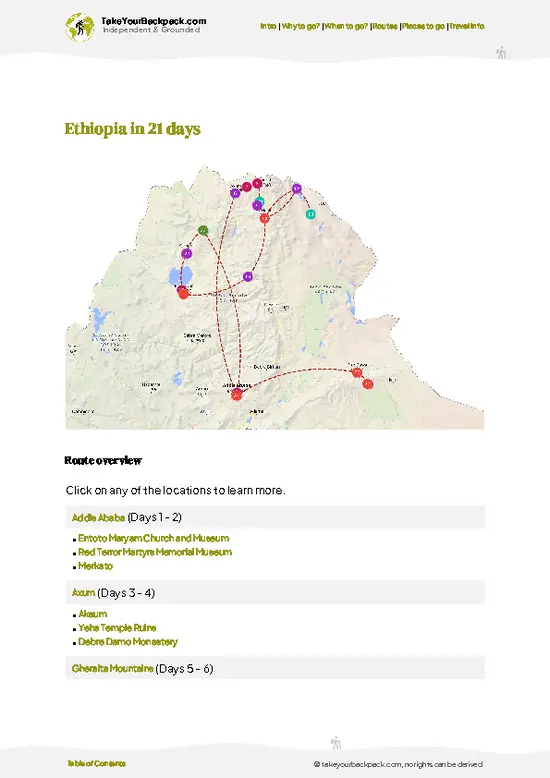
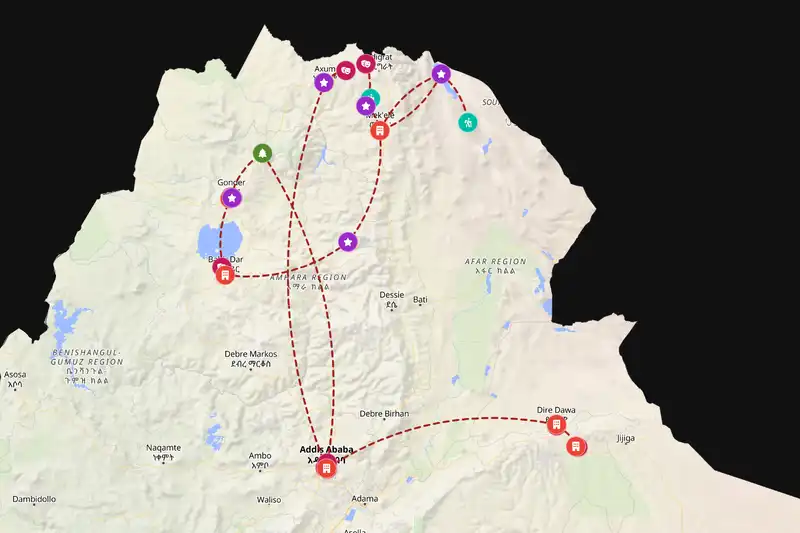
This 7-day route is for travelers who want a deep, story-rich hit of Ethiopia’s historic north without racing across the whole country, using a mix of domestic flights and short drives while keeping the pace relaxed but full. You’ll base yourself around Addis Ababa, Bahir Dar, and Gondar, focusing on monasteries, castles, and a taste of highland hiking rather than long, exhausting overland hauls.

Days 1-2: Addis Ababa - Museums and First Taste of Ethiopia

Fly into Addis Ababa and give yourself time to adjust to altitude, coffee, and injera before you start bouncing around the country. Spend your first full day between the National Museum of Ethiopia (for Lucy and deep-time context) and the Ethnological Museum, which turns abstract “Ethiopian culture” into real faces, music, and objects, then swing by Holy Trinity Cathedral to connect that history to living faith and politics. This cluster keeps your logistics simple—short taxi hops, no time pressure—so you can focus on absorbing the rhythm … read more 👉
This 7-day route is for travelers who want a deep, story-rich hit of Ethiopia’s historic north without racing across the whole country, using a mix of domestic flights and short drives while keeping the pace relaxed but full. You’ll base yourself around Addis Ababa, Bahir Dar, and Gondar, focusing on monasteries, castles, and a taste of highland hiking rather than long, exhausting overland hauls.

Days 1-2: Addis Ababa - Museums and First Taste of Ethiopia

Fly into Addis Ababa and give yourself time to adjust to altitude, coffee, and injera before you start bouncing around the country. Spend your first full day between the National Museum of Ethiopia (for Lucy and deep-time context) and the Ethnological Museum, which turns abstract “Ethiopian culture” into real faces, music, and objects, then swing by Holy Trinity Cathedral to connect that history to living faith and politics. This cluster keeps your logistics simple—short taxi hops, no time pressure—so you can focus on absorbing the rhythm of the city instead of fighting traffic and jet lag.

Days 3-4: Bahir Dar - Lake Tana Monasteries and Blue Nile Origins

Take a short morning flight or a long but scenic drive to Bahir Dar, your base for the Lake Tana region. Use one full day for a boat trip to the Bahir Dar Monasteries on Lake Tana (Ura Kidane Mihret, where painted church interiors, incense, and lake breezes give you that “I’m really in Ethiopia now” feeling, and you can balance culture with simple pleasures like lakeside coffee. With your second day, head out toward the Blue Nile Gorge for a day hike and viewpoints that tie the map together in your head—you’re literally standing near the source of the Nile, which makes every atlas you’ve ever seen suddenly feel personal.

Days 5-7: Gondar - Castles, Baths, and Highland Air

Travel overland from Bahir Dar to Gondar, a half-day drive that doubles as a rolling introduction to the highlands rather than just another transfer. Base yourself in Gondar for two nights, exploring Fasil Ghebbi, Gondar Region with its cluster of castles that feel like someone dropped a medieval European court into East Africa, then visit the Gondar Fasilides Bath and Debre Berhan Selassie Church, whose painted ceiling of winged faces is one of the most quietly powerful sights in the country. On your final day, either linger in Gondar’s cafes and side streets or squeeze in a gentle excursion toward the Simien Mountains outskirts for big views without committing to a full trek, then fly or drive back to Addis for your departure.

My favorite moment on this route is stepping into Debre Berhan Selassie at golden hour, when the painted angels seem to float in the dim light and the whole week suddenly clicks into one long, living story.
Loading the map 🌍
film
0
0
0a
National Museum of Ethiopia
film
1
1
1a
Blue Nile Gorge
film
2
2
2a
Gondar
film
3
3
3a
Fasil Ghebbi, Gondar Region
film
4
4
4a
Gondar Fasilides Bath
film
5
5
5a
Debre Berhan Selassie Church
film
6
6
6a
Simien Mountains

🛏️ Where to stay?Your Route at a Glance

✈️ The backpacker research shortcutEthiopia Travel Guide

An offline-friendly backpacking guide with optimized travel routes, ranked highlights, transport advice, and the best areas to stay.
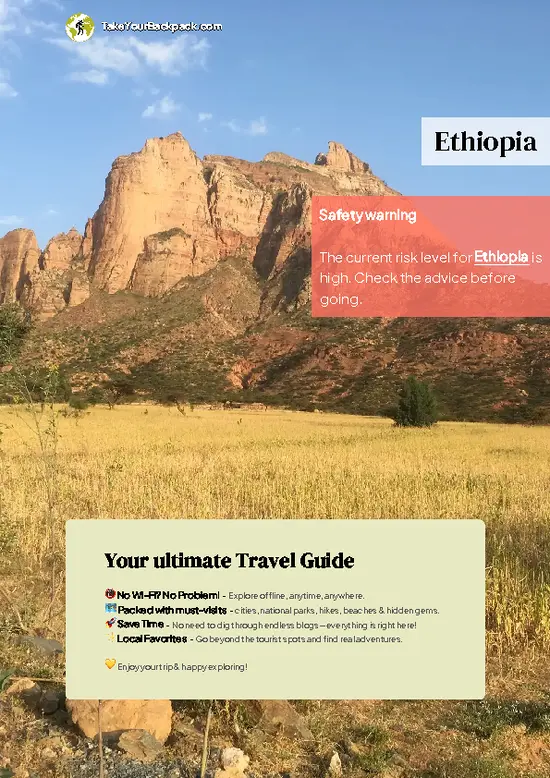
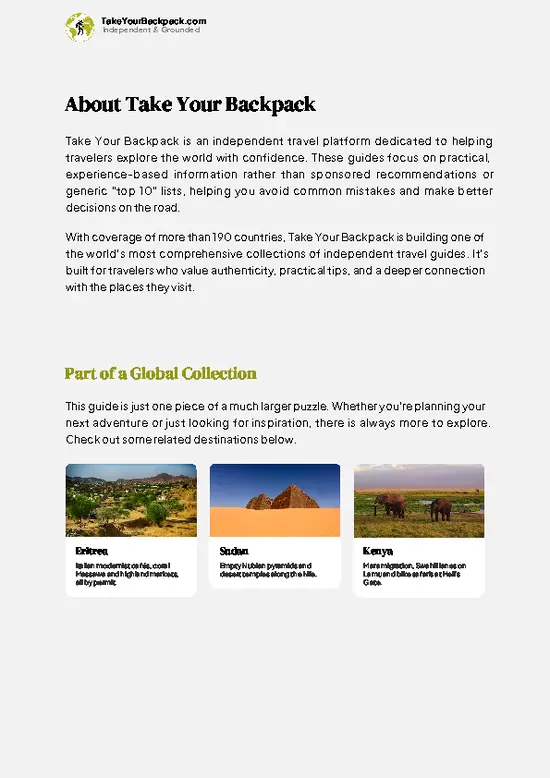
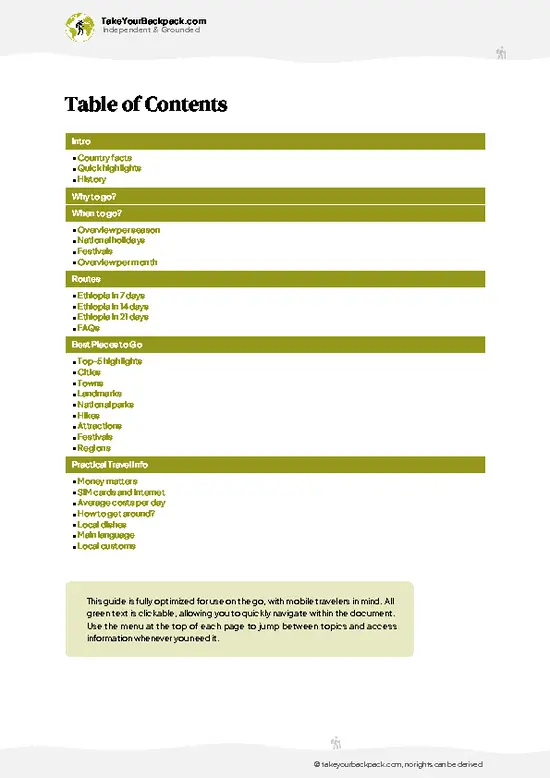
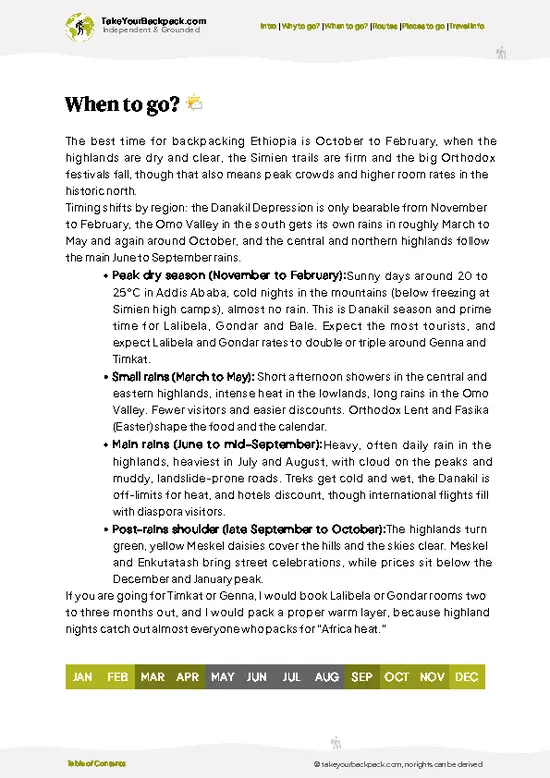
example page 0 from our offline Travel Guide for Ethiopiaexample page 1 from our offline Travel Guide for Ethiopiaexample page 2 from our offline Travel Guide for Ethiopiaexample page 3 from our offline Travel Guide for Ethiopiaexample page 4 from our offline Travel Guide for Ethiopiaexample page 5 from our offline Travel Guide for Ethiopia
The digital guide (345 pages) contains:
101 highlights, ranked by travel appeal
Optimized 7, 14 & 21-day travel routes
Best neighborhoods to stay
How to get around
Offline-friendly for travel without Wi-Fi
👉 See all 30+ guide features

📅 Plan smarter in minutes, not weeks
Month by month travel advice
Festivals & national holidays
Budget expectations

🗺️ Go to the right places, skip the overrated ones
Honest pros & cons of destinations
Top hikes, parks & viewpoints
Lesser-known places most travelers miss
Clear “worth it vs skip it” guidance

🛏️ Travel smoothly without rookie mistakes
Best areas to stay
Transport systems explained simply
Common scams & safety advice
SIM cards, money & practical tips

🌍 Understand the country, not just visit it
Culture & traditions
52 Essential phrases & customs
Festivals worth planning around
Traveler-friendly historical context
Insights that make places more meaningful

📱 Built for real travel conditions
Fully downloadable PDF
Works completely offline
Optimized for phone use
Useful in remote areas & buses
Everything in one place
Save weeks of stressful planning
Get instant access to the full guide directly. 30-day money-back guarantee.


Sent to your inbox immediately after payment • 100% Secure Checkout
Best Backpacking Travel Advisor 2025 tourism awardBest Backpacking
Travel Advisor
2025
What others say about Take Your Backpack Guides:
⭐⭐⭐⭐⭐
Fantastic, amazing amount of information!
⭐⭐⭐⭐⭐
My goodness this is amazing, it's what I've been looking for hats off too you!
⭐⭐⭐⭐⭐
I think this is absolutely BRILLIANT
⭐⭐⭐⭐
Very complete and informative. It's still missing places, but I gotta to commend you
⭐⭐⭐⭐⭐
This is truly amazing, thank you, can't wait to explore it with my kids!
⭐⭐⭐⭐⭐
Awesome resource, thank you!
⭐⭐⭐⭐⭐
This is amazing! Can't wait to explore the ones I haven't seen
⭐⭐⭐⭐
I love this! Well done, great idea.
⭐⭐⭐⭐⭐
Thanks for taking the time to make this gem!
⭐⭐⭐⭐⭐
This might be the best website I've ever seen.
⭐⭐⭐⭐⭐
Congratulations, and thank you so much for your work; it's incredibly valuable.
⭐⭐⭐⭐
In all seriousness I think you did a great job pointing out the important spots
⭐⭐⭐⭐⭐
10/10 very good
⭐⭐⭐⭐⭐
As someone who's only just starting to visit regularly this is awesome, thank you.
⭐⭐⭐⭐
Thank you very much! I'm going to visit my dad, it's going to be very useful!
⭐⭐⭐⭐⭐
This is really cool! We'll be travelling for the first time and this definitely come in handy.
⭐⭐⭐⭐⭐
You are now our minister of culture, congratulations 👨‍💼
⭐⭐⭐⭐⭐
Just wanted to tell you that this is a pearl! Going to follow your recommendations.
⭐⭐⭐⭐⭐
This is so cool. I'll definitely be using the resource for my travels soon.
⭐⭐⭐⭐⭐
This is very impressive! Good work.
⭐⭐⭐⭐⭐
This is an amazing and informative site. Very well done!

🧭 RouteAlternative Routes

Travel Ethiopia your way — from a quick highlights trip to a slow-paced adventure.

🙋 FAQBackpacking FAQ

Short version: yes, you can backpack Ethiopia independently, but it’s not a “show up and wing everything” country like Thailand. It rewards a bit of prep and a flexible mindset.

Ethiopia is easy enough for a reasonably experienced traveler who’s used to chaotic bus stations, language gaps, and changing plans. For a first-time backpacker, it’s doable if you move slower, keep expectations loose, and accept that logistics sometimes eat half a day.

English is common in cities and among younger people, especially around hotels, cafes, and tour offices. In rural areas you’ll rely more on gestures and patience, but people are generally helpful and curious. You won’t feel isolated, just occasionally confused.

Accommodation is straightforward: every town has cheap guesthouses; bigger cities have hostels and midrange hotels. Online booking is limited, so you often just show up, ask to see a room, and negotiate. Always check the bathroom, water pressure, and if there’s hot water; power cuts are normal, so don’t be shocked if the lights flicker.

The main friction points are distances, road conditions, and occasional security concerns in certain regions. Routes that look short on a map can take all day by bus. Political tensions can flare in some areas, so you need to stay flexible and be willing to reroute if locals or your guesthouse advise against a certain road.

Solo travelers are common in the classic circuits (Lalibela, Simien Mountains, Danakil, Omo Valley, Bale Mountains, Harar). For trekking and remote areas, you’ll usually need to hire a guide or scout, not because you can’t walk alone, but because it’s required by local rules or simply safer and more efficient.

If you’re comfortable with:
- Long, crowded bus rides
- Negotiating prices and saying no to persistent touts
- Plans changing last minute

…then independent backpacking in Ethiopia is absolutely manageable and very rewarding on a budget.
If you want more than a rushed highlight reel, 3–4 weeks is the sweet spot for Ethiopia. Anything less than 10 days forces you to choose one region and ignore the rest.

Rough time guidelines for budget travelers:

- 7–10 days: Pick ONE focus.
• North: Addis Ababa + Lalibela + maybe a quick Simien Mountains taster (if flights line up). Expect to fly at least once to avoid losing days on buses.
• South: Addis Ababa + Bale Mountains or the Omo Valley (not both). Overland travel eats time, so keep your circle tight.

- 2 weeks: Two regions, but still selective.
• Classic combo: Addis + Lalibela + Simien Mountains + either Gonder or Bahir Dar. This gives you history, trekking, and some lake time.
• Alternative: Addis + Bale Mountains + Harar + maybe a short stop in the Rift Valley lakes.

- 3–4 weeks: Ideal backpacker window.
• North loop: Addis – Bahir Dar – Gonder – Simien Mountains – Axum (optional) – Lalibela – back to Addis.
• Plus one extra: Bale Mountains OR Harar and the east OR a short Omo Valley taste.
• With this much time, you can mix buses and a couple of domestic flights to save sanity.

- 5–6+ weeks: Deep dive.
• You can do a full north loop, a serious trek (Simien or Bale), plus a slower Omo Valley or extended eastern circuit. This is where you start to feel the rhythm of the country instead of just hopping between sights.

Because buses are slow and flights, while affordable by regional standards, still add up, the main rule is: underestimate how much ground you can cover. It’s better to do fewer regions well than to spend half your trip in transit. For a first visit on a budget, 3 weeks is the best balance between cost, depth, and not burning out.
You can absolutely get around Ethiopia without renting a car, but you’ll mix several modes of transport and need to be okay with some chaos.

Main options for budget travelers:

1. Long-distance buses and minibuses
- This is the backbone of budget travel. They’re cheap, frequent on main routes, and crowded.
- Big companies (like Selam and Sky Bus on some routes) are more comfortable and safer than random minibuses, but they don’t cover every town.
- Buses usually leave early in the morning. You often need to buy a ticket the day before and show up at the station before sunrise.
- Travel times are long: a 300 km trip can easily take 8–10 hours thanks to road conditions, stops, and checkpoints.

2. Domestic flights
- For big jumps (Addis–Lalibela, Addis–Gonder, Addis–Mekelle), flying saves days. If you flew into Ethiopia on the national carrier, domestic tickets are often much cheaper.
- Budget travelers often do a hybrid: buses for shorter hops, flights for one or two long legs.

3. Local transport in towns
- Tuk-tuks (bajajs), shared taxis, and minibuses handle most city movement. They’re cheap; you just need to confirm the price before hopping in.
- Walking is very doable in many towns, but traffic can be hectic and sidewalks inconsistent.

4. Trekking areas and remote regions
- For the Simien Mountains, Bale Mountains, Danakil, and much of the Omo Valley, you don’t drive yourself; you join a tour or arrange a package with transport included. Even if you’re “independent,” you’ll rely on local 4x4s and drivers.

You don’t need to rent a car to see Ethiopia, and for most backpackers it’s more hassle than it’s worth. Between buses, shared taxis, and a couple of strategic flights, you can cover the main circuits on a budget. The trade-off is time and comfort, not access.
Ethiopia is big, so “must-visit” depends on your interests, but for a first-time backpacker on a budget, these places give the best payoff for time and money:

1. Lalibela
- Rock-hewn churches carved into the ground and rock walls, with priests, incense, and chanting that make it feel very alive, not just historical.
- It’s compact and walkable, easy to organize on arrival, and you can keep costs down by staying in simple guesthouses and joining other travelers to split guide costs.

2. Simien Mountains
- One of the best value treks in Africa. Think huge cliffs, deep valleys, and troops of gelada baboons grazing like shaggy monks.
- You can do anything from a day hike to a multi-day trek. Even a short 2–3 day trip gives you big scenery and camping under cold, clear skies.

3. Addis Ababa (1–2 days)
- Not a “love at first sight” city, but worth a short stay.
- Key experiences: the National Museum (for Lucy and early human fossils), Merkato (huge, chaotic market), and eating injera with spicy stews in local joints.
- It’s also your main transport hub, so you’ll pass through anyway.

4. Gonder
- Known for its castle complex and old churches with vivid murals.
- It’s a relaxed base before or after the Simien Mountains, with enough cheap hotels and cafes to make logistics easy.

5. Bahir Dar and Lake Tana
- Lakeside town with boat trips to island monasteries and a day trip to the Blue Nile Falls (water levels vary by season).
- It’s a nice breather between bus days, with a more laid-back feel and easy cycling or walking along the lake.

6. Harar (if you have time for the east)
- Walled city with tight alleys, colorful houses, and a very different feel from the north: more Islamic heritage, coffee culture, and a slower pace.
- It’s a great place to wander, drink coffee, and people-watch. Night hyena feeding is famous; whether it’s your thing or not, the town itself is worth the detour if you have extra days.

7. Bale Mountains (for nature lovers with extra time)
- High-altitude plateau, cloud forest, and a chance (not a guarantee) to see Ethiopian wolves.
- Less visited than the Simiens, so it feels wilder. It’s best if you’re into trekking and don’t mind basic conditions.

If you have 2–3 weeks, a strong core route is: Addis – Bahir Dar – Gonder – Simien Mountains – Lalibela – back to Addis, with Harar or Bale added if you have extra time and budget for the detour.
If you’re short on time or cash, the key is to avoid trying to “do everything.” Some famous areas are incredible but either expensive, time-consuming, or both. Here’s what a budget backpacker can reasonably skip on a first trip:

1. Danakil Depression (if money or time is tight)
- It’s visually otherworldly, but tours are expensive, tightly controlled, and usually 2–4 days with long drives and basic conditions.
- If your budget is limited, that money often goes further on a Simien or Bale trek plus extra days elsewhere.

2. Full Omo Valley circuit
- Culturally fascinating, but logistically heavy and not very budget-friendly unless you have a group to split costs.
- It also takes a lot of time just to get there and between villages. If you only have 2 weeks, this will dominate your itinerary and you’ll miss most of the rest of the country.

3. Trying to hit both far north and far south in one short trip
- Doing Addis – Bahir Dar – Gonder – Simien – Lalibela – Omo Valley – Bale – Harar in 2 weeks is a recipe for burnout and bus fatigue.
- Pick either a north-focused trip (history + mountains) or a south/east-focused trip (Bale + Harar or a slice of Omo), not both.

4. Extra big cities beyond what you need for logistics
- Outside Addis, most larger towns are more functional than exciting. They’re fine for a night, but not worth padding your schedule for.
- If you’re choosing between an extra city day and an extra day in the mountains or Lalibela, choose nature or history every time.

5. Blue Nile Falls in dry season
- If water levels are low (often due to season and upstream dams), the falls can be underwhelming compared to the time and effort to get there.
- If you’re visiting Bahir Dar anyway, it’s a nice outing when the water is strong; if not, don’t build your whole plan around it.

6. Over-planning minor stops
- With limited time, focus on a few anchors: Lalibela, Simien or Bale, one or two historic towns, and maybe Harar.
- Skip detours to every lake, monastery, or viewpoint you hear about. The big-ticket places already demand long travel days; padding your route with small side trips just adds fatigue.

For a short trip, the smartest move is to choose one main region, accept that you’ll come back another time for the rest, and spend your limited days actually experiencing places instead of watching them blur past a bus window.

🇪🇹 EthiopiaMore of Ethiopia

Ready to build a truly unique trip? Predefined routes are perfect for first-time visitors, but there is so much more to discover. Whether you are chasing a city trip, pristine national parks, local food scenes, or quiet beaches, pick a category to design your own path.