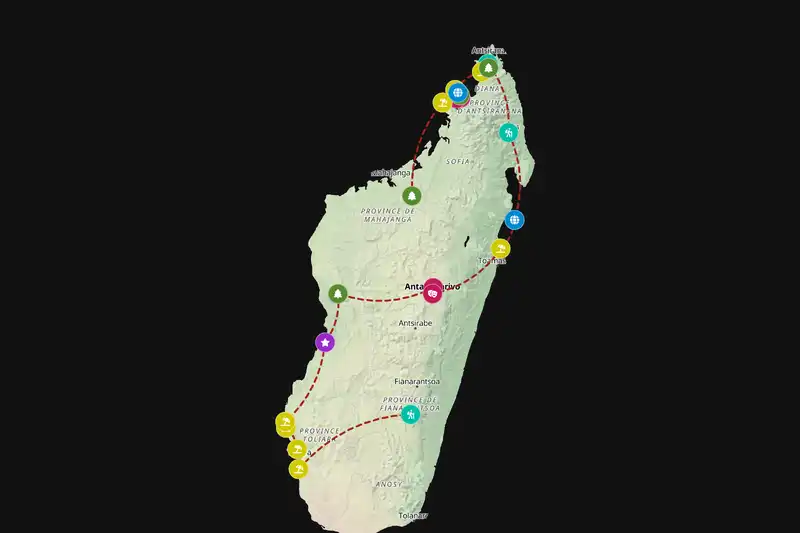
Short version: Madagascar is doable to backpack independently, but it’s not a “show up and wing it” country like Thailand. It rewards patience, flexibility, and a bit of Type‑B personality.
What makes it harder:
- Distances are huge and roads are rough, so travel days are long and often uncomfortable.
- Schedules are loose; buses leave when full, not at a precise time.
- English is limited outside tourist hubs; French and a few words of Malagasy help a lot.
- ATMs and card payments are patchy once you leave bigger towns.
What makes it worth it:
- Locals are generally kind, curious, and used to independent travelers.
- There’s a strong backpacker circuit along the RN7 (Tana–Antsirabe–Fianar–Isalo–Toliara) with hostels, cheap guesthouses, and shared tours.
- Park visits are structured: you hire a local guide at the entrance, so you don’t need to pre‑book big tour packages.
Who will be fine:
- You’re okay with 8–12 hour bus rides, chickens under your seat, and random delays.
- You can handle basic French phrases or are willing to learn them fast.
- You’re flexible with plans and don’t panic if a connection falls through.
Who should consider a partial tour:
- You have very limited time (under 2 weeks) and want to see multiple regions.
- You hate uncertainty around transport.
Independent backpacking in Madagascar is absolutely possible on a budget, but you have to treat logistics as part of the adventure, not background noise.
For a first‑time backpacker in Madagascar, 3–4 weeks is the sweet spot. Anything less than 2 weeks and you’ll spend more time in transit than in nature.
Rough guidelines:
- 10–14 days (rushed, one main region): Pick ONE axis and stick to it.
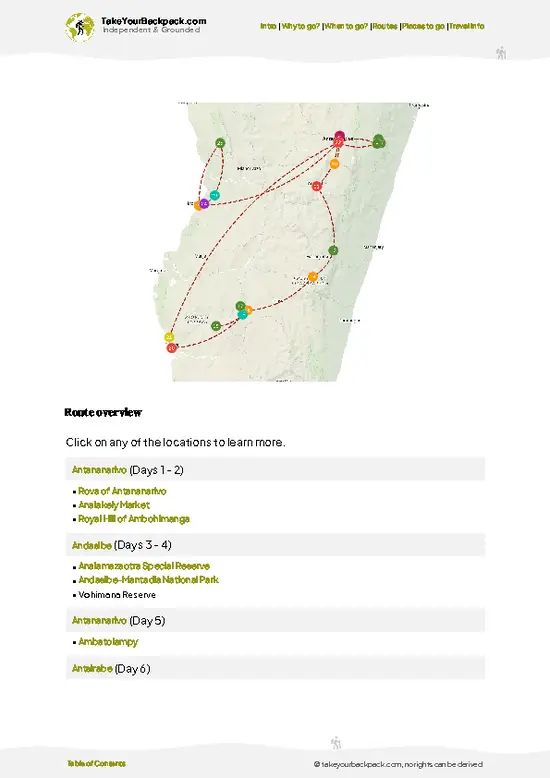
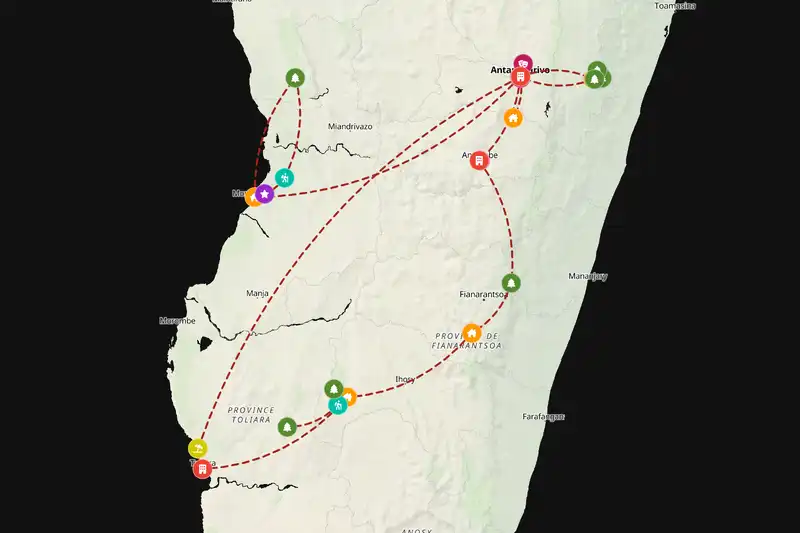
- RN7 classic: Antananarivo – Antsirabe – Ranomafana – Isalo – Ifaty/Toliara. Good mix of lemurs, landscapes, and beaches.
- Or East: Tana – Andasibe (lemurs) – maybe Akanin’ny Nofy (Palmarium) – back to Tana.
You’ll be moving a lot; expect multiple full‑day bus rides.
- 3 weeks (balanced, recommended):
- RN7 route with time to actually hike in Isalo, enjoy hot springs, and not sprint through every town.
- Plus a side trip: either east to Andasibe or down to the coast for a few lazy days.
This lets you absorb the pace of the country instead of racing it.
- 4+ weeks (ideal for backpackers):
- RN7 + Andasibe + a coastal stretch (Ifaty, Anakao, or Île Sainte‑Marie) and maybe one more region like the West (Morondava and the baobabs) if you’re okay with long hauls.
- You can afford buffer days for canceled transport or weather.
Because roads are slow, always add at least 1 buffer day per week of travel. If you only have 2 weeks, cut destinations instead of trying to “fit it all in.” Madagascar rewards depth over breadth.
You can absolutely get around Madagascar without renting a car, but you trade money savings for time and comfort.
Main options for backpackers:
- Taxi‑brousse (shared minivans/bush taxis):
- Cheapest way to move between towns.
- Leave when full, not on a strict schedule.
- Expect cramped seats, slow progress, and frequent stops.
- Good for the RN7 and popular routes; trickier for remote areas.
- Cotisse / higher‑end shuttles (where available):
- Slightly more expensive but safer and more comfortable than random taxi‑brousse.
- Run on semi‑fixed schedules between major cities.
- Local buses and tuk‑tuks in towns:
- Super cheap for short hops.
- Great for getting to markets, bus stations, and budget guesthouses.
- Domestic flights:
- Time‑savers for huge jumps (e.g., Tana to Diego Suarez or Toliara), but not budget‑friendly.
- Useful if you have limited time and want to see far‑flung regions without days on the road.
- Hitching / arranging rides:
- Sometimes you can pay for a seat in a private 4x4 heading your way, especially in remote areas.
- Ask at guesthouses; they often know who’s driving where.
When a car (with driver) becomes worth it:
- You’re traveling as a group of 3–4 and can split costs.
- You want to reach off‑route parks (like Tsingy de Bemaraha) on a tight schedule.
For a solo or couple on a budget, using taxi‑brousse plus the occasional shared tour or arranged transfer is the normal, workable way to move around without your own car.
For budget travelers, “must‑visit” in Madagascar means places that give you maximum wildlife and landscape payoff for the time and money you spend.
Top picks that earn the effort:
- Andasibe–Mantadia National Park (Analamazaotra area):
- Easiest high‑impact lemur experience from Antananarivo.
- Famous for indri (the big teddy‑bear lemurs with the eerie morning calls), plus other species on short guided walks.
- Night walks along the road or in community forests are cheap and excellent.
- RN7 corridor (Antananarivo to Toliara):
- This is the classic backpacker spine: good infrastructure, lots of cheap guesthouses, and varied scenery.
- Key stops:
- Antsirabe: cool climate, lakes, cheap food, good place to break the journey.
- Ranomafana National Park: lush rainforest, multiple lemur species, hot springs nearby.
- Isalo National Park: canyon hikes, natural pools, big skies. You can do 1–3 days of trekking on a budget with local guides.
- Ifaty or nearby beaches near Toliara: chill end‑of‑trip coast time, snorkeling, and cheap bungalows.
- Avenue of the Baobabs (near Morondava):
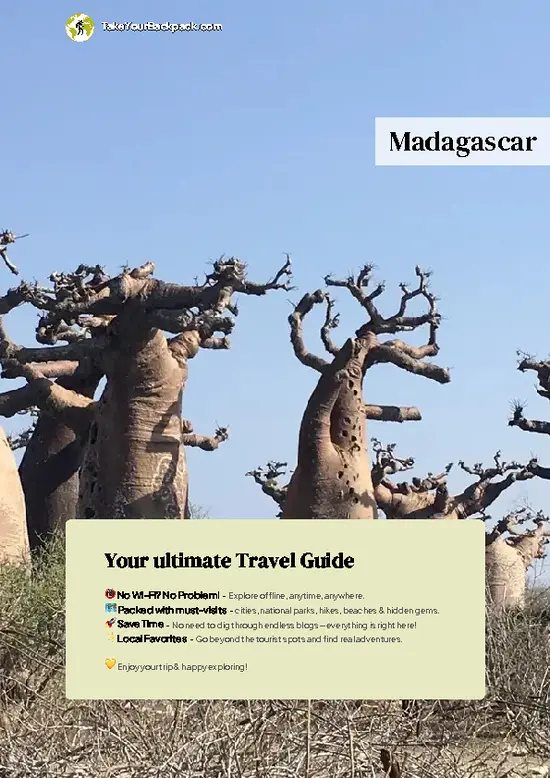
- Iconic baobab alley that actually lives up to the photos.
- Best at sunrise or sunset; easy to combine with a night or two in Morondava.
- Reaching it overland takes time, but if you’re already heading west, it’s worth the detour.
- A relaxed beach base (choose one):
- Ifaty / Mangily (southwest): easier to reach if you’re already doing RN7.
- Île Sainte‑Marie (east): more travel to get there, but great for a slower, low‑key island vibe.
If you have 2–3 weeks, a strong, efficient route is: Antananarivo – Andasibe – RN7 (Antsirabe, Ranomafana, Isalo) – Ifaty/Toliara – back or fly out.
With limited time, the key is to avoid trying to “do all of Madagascar.” Distances are huge, and every extra region adds days of transit.
What to skip if you’re short on time or cash:
- Trying to combine too many far‑flung regions:
- Don’t attempt north (Diego Suarez / Nosy Be), west (Tsingy / Morondava), east (Sainte‑Marie), and south (RN7) in one 2‑ or even 3‑week trip.
- Pick 1–2 regions and do them well instead of collecting pins on a map.
- Tsingy de Bemaraha (if under 3 weeks or on a tight budget):
- Spectacular, but expensive and logistically heavy: rough roads, mandatory 4x4, park fees, guides, and multiple days of travel.
- If you have limited time, that same effort can give you several other parks and a beach stop.
- Extra nights in Antananarivo:
- One full day is enough for most backpackers: markets, a viewpoint, maybe the Rova area.
- Use the saved days for parks or coast instead.
- Multiple beach destinations:
- Choose one beach area that fits your route (Ifaty near Toliara, or Île Sainte‑Marie, or Nosy Be) instead of hopping between several.
- The beaches start to blur together; the real variety is in the inland parks.
- Overpriced, ultra‑packaged resorts and private islands:
- They eat your budget without adding much if your main goal is wildlife and local culture.
If you’re on a 10–14 day trip, a smart “skip list” is: skip Tsingy, skip the far north, skip multiple coasts, and keep your focus on Andasibe + the RN7 corridor. That combo gives you lemurs, rainforest, highlands, canyons, and a beach finish without spending your whole trip in a minivan.