Yes, Portugal is one of the easiest countries in Europe to backpack on your own: distances are short, crime against travelers is low, and hostels are plentiful and well run.
Dorm beds in
Lisbon and
Porto typically cost €20 to 35 a night, a little less in smaller towns. Lisbon to Porto takes about 3 hours by train (€25 to 35) or 3 to 3.5 hours by bus (€10 to 20), and Lisbon to
Lagos is around 4 hours by bus. Younger locals usually speak good English. Independent travel only gets harder in the interior, where villages like
Monsanto or the trails of
Peneda-Gerês have few buses, especially on weekends.
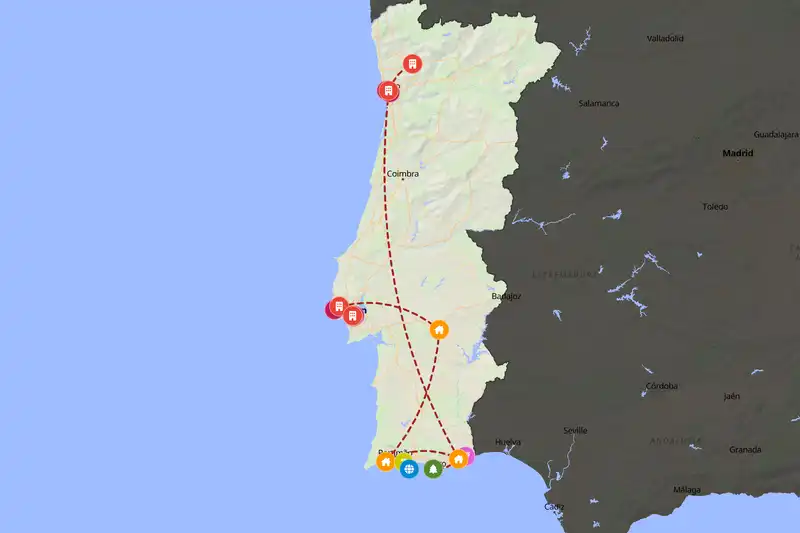
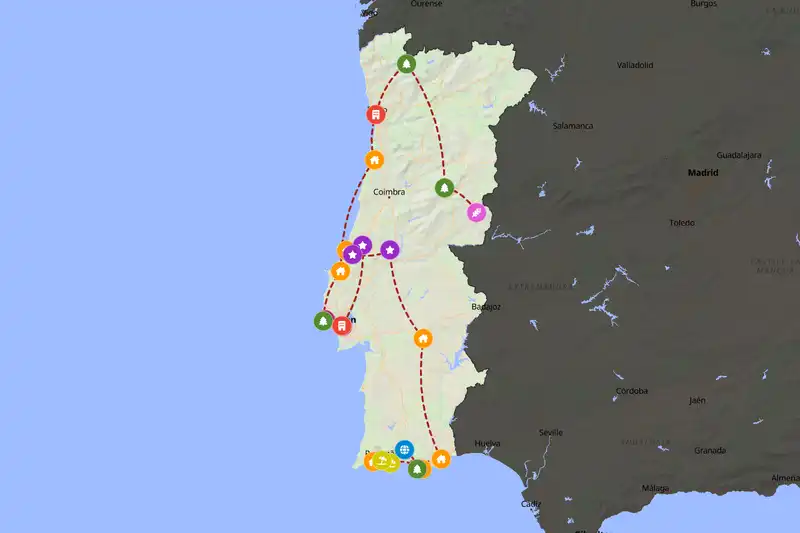
Ten days is the right amount for a first trip to Portugal, enough for Porto, Lisbon and either the central monasteries or the Algarve without rushing.
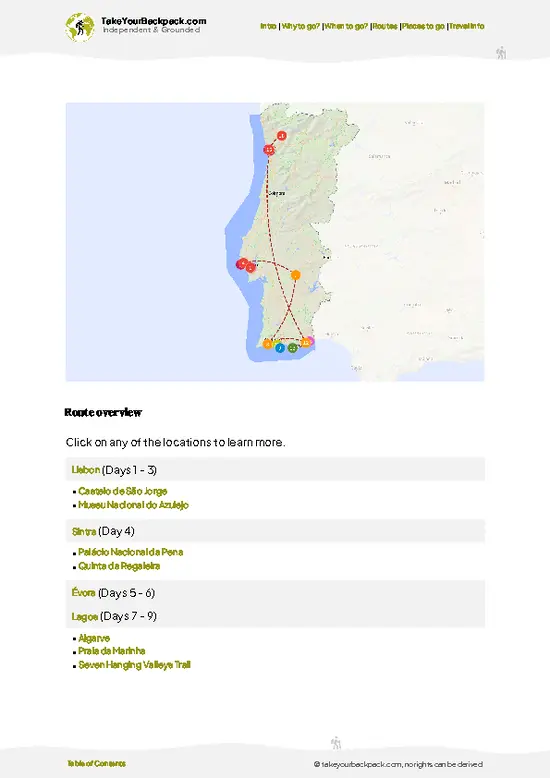
With 5 days, stay around
Lisbon and spend a night in
Sintra. With 10 days, add 3 nights in
Porto plus
Coimbra and
Nazaré, or swap the center for 3 nights in
Lagos. Two weeks lets you cover the mainland properly, adding
Évora,
Tavira and a day in
Guimarães. The islands need their own block: plan 4 to 7 days for
Madeira (about 1 hour 45 minutes by air from Lisbon) and a similar stretch for the
Azores.
Yes, you can travel Portugal comfortably without a car as long as you stick to the coast and the main cities, where trains and intercity buses link everything.
Typical journeys:
Lisbon to
Porto about 3 hours by train, Lisbon to
Faro about 3 to 3.5 hours, Lisbon to
Évora roughly 1.5 hours, and Lisbon to
Sintra 40 minutes for under €3. Rede Expressos and FlixBus fill the gaps, often for €10 to 20. A car becomes worth renting for 2 or 3 days only if you want
Peneda-Gerês,
Serra da Estrela or hill villages such as
Monsanto and
Piódão, where buses run once or twice a day at best.
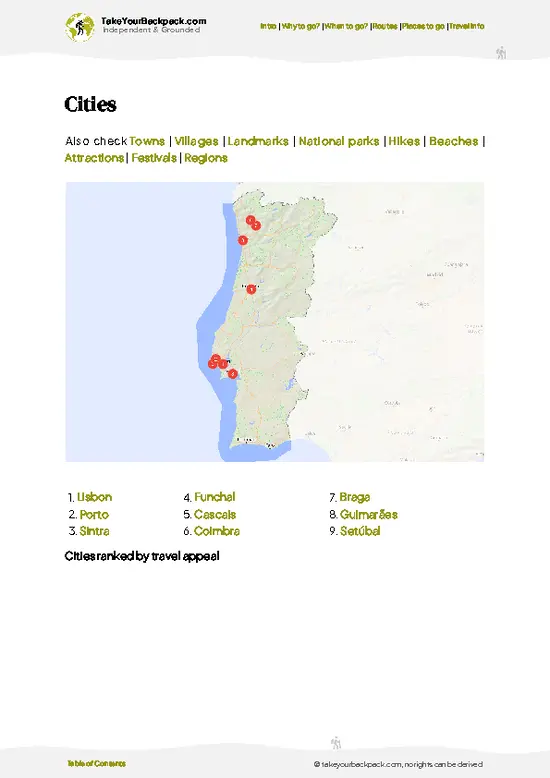
The places in Portugal worth building a trip around are Lisbon, Porto, Sintra and the Algarve cliffs around Lagos, with Évora as the best short detour inland.
Give
Lisbon 3 days for Alfama, the castle and Belém’s
Mosteiro dos Jerónimos, and
Porto 2 to 3 days for the Ribeira and the port lodges. In
Sintra,
Palácio Nacional da Pena costs around €20 for palace and park, and an overnight stay beats the crowds. On the coast,
Praia da Marinha and the
Seven Hanging Valleys Trail are the Algarve at its finest.
Évora is 1.5 hours from Lisbon, and on Madeira the
Pico do Arieiro to Pico Ruivo ridge hike is the country’s top day walk.
If time is tight in Portugal, skip the big resort strips and the long-haul flights to the islands, and put those days into Lisbon, Porto and Sintra instead.
Praia da Rocha in Portimão is a wide beach backed by high-rise hotels; the coves near
Lagos and
Praia da Marinha are far prettier.
Cascais is pleasant but can go if you already have a Sintra day. The
Oceanário de Lisboa is excellent, yet it costs around €25 and half a day you could spend in Alfama.
Livraria Lello often means a 30 to 60 minute queue for a short look inside. On a trip under 10 days, leave
Madeira and the
Azores for a separate visit.
Yes, our itinerary-planner does exactly that. Set your trip length in days, give your interests and travel style, optionally give start- and end location and/or some mandatory stops you would like to include and the itinerary planner creates your personalized routes for Portugal in seconds. Try it out!
Try the itinerary plannerv2.webp)
 Best Backpacking