Short version: yes, you can backpack Sierra Leone independently, but it’s not a plug‑and‑play Southeast Asia situation. It’s more “low‑infrastructure adventure” than “hostel conveyor belt.”
The good news: people are warm, English is widely spoken, and crime against foreigners is more about petty theft than targeted violence if you use normal street sense. You can walk around most towns in daylight, ask for help, and expect people to point you in the right direction rather than hustle you nonstop.
The challenge: logistics. Public transport is informal, schedules are loose, and roads outside main routes can be rough, especially in rainy season. You’ll rely on poda‑podas (minibuses), shared taxis, motorbikes, and your own patience. If you’re used to rigid timetables, this will feel chaotic; if you treat it like part of the trip, it’s fun.
Accommodation for backpackers is improving but still thin. You’ll find budget guesthouses and simple beach lodges rather than classic hostels with dorms and pub crawls. Booking is often done by phone or just showing up. Power cuts and weak Wi‑Fi are normal, so plan offline maps and keep key info saved.
If you’re a first‑time backpacker, it’s doable as long as you’re flexible, okay with basic conditions, and not in a rush. If you’ve already handled West Africa, Central America chicken buses, or rural South Asia, Sierra Leone will feel like a natural next step rather than a shock.
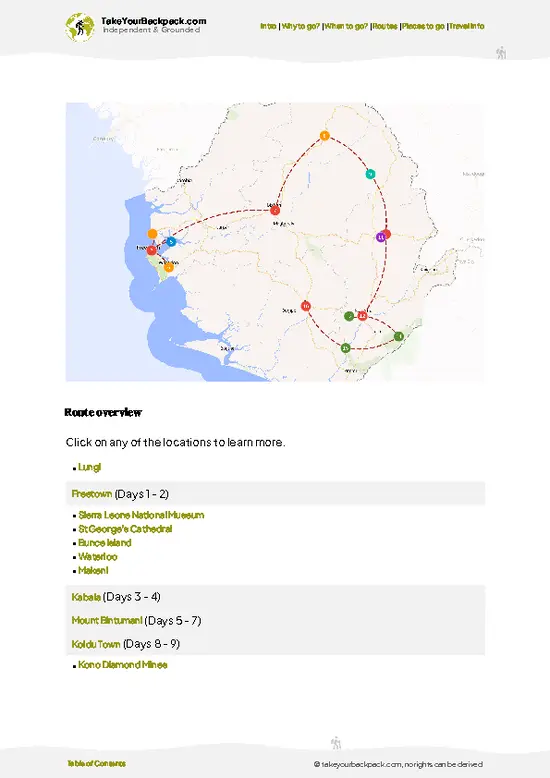
For a solid first look without rushing, 10–14 days works well. That gives you time for Freetown, the beaches, and at least one inland area without spending your whole trip in transit.
Rough breakdown for a 10–14 day trip:
- 2–3 days: Freetown and surrounds (city, history, markets, nearby beaches like Lakka or River No. 2)
- 3–5 days: Banana Islands and/or the main peninsula beaches (Tokeh, Bureh, John Obey)
- 3–5 days: Inland loop (e.g., Bo and Tiwai Island, or Makeni plus a northern town like Kabala)
If you only have 5–7 days, focus on Freetown + peninsula beaches + maybe Banana Islands. You’ll get a strong feel for the country’s energy, coastline, and food without spending half your time in shared taxis.
If you have 3+ weeks, you can slow down and add more remote areas: Kabala for hills and hiking, more time in the south around Tiwai Island and the Gola Forest area, or extra beach days to just switch off. Longer stays pay off here because transport is slow; the more days you have, the less each delay matters.
The key is to avoid over‑stacking your itinerary. Two or three base areas with day trips is better than trying to “do the whole country” and spending every second day in a cramped minibus.
You can absolutely get around Sierra Leone without your own car, but it’s a trade‑off between money and time.
Public options you’ll actually use:
- Poda‑podas: Minibuses running between towns and around cities. Cheapest option, but they leave when full, stop often, and can be cramped. Great for your budget, not great for your spine.
- Shared taxis: Slightly more expensive than poda‑podas, usually faster and a bit more comfortable. Common on popular routes like Freetown–Bo or Freetown–Makeni.
- Okadas (motorbike taxis): Everywhere, especially for short hops or last‑mile connections to beaches and villages. Wear a helmet if you can get one and avoid them at night or in heavy rain.
- Boats: For Banana Islands and some river crossings. These are usually arranged through your guesthouse or directly at the jetty; prices are negotiable but not outrageous if you share.
Where not having a car hurts is flexibility: you’ll wait for vehicles to fill, you’ll sometimes arrive after dark, and you might need to change plans if a road is washed out or a vehicle just doesn’t show. Build buffer time into every travel day and avoid tight same‑day connections like “boat + long bus + border.”
If you’re on a strict budget, public transport is the norm and totally workable. If you have a bit more cash and are short on time, occasionally hiring a private car for specific legs (e.g., Freetown to Tiwai area, or a beach‑hopping day on the peninsula) can save hours and a lot of hassle, but you don’t need it for the whole trip.
For a budget backpacker, the best value in Sierra Leone is the mix of coastline, local life, and a taste of the interior. These are the places that punch above their weight:
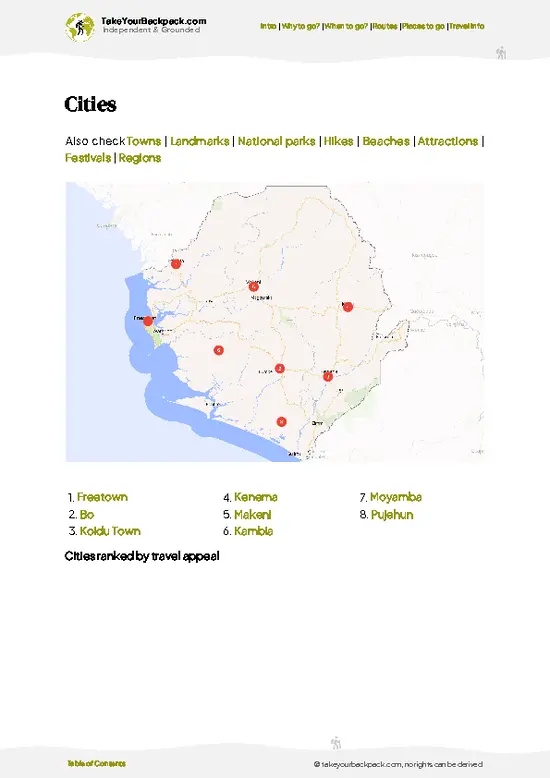
1. Freetown
Not because it’s pretty in a postcard way, but because it’s the country’s brain and heartbeat. Wander the markets, check out the cotton tree area and historic sites tied to the return of freed slaves, and feel the everyday chaos. It’s where you understand the country, not just see it.
2. Freetown Peninsula Beaches (especially Bureh, Tokeh, John Obey, River No. 2)
This is where your backpacking money goes far. Simple beach lodges, fresh fish, surf at Bureh, and long walks on wide, quiet sand. You can live cheaply here if you’re okay with basic rooms and bucket showers. It’s also an easy escape from Freetown without brutal travel days.
3. Banana Islands
Close enough to reach in a day, far enough to feel like a different world. Good for snorkeling, laid‑back village life, and camp‑style stays. It’s a great reset spot after Freetown: no traffic, just sea, simple food, and slow evenings.
4. Tiwai Island (and the surrounding south)
If you want wildlife and forest without blowing your budget on a full‑on safari, Tiwai is the move. It’s known for primates, birdlife, and river scenery. Getting there is a bit of a mission, but that’s part of the charm, and you’ll meet other travelers who are serious about being there, not just ticking a box.
5. An Inland Town Base (Bo, Makeni, or Kabala)
Pick at least one. Bo and Makeni are good for seeing everyday urban life outside the capital, with cheap food and guesthouses. Kabala, further north, adds hills and hiking, plus a cooler climate. Any of these give you a sense of the country beyond the coast, which is what makes the trip feel complete.
If you’re short on time or cash, skip anything that’s mostly long transit for a slightly different version of what you already saw.
1. Deep, Multi‑Stop Cross‑Country Loops
Trying to cram Freetown, all the peninsula beaches, Banana Islands, Bo, Kenema, Kabala, and Gola Forest into 7–10 days just means you’ll see a lot of bus stations. Pick one inland focus (Tiwai + Bo, or Kabala, or Makeni) and drop the rest.
2. Extra Inland Cities That Feel Similar
Bo and Makeni are interesting, but you don’t need both on a short trip. They’re variations on the same theme: busy regional hubs with markets, traffic, and local nightlife. Choose one as your inland base and skip the other unless you have a specific reason.
3. Over‑Ambitious National Park Itineraries
Some parks and reserves are hard to reach, have limited infrastructure, and can be expensive once you factor in guides and transport. If you’re already doing Tiwai Island or a well‑organized forest visit, you can skip more remote parks on a short, budget trip and save them for a longer, better‑planned return.
4. Multiple Beach Bases on the Same Peninsula
You don’t need to sleep at every single beach. Pick one or two (for example, Bureh for surf and vibe, Tokeh or John Obey for more chill) and visit others as day trips if you really want to. Changing accommodation every night just burns time and transport money.
5. High‑End Resorts and Imported Experiences
If you’re backpacking, you won’t get good value from top‑tier resorts or activities priced for short‑stay package tourists. They can be nice, but they don’t show you much you can’t get from a simpler lodge plus a walk through the nearest village. Put that money into extra days, not fancy pillows.