Short version: yes, Egypt is absolutely doable as an independent backpacker, but it’s not a “set it and forget it” country. It rewards patience, a sense of humor, and a bit of homework.
For budget travelers, the big advantages are: cheap intercity transport, plenty of low-cost guesthouses, and a long-established tourist trail where English is widely understood in the main hubs (Cairo, Giza, Luxor, Aswan, Dahab, Hurghada). You can show up with a rough plan and fill in the gaps as you go.
The main challenges are: aggressive touts around major sights, dual pricing (locals vs foreigners), and occasionally chaotic logistics. None of this is dangerous if you stay aware, but it can be tiring. The trick is to set boundaries early and clearly: learn a few phrases like “la, shukran” (no, thank you), walk with purpose, and don’t feel bad about ignoring persistent sellers.
Booking trains, buses, and budget flights is straightforward once you know the main companies and routes. Many hostels and guesthouses will help you buy tickets for a small fee, which is often worth it to avoid station confusion. In touristy areas, you can negotiate almost everything: taxis, felucca rides, tours, and even some hotel rates if you’re staying multiple nights.
Solo travelers, including solo women, backpack Egypt all the time. Expect more attention than in Europe or Southeast Asia, but not constant danger. Dress on the conservative side outside beach towns, avoid walking alone down dark, empty streets late at night, and use registered taxis or ride-hailing apps where available.
If you’ve backpacked in India, Morocco, or Southeast Asia, Egypt will feel intense but manageable. If this is your first “big” trip, it’s still doable—just move a little slower, give yourself rest days, and lean on hostels for local advice and social backup.
For a first-time backpacking trip, 10–14 days is the sweet spot: enough to see the big hitters without turning your trip into a sprint.
Rough time guidelines for budget travelers:
5–7 days (fast, focused)You’ll have to choose between “Nile + Cairo” or “Red Sea + Cairo.”
• Cairo & Giza: 3–4 days for the Pyramids, Egyptian Museum (or its newer version), Islamic Cairo, and Coptic Cairo.
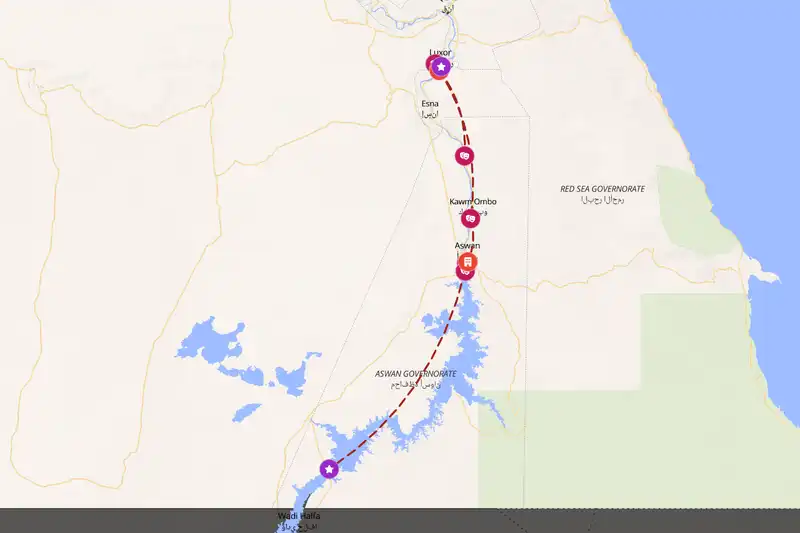
• Luxor OR Aswan: 3–4 days for temples and tombs (Luxor) or Nubian culture and Abu Simbel side trip (Aswan).
This is tight and transport days will eat time, but it works if you accept a busy schedule.
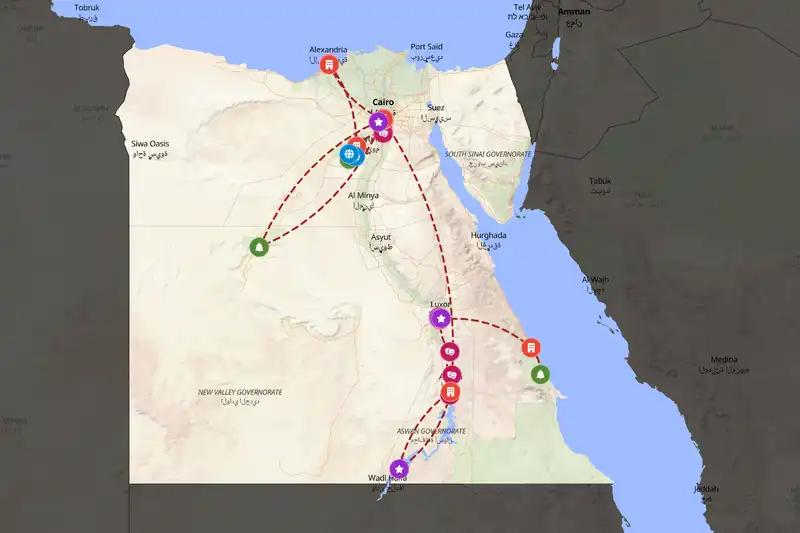
10–14 days (ideal first trip)This lets you do the classic loop without rushing:
• Cairo & Giza: 3–4 days.
• Luxor: 3 days (West Bank tombs, Karnak, Luxor Temple, maybe a hot-air balloon if you want a splurge).
• Aswan: 2–3 days (Philae Temple, Nubian village, optional Abu Simbel day trip).
• Dahab or Hurghada: 3–4 days for cheap diving, snorkeling, and a slower pace.
This length gives you buffer for delayed trains, heat fatigue, and the occasional “I just need a nap and some falafel” day.
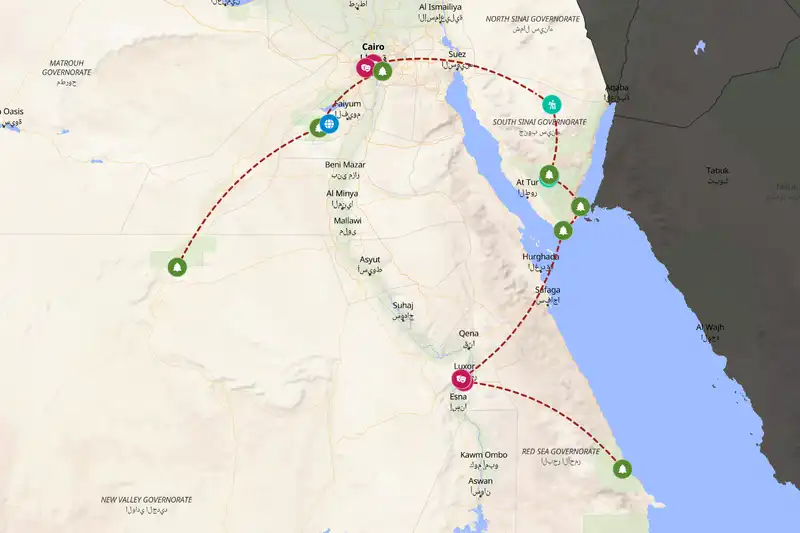
3+ weeks (deep dive)If you have more time, you can:
• Add Siwa Oasis for desert vibes and hot springs.
• Spend longer in Dahab for diving courses.
• Explore less-visited sites like Abydos and Dendera from Luxor.
• Slow down and travel mostly by train and bus to save money.
If you’re truly short on time and cash, prioritize fewer places and more days in each. Egypt is more enjoyable when you’re not temple-hopping on four hours of sleep.
You can absolutely get around Egypt without a car, and for backpackers it’s usually cheaper, safer, and less stressful to skip driving entirely.
Trains• The main backpacker spine is the Cairo–Luxor–Aswan rail line. Trains are frequent and reasonably priced.
• Day trains are cheaper and more social; night trains save on accommodation but can be pricier. For budget travelers, a regular seated or basic sleeper train is usually enough.
• Book in advance for popular routes and times, especially around holidays.
Buses & minibuses• Long-distance buses connect Cairo with Hurghada, Sharm el-Sheikh, Dahab, and other cities. They’re cheap and reasonably comfortable.
• Minibuses and shared vans handle shorter hops between towns. They’re very budget-friendly but can be cramped; good for short distances, not overnight marathons.
Domestic flights• Budget flights can be worth it if your time is tight, especially Cairo–Luxor, Cairo–Aswan, or Cairo–Sharm el-Sheikh.
• For strict budget travelers with more time than money, trains and buses usually win.
City transport• Cairo has a metro that’s cheap and efficient for major areas.
• Taxis and ride-hailing apps are common in big cities and tourist hubs. Always agree on a price beforehand if there’s no meter.
• In smaller towns like Luxor and Aswan, you’ll use taxis, tuk-tuks, or horse carriages. Negotiate clearly before getting in.
Boats & feluccas• In Aswan and Luxor, boats and feluccas are both transport and experience. They’re not the fastest way to move, but they’re memorable and affordable if you share with others.
Renting a car is rarely worth it for backpackers: traffic is hectic, parking is a pain, and police checkpoints add stress. Public transport plus the occasional taxi or flight covers almost every itinerary you’ll want.
For a budget backpacker, “must-visit” means places that deliver big experiences without requiring luxury tours. These are the heavy hitters that earn their hype.
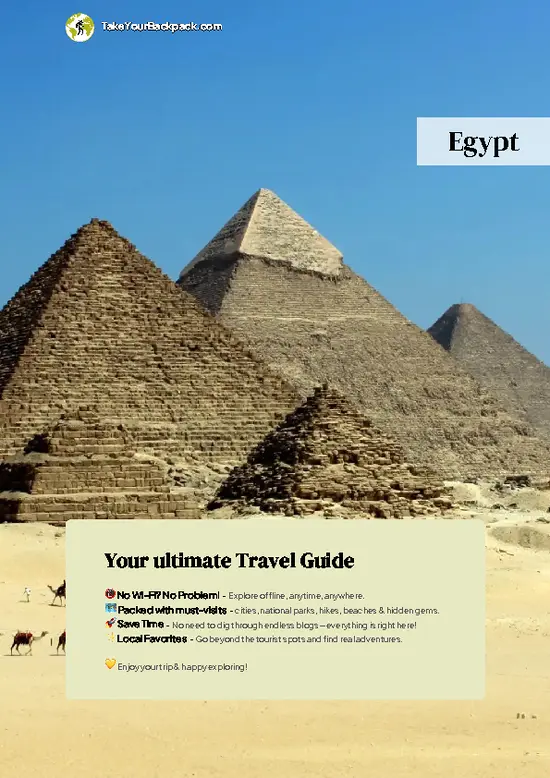
Cairo & Giza• Pyramids of Giza and the Sphinx: Go early in the morning or late afternoon to dodge the worst heat and crowds. Skip the overpriced camel rides unless you really want the photo; if you do, agree on the exact price and duration first.
• Egyptian Museum (or its newer counterpart): This is where the history you see in the temples actually clicks. Even a quick 2–3 hour visit makes the rest of Egypt feel more meaningful.
• Islamic Cairo: Khan el-Khalili market, old mosques, and rooftop views. Great for cheap food, tea, and people-watching.
Luxor• West Bank: Valley of the Kings, Hatshepsut’s Temple, and a few carefully chosen tombs. A shared taxi or group tour keeps costs down.
• East Bank: Karnak and Luxor Temple. Karnak at sunset is one of those “okay, this really is world-class” moments.
Luxor is where your money buys maximum history per dollar.
Aswan• Philae Temple: Beautiful island setting, especially at sunrise or sunset.
• Nubian culture: A visit to a Nubian village (ideally arranged through your guesthouse) is a nice break from pure ruins.
• Abu Simbel (day trip): Not cheap or close, but if you’re already in Aswan and can afford the time and cost, it’s one of the most impressive sites in the country.
Dahab (or another Red Sea town)• Dahab is backpacker central: cheap hostels, relaxed vibe, and some of the most affordable diving and snorkeling you’ll find anywhere.
• Even if you don’t dive, a couple of days here to swim, snorkel, and reset your brain after temple overload is worth it.
Optional but excellent if you have time• Siwa Oasis: Long journey, but great if you want desert landscapes, hot springs, and a slower pace.
• A short felucca trip on the Nile: Not mandatory, but a one-night sail between Aswan and a nearby village can be a highlight if you like simple, slow travel.
If you hit Cairo/Giza, Luxor, Aswan (with or without Abu Simbel), and Dahab, you’ve done a very strong first pass through Egypt.
If you’re short on time or cash, you don’t need to see everything. Egypt is dense with sights, and trying to do it all just turns your trip into a checklist.
What many backpackers can skip• Too many tombs in one day: After 3–4 tombs in the Valley of the Kings, they start to blur together. Pick a few good ones and save your energy and ticket money.
• Multiple similar temples: Karnak + Luxor + one or two West Bank temples already give you a rich temple experience. You don’t need every single temple on every tour brochure.
• Overpriced sound-and-light shows: The tech feels dated, and the ticket prices are high for what you get. If you’re on a budget, that money goes further on a good meal or an extra night in Dahab.
Places and experiences you can deprioritize• Sharm el-Sheikh: More package resort, less backpacker character. If you’re already going to Dahab or Hurghada, you don’t need Sharm as well.
• Long Nile cruises: Multi-day cruises can be expensive and lock you into a fixed schedule. For budget travelers, trains + a short felucca ride or a simple day boat trip give you the Nile experience without draining your wallet.
• Extra days in Cairo malls and modern districts: One evening to see the “modern city” side is enough. Your limited days are better spent on history, local neighborhoods, or the Red Sea.
Big-ticket maybe-skips if you’re very tight on time• Abu Simbel: It’s incredible, but it’s a long, early-morning trip and not cheap. If you only have a week, you might prefer to spend that day exploring more of Luxor or relaxing in Dahab.
• Siwa Oasis: Fantastic if you have 2–3 extra days, but the travel time is long. On a short trip, it can eat days you might want for Luxor or the Red Sea.
When in doubt, cut breadth and keep depth: fewer cities, more days in each. Egypt rewards lingering in a place, getting to know your local falafel spot, and seeing the big sights at a relaxed pace instead of racing from bus to bus.