×
Egypt🇪🇬 | 21 days itinerary

Egypt in 21 Days

By Johan Kruseman 🇳🇱 | Updated May 11, 2026
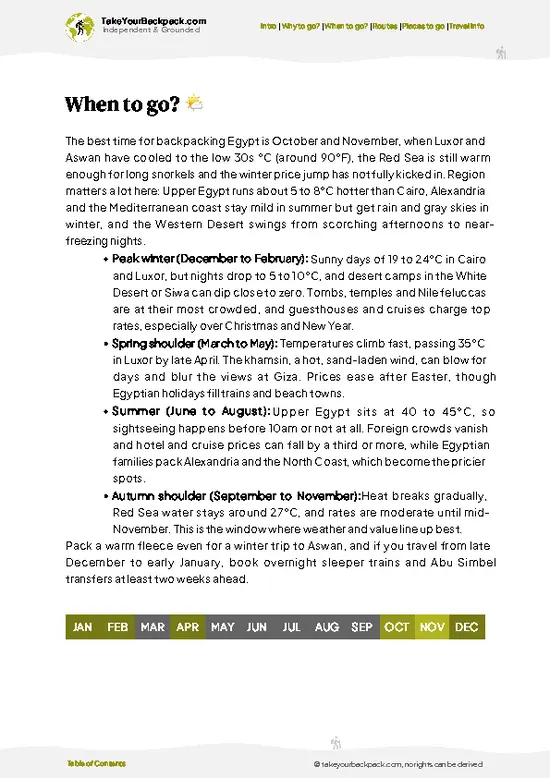
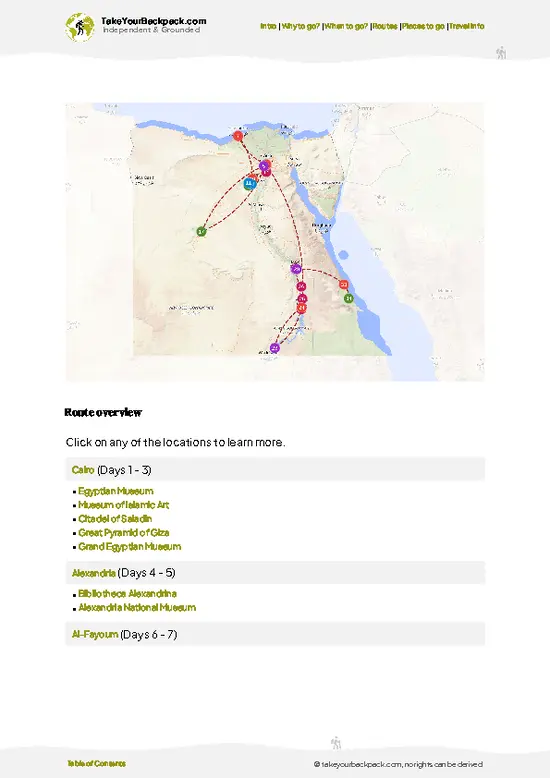
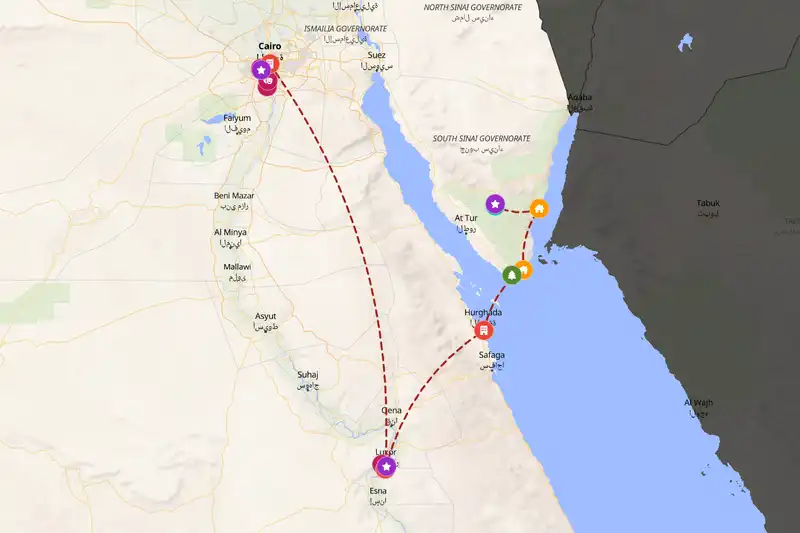
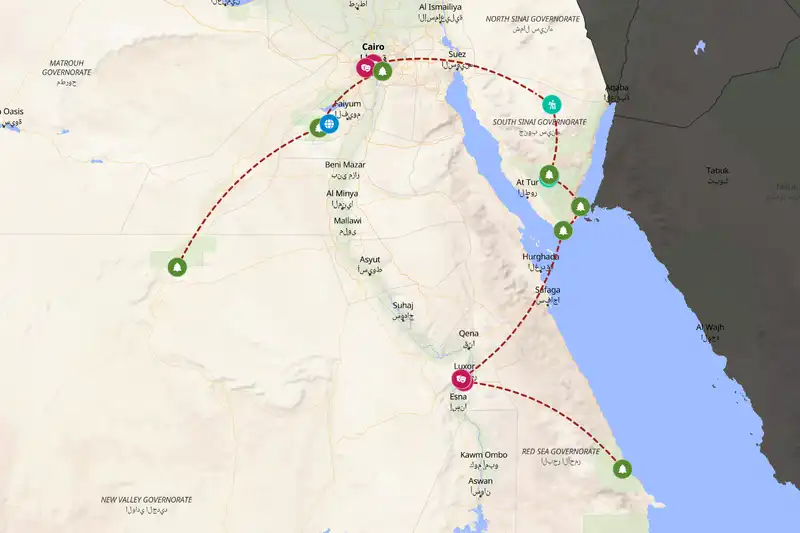
This 21-day route is for travelers who want to really work the map of Egypt: big-name sites, Red Sea downtime, Sinai hikes, and a couple of quieter corners, using a mix of domestic flights, trains, buses, and shared taxis. The pace is adventurous but not punishing, with long moves spaced out by multi-night stays so you can actually breathe between temples, reefs, and mountain trails.

Days 1-4: Cairo and Giza - Deep-Dive into Ancient and Islamic Heritage

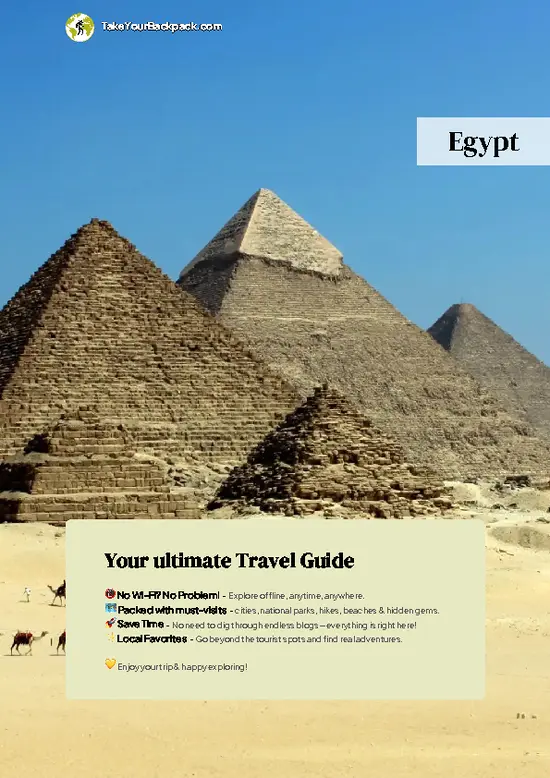
Begin in Cairo, giving yourself time to layer the city instead of just skimming the surface. Spend one day between the Egyptian Museum and the Grand Egyptian Museum, using the contrast between old-school display cases and modern curation to get a handle on Egypt’s story before you hit the sites themselves. Another full day goes to the Great Pyramid of Giza, the Saqqara Necropolis, and the Dahshur Pyramids, where you can actually climb into the Bent or Red Pyramid if you’re up for steep passages. Use your remaining time to explore the Coptic read more 👉
This 21-day route is for travelers who want to really work the map of Egypt: big-name sites, Red Sea downtime, Sinai hikes, and a couple of quieter corners, using a mix of domestic flights, trains, buses, and shared taxis. The pace is adventurous but not punishing, with long moves spaced out by multi-night stays so you can actually breathe between temples, reefs, and mountain trails.

Days 1-4: Cairo and Giza - Deep-Dive into Ancient and Islamic Heritage

Begin in Cairo, giving yourself time to layer the city instead of just skimming the surface. Spend one day between the Egyptian Museum and the Grand Egyptian Museum, using the contrast between old-school display cases and modern curation to get a handle on Egypt’s story before you hit the sites themselves. Another full day goes to the Great Pyramid of Giza, the Saqqara Necropolis, and the Dahshur Pyramids, where you can actually climb into the Bent or Red Pyramid if you’re up for steep passages. Use your remaining time to explore the Coptic Museum and the Islamic Art Museum in Cairo, plus a walk up to the Citadel of Saladin, which gives you a sense of Cairo’s medieval layers and big-sky views over the city.

Days 5-7: Fayoum and Whale Valley - Desert Curves and Fossil Beds

Head to the Fayoum Oasis for a slower, more rural rhythm. Base yourself in or near Fayoum while you explore Wadi El Rayan National Park, where desert cliffs, dunes, and lakes collide in a way that feels worlds away from Cairo’s density. Then spend a day in Wadi Al-Hitan (Whale Valley), walking among fossilized whale skeletons and sandstone formations that tell a story millions of years older than the pyramids. If you have extra energy, swing by Wadi El Rayan National Park again for sunset or a second, more relaxed wander, letting the desert quiet reset your brain before you dive back into temples.

Days 8-11: Luxor and the Nile Corridor - Temples, Tombs, and River Life

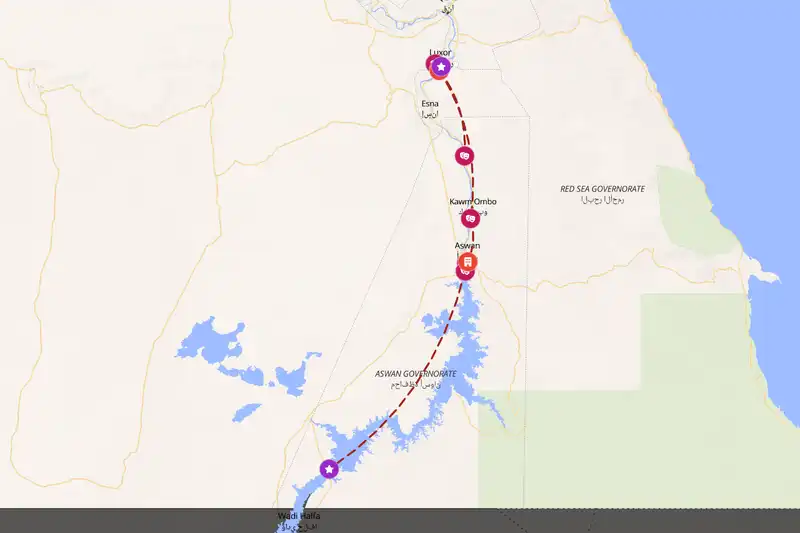
Travel south to Luxor, the heart of pharaonic Egypt, and give it the time it deserves. Spend a full day at the Karnak Temple Complex, then another on the West Bank at the Valley of the Kings and the Temple of Hatshepsut, choosing a handful of tombs to savor rather than racing through every open door. Reserve an evening for Luxor Temple, which is at its best in the blue hour and after dark. Continue downriver by train, stopping in Edfu to visit the Temple of Edfu, one of the best-preserved Ptolemaic temples, and in Kom Ombo to see the riverside Temple of Kom Ombo, where the double dedication and Nile-side setting make it feel different from everything you’ve seen so far.

Days 12-14: Aswan and Abu Simbel - Southern Calm and Colossal Statues

Roll into Aswan, where the Nile widens and the pace slows. Take a boat out to the Temple of Philae, lingering in the colonnades and reliefs instead of just snapping the classic island shot, then spend time in the Nubian Museum to understand the cultures that shaped this stretch of the river. From here, head further south to the town of Abu Simbel to visit the Abu Simbel Temples, ideally staying overnight so you can see the site in softer morning or late-afternoon light; the scale and the story of their relocation make this one of the most impressive feats of both ancient and modern engineering on the trip.

Days 15-17: Marsa Alam and Wadi El Gemal - Red Sea Reefs and Coastal Desert

Cut across to the Red Sea coast and base yourself in Marsa Alam, where the vibe shifts from temples to turquoise water and coral. Use a day to explore Wadi El Gemal National Park, where coastal desert, wadis, and reefs all sit within reach, and another to head into Wadi El Gemal itself for a more land-focused look at the region’s wildlife and Bedouin routes. The remaining time is for snorkeling or diving off Marsa Alam’s coast, letting your brain process the last two weeks while your body just floats over coral gardens.

Days 18-21: Sinai Peaks and Reefs - Sharm, Ras Muhammad, and Mount Sinai

Fly or bus up to Sharm El Sheikh, using it as a launchpad for both sea and mountains. Spend a day in Ras Muhammad National Park, where shore entries and boat trips get you over some of the Red Sea’s most colorful reefs without needing expedition-level logistics. Then head inland into the Saint Katherine Protectorate, where you can climb Mount Sinai for sunrise or sunset and visit the area around the Sinai Trail to get a feel for the high desert and Bedouin culture, even if you only walk a short segment. Return to Sharm El Sheikh for your final night, letting one last swim or beach walk close out a route that’s taken you from museum halls to fossil deserts, Nile temples, coral walls, and granite peaks.
Loading the map 🌍
film
0
0
0a
Cairo
Pixabay
film
1
1
1a
Egyptian Museum
Pixabay
film
2
2
2a
Grand Egyptian Museum
film
3
3
3a
Great Pyramid of Giza
Pixabay
film
4
4
4a
Fayoum Oasis
film
5
5
5a
Wadi Al-Hitan (Whale Valley)
film
6
6
6a
Karnak Temple Complex
film
7
7
7a
Valley of the Kings
film
8
8
8a
Temple of Hatshepsut
film
9
9
9a
Edfu
film
10
10
10a
Temple of Edfu
film
11
11
11a
Temple of Philae
film
12
12
12a
Abu Simbel
film
13
13
13a
Marsa Alam
film
14
14
14a
Wadi El Gemal
film
15
15
15a
Wadi El Gemal
film
16
16
16a
Sharm El Sheikh
film
17
17
17a
Ras Muhammad
film
18
18
18a
Saint Katherine Protectorate
film
19
19
19a
Mount Sinai
film
20
20
20a
Sinai Trail

✈️ The backpacker research shortcutEgypt Travel Guide

An offline-friendly backpacking guide with optimized travel routes, ranked highlights, transport advice, and the best areas to stay.
example page 0 from our offline Travel Guide for Egyptexample page 1 from our offline Travel Guide for Egyptexample page 2 from our offline Travel Guide for Egyptexample page 3 from our offline Travel Guide for Egyptexample page 4 from our offline Travel Guide for Egyptexample page 5 from our offline Travel Guide for Egypt
The digital guide (375 pages) contains:
116 highlights, ranked by travel appeal
Optimized 7, 14 & 21-day travel routes
Best neighborhoods to stay
How to get around
Offline-friendly for travel without Wi-Fi
👉 See all 30+ guide features

📅 Plan smarter in minutes, not weeks
Month by month travel advice
Festivals & national holidays
Budget expectations

🗺️ Go to the right places, skip the overrated ones
Honest pros & cons of destinations
Top hikes, parks & viewpoints
Lesser-known places most travelers miss
Clear “worth it vs skip it” guidance

🛏️ Travel smoothly without rookie mistakes
Best areas to stay
Transport systems explained simply
Common scams & safety advice
SIM cards, money & practical tips

🌍 Understand the country, not just visit it
Culture & traditions
52 Essential phrases & customs
Festivals worth planning around
Traveler-friendly historical context
Insights that make places more meaningful

📱 Built for real travel conditions
Fully downloadable PDF
Works completely offline
Optimized for phone use
Useful in remote areas & buses
Everything in one place
Save weeks of stressful planning
Get instant access to the full guide directly. 30-day money-back guarantee.


Sent to your inbox immediately after payment • 100% Secure Checkout
Best Backpacking Travel Advisor 2025 tourism awardBest Backpacking
Travel Advisor
2025
What others say about Take Your Backpack Guides:
⭐⭐⭐⭐⭐
Fantastic, amazing amount of information!
⭐⭐⭐⭐⭐
My goodness this is amazing, it's what I've been looking for hats off too you!
⭐⭐⭐⭐⭐
I think this is absolutely BRILLIANT
⭐⭐⭐⭐
Very complete and informative. It's still missing places, but I gotta to commend you
⭐⭐⭐⭐⭐
This is truly amazing, thank you, can't wait to explore it with my kids!
⭐⭐⭐⭐⭐
Awesome resource, thank you!
⭐⭐⭐⭐⭐
This is amazing! Can't wait to explore the ones I haven't seen
⭐⭐⭐⭐
I love this! Well done, great idea.
⭐⭐⭐⭐⭐
Thanks for taking the time to make this gem!
⭐⭐⭐⭐⭐
This might be the best website I've ever seen.
⭐⭐⭐⭐⭐
Congratulations, and thank you so much for your work; it's incredibly valuable.
⭐⭐⭐⭐
In all seriousness I think you did a great job pointing out the important spots
⭐⭐⭐⭐⭐
10/10 very good
⭐⭐⭐⭐⭐
As someone who's only just starting to visit regularly this is awesome, thank you.
⭐⭐⭐⭐
Thank you very much! I'm going to visit my dad, it's going to be very useful!
⭐⭐⭐⭐⭐
This is really cool! We'll be travelling for the first time and this definitely come in handy.
⭐⭐⭐⭐⭐
You are now our minister of culture, congratulations 👨‍💼
⭐⭐⭐⭐⭐
Just wanted to tell you that this is a pearl! Going to follow your recommendations.
⭐⭐⭐⭐⭐
This is so cool. I'll definitely be using the resource for my travels soon.
⭐⭐⭐⭐⭐
This is very impressive! Good work.
⭐⭐⭐⭐⭐
This is an amazing and informative site. Very well done!

🧭 RouteGot More or Less Time?

Travel Egypt your way — from a quick highlights trip to a slow-paced adventure.

🙋 FAQCommon Questions

Short version: yes, Egypt is absolutely doable as an independent backpacker, but it’s not a “set it and forget it” country. It rewards patience, a sense of humor, and a bit of homework.

For budget travelers, the big advantages are: cheap intercity transport, plenty of low-cost guesthouses, and a long-established tourist trail where English is widely understood in the main hubs (Cairo, Giza, Luxor, Aswan, Dahab, Hurghada). You can show up with a rough plan and fill in the gaps as you go.

The main challenges are: aggressive touts around major sights, dual pricing (locals vs foreigners), and occasionally chaotic logistics. None of this is dangerous if you stay aware, but it can be tiring. The trick is to set boundaries early and clearly: learn a few phrases like “la, shukran” (no, thank you), walk with purpose, and don’t feel bad about ignoring persistent sellers.

Booking trains, buses, and budget flights is straightforward once you know the main companies and routes. Many hostels and guesthouses will help you buy tickets for a small fee, which is often worth it to avoid station confusion. In touristy areas, you can negotiate almost everything: taxis, felucca rides, tours, and even some hotel rates if you’re staying multiple nights.

Solo travelers, including solo women, backpack Egypt all the time. Expect more attention than in Europe or Southeast Asia, but not constant danger. Dress on the conservative side outside beach towns, avoid walking alone down dark, empty streets late at night, and use registered taxis or ride-hailing apps where available.

If you’ve backpacked in India, Morocco, or Southeast Asia, Egypt will feel intense but manageable. If this is your first “big” trip, it’s still doable—just move a little slower, give yourself rest days, and lean on hostels for local advice and social backup.
For a first-time backpacking trip, 10–14 days is the sweet spot: enough to see the big hitters without turning your trip into a sprint.

Rough time guidelines for budget travelers:

5–7 days (fast, focused)
You’ll have to choose between “Nile + Cairo” or “Red Sea + Cairo.”
• Cairo & Giza: 3–4 days for the Pyramids, Egyptian Museum (or its newer version), Islamic Cairo, and Coptic Cairo.
• Luxor OR Aswan: 3–4 days for temples and tombs (Luxor) or Nubian culture and Abu Simbel side trip (Aswan).
This is tight and transport days will eat time, but it works if you accept a busy schedule.

10–14 days (ideal first trip)
This lets you do the classic loop without rushing:
• Cairo & Giza: 3–4 days.
• Luxor: 3 days (West Bank tombs, Karnak, Luxor Temple, maybe a hot-air balloon if you want a splurge).
• Aswan: 2–3 days (Philae Temple, Nubian village, optional Abu Simbel day trip).
• Dahab or Hurghada: 3–4 days for cheap diving, snorkeling, and a slower pace.
This length gives you buffer for delayed trains, heat fatigue, and the occasional “I just need a nap and some falafel” day.

3+ weeks (deep dive)
If you have more time, you can:
• Add Siwa Oasis for desert vibes and hot springs.
• Spend longer in Dahab for diving courses.
• Explore less-visited sites like Abydos and Dendera from Luxor.
• Slow down and travel mostly by train and bus to save money.

If you’re truly short on time and cash, prioritize fewer places and more days in each. Egypt is more enjoyable when you’re not temple-hopping on four hours of sleep.
You can absolutely get around Egypt without a car, and for backpackers it’s usually cheaper, safer, and less stressful to skip driving entirely.

Trains
• The main backpacker spine is the Cairo–Luxor–Aswan rail line. Trains are frequent and reasonably priced.
• Day trains are cheaper and more social; night trains save on accommodation but can be pricier. For budget travelers, a regular seated or basic sleeper train is usually enough.
• Book in advance for popular routes and times, especially around holidays.

Buses & minibuses
• Long-distance buses connect Cairo with Hurghada, Sharm el-Sheikh, Dahab, and other cities. They’re cheap and reasonably comfortable.
• Minibuses and shared vans handle shorter hops between towns. They’re very budget-friendly but can be cramped; good for short distances, not overnight marathons.

Domestic flights
• Budget flights can be worth it if your time is tight, especially Cairo–Luxor, Cairo–Aswan, or Cairo–Sharm el-Sheikh.
• For strict budget travelers with more time than money, trains and buses usually win.

City transport
• Cairo has a metro that’s cheap and efficient for major areas.
• Taxis and ride-hailing apps are common in big cities and tourist hubs. Always agree on a price beforehand if there’s no meter.
• In smaller towns like Luxor and Aswan, you’ll use taxis, tuk-tuks, or horse carriages. Negotiate clearly before getting in.

Boats & feluccas
• In Aswan and Luxor, boats and feluccas are both transport and experience. They’re not the fastest way to move, but they’re memorable and affordable if you share with others.

Renting a car is rarely worth it for backpackers: traffic is hectic, parking is a pain, and police checkpoints add stress. Public transport plus the occasional taxi or flight covers almost every itinerary you’ll want.
For a budget backpacker, “must-visit” means places that deliver big experiences without requiring luxury tours. These are the heavy hitters that earn their hype.

Cairo & Giza
• Pyramids of Giza and the Sphinx: Go early in the morning or late afternoon to dodge the worst heat and crowds. Skip the overpriced camel rides unless you really want the photo; if you do, agree on the exact price and duration first.
• Egyptian Museum (or its newer counterpart): This is where the history you see in the temples actually clicks. Even a quick 2–3 hour visit makes the rest of Egypt feel more meaningful.
• Islamic Cairo: Khan el-Khalili market, old mosques, and rooftop views. Great for cheap food, tea, and people-watching.

Luxor
• West Bank: Valley of the Kings, Hatshepsut’s Temple, and a few carefully chosen tombs. A shared taxi or group tour keeps costs down.
• East Bank: Karnak and Luxor Temple. Karnak at sunset is one of those “okay, this really is world-class” moments.
Luxor is where your money buys maximum history per dollar.

Aswan
• Philae Temple: Beautiful island setting, especially at sunrise or sunset.
• Nubian culture: A visit to a Nubian village (ideally arranged through your guesthouse) is a nice break from pure ruins.
• Abu Simbel (day trip): Not cheap or close, but if you’re already in Aswan and can afford the time and cost, it’s one of the most impressive sites in the country.

Dahab (or another Red Sea town)
• Dahab is backpacker central: cheap hostels, relaxed vibe, and some of the most affordable diving and snorkeling you’ll find anywhere.
• Even if you don’t dive, a couple of days here to swim, snorkel, and reset your brain after temple overload is worth it.

Optional but excellent if you have time
• Siwa Oasis: Long journey, but great if you want desert landscapes, hot springs, and a slower pace.
• A short felucca trip on the Nile: Not mandatory, but a one-night sail between Aswan and a nearby village can be a highlight if you like simple, slow travel.

If you hit Cairo/Giza, Luxor, Aswan (with or without Abu Simbel), and Dahab, you’ve done a very strong first pass through Egypt.
If you’re short on time or cash, you don’t need to see everything. Egypt is dense with sights, and trying to do it all just turns your trip into a checklist.

What many backpackers can skip
• Too many tombs in one day: After 3–4 tombs in the Valley of the Kings, they start to blur together. Pick a few good ones and save your energy and ticket money.
• Multiple similar temples: Karnak + Luxor + one or two West Bank temples already give you a rich temple experience. You don’t need every single temple on every tour brochure.
• Overpriced sound-and-light shows: The tech feels dated, and the ticket prices are high for what you get. If you’re on a budget, that money goes further on a good meal or an extra night in Dahab.

Places and experiences you can deprioritize
• Sharm el-Sheikh: More package resort, less backpacker character. If you’re already going to Dahab or Hurghada, you don’t need Sharm as well.
• Long Nile cruises: Multi-day cruises can be expensive and lock you into a fixed schedule. For budget travelers, trains + a short felucca ride or a simple day boat trip give you the Nile experience without draining your wallet.
• Extra days in Cairo malls and modern districts: One evening to see the “modern city” side is enough. Your limited days are better spent on history, local neighborhoods, or the Red Sea.

Big-ticket maybe-skips if you’re very tight on time
• Abu Simbel: It’s incredible, but it’s a long, early-morning trip and not cheap. If you only have a week, you might prefer to spend that day exploring more of Luxor or relaxing in Dahab.
• Siwa Oasis: Fantastic if you have 2–3 extra days, but the travel time is long. On a short trip, it can eat days you might want for Luxor or the Red Sea.

When in doubt, cut breadth and keep depth: fewer cities, more days in each. Egypt rewards lingering in a place, getting to know your local falafel spot, and seeing the big sights at a relaxed pace instead of racing from bus to bus.

🇪🇬 EgyptWhere to Go Next

Ready to build a truly unique trip? Predefined routes are perfect for first-time visitors, but there is so much more to discover. Whether you are chasing a city trip, pristine national parks, local food scenes, or quiet beaches, pick a category to design your own path.