×
Ecuador🇪🇨 | 15 days itinerary

Your 15-Day Ecuador Itinerary

By Johan Kruseman 🇳🇱 | Updated May 5, 2026
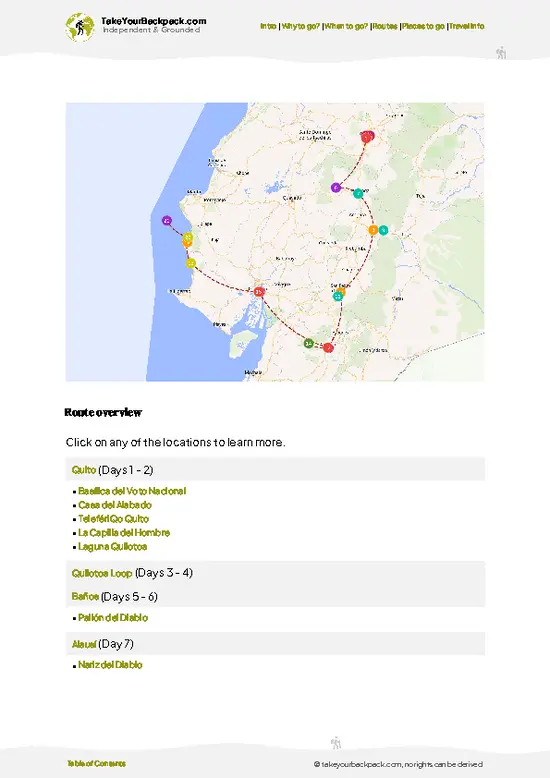
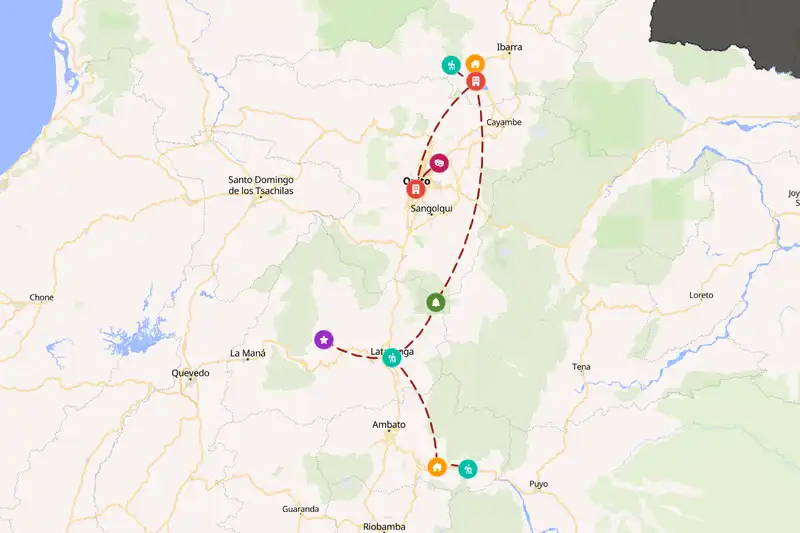
This 15-day route is for travelers who want to go deep: a full Ecuador sampler that stitches together highlands, colonial cities, national parks, and the Pacific coast at a steady, immersive pace. You’ll mostly rely on intercity buses and a few taxis, moving in a big overland arc from Quito through the Andes to Cuenca and then out to the ocean, with enough time in each stop to actually feel the character of each region instead of just ticking off names.

Days 1-3: Quito, Culture, and Cotopaxi Peaks

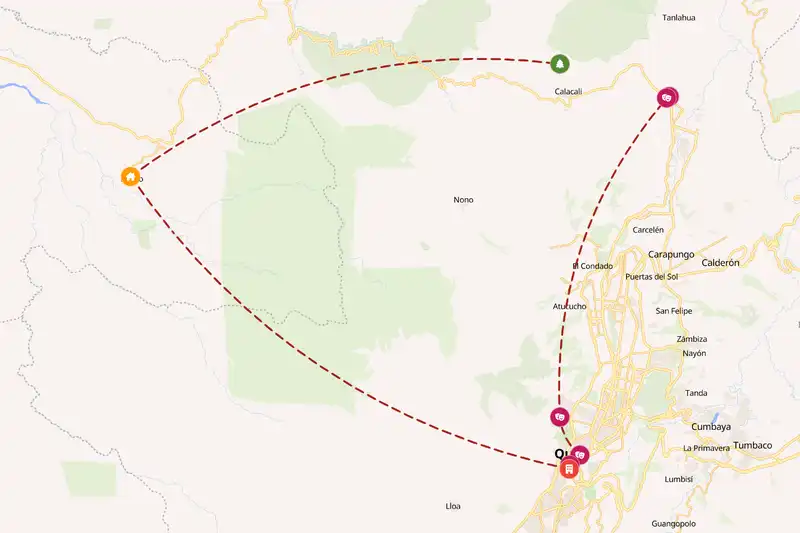
Begin with three nights in Quito, using the first full day to ground yourself in the historic center with Iglesia de la Compañía de Jesús, Basilica del Voto Nacional, and an evening wander along La Ronda Historic Street so you get both the daytime architecture and the nighttime street life. On day two, ride the TelefériQo Quito for a high-altitude perspective on the city, then spend the afternoon at La Capilla del Hombre and Guayasamín Museum, which gives you a powerful emotional and political … read more 👉
This 15-day route is for travelers who want to go deep: a full Ecuador sampler that stitches together highlands, colonial cities, national parks, and the Pacific coast at a steady, immersive pace. You’ll mostly rely on intercity buses and a few taxis, moving in a big overland arc from Quito through the Andes to Cuenca and then out to the ocean, with enough time in each stop to actually feel the character of each region instead of just ticking off names.

Days 1-3: Quito, Culture, and Cotopaxi Peaks

Begin with three nights in Quito, using the first full day to ground yourself in the historic center with Iglesia de la Compañía de Jesús, Basilica del Voto Nacional, and an evening wander along La Ronda Historic Street so you get both the daytime architecture and the nighttime street life. On day two, ride the TelefériQo Quito for a high-altitude perspective on the city, then spend the afternoon at La Capilla del Hombre and Guayasamín Museum, which gives you a powerful emotional and political context for everything you’ll see across the country. Day three is your first big nature push: take a day trip into Cotopaxi within Andean Highlands, where you can walk around the base area, explore the páramo landscapes, and, if conditions and fitness allow, hike up to the refuge zone for a close-up with one of South America’s most iconic volcano silhouettes before returning to Quito for the night.

Days 4-6: Quilotoa, Riobamba, and El Altar Country

Leave Quito for the high plateau around Laguna Quilotoa, spending a night near the crater so you can hike a section of the Quilotoa Loop and feel the raw, wind-whipped edge of the Andean Highlands without committing to a full multi-day trek. From there, continue south to Riobamba, a classic Andean city that makes a practical base for exploring Chimborazo National Park and the dramatic landscapes around El Altar. Use your time here to do a long day hike or an overnight-style push toward El Altar if you’re fit and prepared, or opt for gentler walks in Chimborazo National Park where vicuñas graze under the watch of Ecuador’s highest peak; either way, this phase is about big, open highland scenery and quieter local life between busier hubs.

Days 7-9: Baños, Pailón del Diablo, and Amazon Edge

From Riobamba, drop into Baños for three nights to reset the pace and enjoy a more playful side of the Andes. Spend one day focused on the Pailón del Diablo Trail, riding or biking the waterfall route and getting close enough to the cascade that you’ll need to protect your camera from the spray, then use your other full day for viewpoints, swings, or simply soaking in local hot pools and wandering town. If you want a taste of the Amazon fringe without going deep into the jungle, you can use Baños as a jumping-off point toward the broader region that leads toward places like Tena, but for this itinerary it works best as a comfortable, well-connected base where you can catch your breath between highland pushes and the long ride south.

Days 10-12: Cuenca, Cajas, and Inca Echoes

Travel south to Cuenca, giving yourself three nights in what many people consider Ecuador’s most graceful highland city, with its rivers, plazas, and café culture. Use one day to explore the city itself and dive into Museo Pumapungo, where the combination of museum exhibits and on-site ruins gives you a compact, walkable crash course in pre-Columbian and colonial history. On another day, head out to Cajas National Park and walk a section of the Cajas Inca Trail, where high-altitude lakes, rolling páramo, and ancient paths make it feel like you’ve stepped into a different, quieter world just outside the city. If you have the energy, you can also add a shorter visit to the El Cajas region more broadly, but the key here is to balance city wandering with one or two solid hikes rather than trying to do everything at once.

Days 13-15: Pacific Coast - Machalilla, Playa de los Frailes, and Puerto López

Finish your arc by heading out to the coast, basing yourself in Puerto López for three nights so you can explore Machalilla and its beaches without constantly packing and unpacking. Dedicate one full day to Playa de los Frailes, a protected stretch of sand inside Machalilla that feels far more relaxed and wild than the busier resort towns, with short coastal trails and viewpoints that let you stretch your legs without serious elevation. Another day can be spent heading offshore to Isla de la Plata, where coastal cliffs, seabirds, and seasonal marine life give you a “mini-Galapagos” feel at a fraction of the time and cost, rounding out your trip with a completely different ecosystem from the high Andes. On day fifteen, make your way back toward Guayaquil’s transport links via Guayaquil itself if needed, carrying a mental map that now runs from colonial plazas and crater lakes all the way to Pacific sunsets and offshore islands.

My favorite stretch of this route is the jump from Cuenca’s cool, stone streets to the warm air and quiet trails around Playa de los Frailes, when you realize just how much of a continent Ecuador squeezes into one small country.
Loading the map 🌍
film
0
0
0a
Quito
Pixabay
film
1
1
1a
Iglesia de la Compañía de Jesús
film
2
2
2a
Basilica del Voto Nacional
film
3
3
3a
La Ronda Historic Street
film
4
4
4a
TelefériQo Quito
film
5
5
5a
La Capilla del Hombre and Guayasamín Museum
film
6
6
6a
Andean Highlands
film
7
7
7a
Cotopaxi
Miguel Anchaluisa
film
8
8
8a
Laguna Quilotoa
Rafael Machado
film
9
9
9a
Chimborazo
Turismo Riobamba
film
10
10
10a
El Altar
Jessenia Rueda
film
11
11
11a
Pailón del Diablo Trail
film
12
12
12a
Museo Pumapungo
film
13
13
13a
Cajas
Christian Gonzalez
film
14
14
14a
Cajas Inca Trail
film
15
15
15a
El Cajas
film
16
16
16a
Machalilla
Diego Salas Cba
film
17
17
17a
Playa de los Frailes
Karen Parraga
film
18
18
18a
Isla de la Plata
Tu Guía En México

✈️ The backpacker research shortcutEcuador Travel Guide

An offline-friendly backpacking guide with optimized travel routes, ranked highlights, transport advice, and the best areas to stay.
example page 0 from our offline Travel Guide for Ecuadorexample page 1 from our offline Travel Guide for Ecuadorexample page 2 from our offline Travel Guide for Ecuadorexample page 3 from our offline Travel Guide for Ecuadorexample page 4 from our offline Travel Guide for Ecuadorexample page 5 from our offline Travel Guide for Ecuador
The digital guide (311 pages) contains:
94 highlights, ranked by travel appeal
Optimized 5, 10 & 15-day travel routes
Best neighborhoods to stay
How to get around
Offline-friendly for travel without Wi-Fi
👉 See all 30+ guide features

📅 Plan smarter in minutes, not weeks
Month by month travel advice
Festivals & national holidays
Budget expectations

🗺️ Go to the right places, skip the overrated ones
Honest pros & cons of destinations
Top hikes, parks & viewpoints
Lesser-known places most travelers miss
Clear “worth it vs skip it” guidance

🛏️ Travel smoothly without rookie mistakes
Best areas to stay
Transport systems explained simply
Common scams & safety advice
SIM cards, money & practical tips

🌍 Understand the country, not just visit it
Culture & traditions
52 Essential phrases & customs
Festivals worth planning around
Traveler-friendly historical context
Insights that make places more meaningful

📱 Built for real travel conditions
Fully downloadable PDF
Works completely offline
Optimized for phone use
Useful in remote areas & buses
Everything in one place
Save weeks of stressful planning
Get instant access to the full guide directly. 30-day money-back guarantee.


Sent to your inbox immediately after payment • 100% Secure Checkout
Best Backpacking Travel Advisor 2025 tourism awardBest Backpacking
Travel Advisor
2025
What others say about Take Your Backpack Guides:
⭐⭐⭐⭐⭐
Fantastic, amazing amount of information!
⭐⭐⭐⭐⭐
My goodness this is amazing, it's what I've been looking for hats off too you!
⭐⭐⭐⭐⭐
I think this is absolutely BRILLIANT
⭐⭐⭐⭐
Very complete and informative. It's still missing places, but I gotta to commend you
⭐⭐⭐⭐⭐
This is truly amazing, thank you, can't wait to explore it with my kids!
⭐⭐⭐⭐⭐
Awesome resource, thank you!
⭐⭐⭐⭐⭐
This is amazing! Can't wait to explore the ones I haven't seen
⭐⭐⭐⭐
I love this! Well done, great idea.
⭐⭐⭐⭐⭐
Thanks for taking the time to make this gem!
⭐⭐⭐⭐⭐
This might be the best website I've ever seen.
⭐⭐⭐⭐⭐
Congratulations, and thank you so much for your work; it's incredibly valuable.
⭐⭐⭐⭐
In all seriousness I think you did a great job pointing out the important spots
⭐⭐⭐⭐⭐
10/10 very good
⭐⭐⭐⭐⭐
As someone who's only just starting to visit regularly this is awesome, thank you.
⭐⭐⭐⭐
Thank you very much! I'm going to visit my dad, it's going to be very useful!
⭐⭐⭐⭐⭐
This is really cool! We'll be travelling for the first time and this definitely come in handy.
⭐⭐⭐⭐⭐
You are now our minister of culture, congratulations 👨‍💼
⭐⭐⭐⭐⭐
Just wanted to tell you that this is a pearl! Going to follow your recommendations.
⭐⭐⭐⭐⭐
This is so cool. I'll definitely be using the resource for my travels soon.
⭐⭐⭐⭐⭐
This is very impressive! Good work.
⭐⭐⭐⭐⭐
This is an amazing and informative site. Very well done!

🧭 RouteOther Route Options

Travel Ecuador your way — from a quick highlights trip to a slow-paced adventure.

🙋 FAQFAQ: Backpacking Ecuador

Ecuador is one of the easiest countries in South America to backpack independently, especially for a first big trip. Distances are short, Spanish is widely spoken but people are patient with basic phrases, and the main backpacker trail is well established. You can move between the Andes, jungle, and coast in a single day of travel, which keeps logistics simple and costs down. Hostels are common in all major stops (Quito, Baños, Cuenca, Montañita, Mindo, Otavalo, Tena), and most can arrange tours, shuttles, and activities on the spot so you do not need to pre-book everything. Safety is manageable if you use normal city smarts: avoid flashing valuables, use registered taxis or ride apps in big cities at night, and keep your daypack in front of you on buses. Street food and local markets are cheap and generally fine if you stick to busy stalls with high turnover. The only part that is not naturally budget-friendly is the Galápagos, which is logistically more complex and expensive; everything else in mainland Ecuador is very doable on a backpacker budget with a lot of freedom to improvise.
For a solid backpacking loop of mainland Ecuador, 2–3 weeks is the sweet spot. In about 14 days you can hit a classic route: Quito (city and day trips), Mindo or Otavalo, Baños, and Cuenca, with maybe a quick jungle or coast stop. Three weeks lets you slow down, add the Quilotoa Loop or a multi-day trek, and spend a couple of lazy days on the beach. If you only have 7–10 days, focus on one region instead of trying to do everything: for mountains and adventure, do Quito + Baños + Quilotoa; for culture and chill, do Quito + Cuenca + a day trip or two. If you want to include the Galápagos on a budget, you realistically want at least 10 days total, with 5–7 of those in the islands and the rest on the mainland for acclimatizing and logistics. Anything under a week is possible but will feel rushed and bus-heavy; Ecuador is compact, but mountain roads and traffic still eat time, so always add buffer days for long bus rides and weather delays in the highlands.
You can travel almost everywhere in mainland Ecuador without a car, and for budget travelers it is usually cheaper and less stressful to skip renting. Intercity buses are frequent and very affordable, connecting Quito, Baños, Cuenca, Guayaquil, the coast, and most Andean towns. Expect basic but functional buses, with some nicer companies on the main routes; buy tickets at the terminal and keep small bills handy. For shorter hops and day trips, you can use local buses, shared pickups, or cheap taxis, especially around Baños, Mindo, Otavalo, and the Quilotoa area. In cities, ride apps and registered taxis are the safest way to move around at night, while during the day you can walk or use city buses if you are comfortable with crowds. For the Amazon, most budget travelers go by bus to a gateway town like Tena or Lago Agrio, then use lodge or tour transport from there. For the Galápagos, you will rely on ferries, water taxis, and organized day tours instead of any self-drive option. The only time a rental car is truly useful is if you are traveling as a group, want maximum flexibility in remote areas, and are confident driving mountain roads; otherwise, public transport plus the occasional taxi covers almost everything you will want to do.
For a first-time backpacking trip, a strong, budget-friendly Ecuador route includes: Quito, for its historic center, viewpoints like El Panecillo or TelefériQo, and easy day trips; Baños, the adventure hub with cheap rafting, canyoning, hot springs, and the swing at Casa del Árbol; the Quilotoa area, either as a 3-day loop trek through villages or at least a day at the crater lake; Cuenca, for colonial streets, relaxed cafes, and nearby Cajas National Park for high-altitude hiking; Mindo, a cloud forest town with birdlife, waterfalls, and chocolate tours; and Otavalo, especially on market days, plus nearby Laguna Cuicocha for a half-day hike. If you want jungle on a budget, Tena is a good base for rafting and short Amazon trips without the cost of deep-lodge packages. For the coast, Montañita is the classic backpacker surf town, while nearby Olón is quieter but still cheap and social. If your budget stretches, the Galápagos are absolutely world-class for wildlife, and you can keep costs lower by staying on a couple of islands (like Santa Cruz and Isabela) and booking day tours locally instead of a cruise.
If you are short on time or money, you can skip a few places without feeling like you missed the core of Ecuador. The Galápagos, while incredible, are the first thing most strict-budget travelers cut because flights, park fees, and tours add up fast; you can still see plenty of wildlife on the coast and in the Amazon. Guayaquil is a major transit hub but not essential as a destination for most backpackers, so treat it as a stopover rather than a base unless you have a specific reason to stay. Many smaller beach towns along the coast are pleasant but similar; if time is tight, pick one spot like Montañita or Olón instead of hopping along the whole shoreline. Deep Amazon lodges that require flights or long boat rides are amazing but expensive and time-consuming, so a shorter, cheaper jungle experience around Tena or Misahuallí is usually enough for a first trip. You can also skip extra big-city time in Quito once you have seen the historic center and a viewpoint; use those days for the mountains or cloud forest instead, where your time and money go further in terms of experiences.

🇪🇨 EcuadorExpand Your Journey

Ready to build a truly unique trip? Predefined routes are perfect for first-time visitors, but there is so much more to discover. Whether you are chasing a city trip, pristine national parks, local food scenes, or quiet beaches, pick a category to design your own path.