×
Japan🇯🇵 | 14 days itinerary

Your 14-Day Japan Itinerary

By Johan Kruseman 🇳🇱 | Updated October 18, 2026
This two-week line across central Japan is for travelers who want the big cities balanced with mountain air, hot springs and thatched villages. The pace is moderate, with two- to four-night stays and every transfer under 5 hours. You’ll ride the shinkansen, the Odakyu line and Hakone’s mountain railways, the JR Hida limited express, Nohi highway buses to Shirakawa-go and Kanazawa, and the Hokuriku shinkansen plus Thunderbird express into Kyoto.

Days 1-4: Tokyo

Open with four nights in Tokyo, a city best taken one neighborhood per day rather than raced across. Pair Senso-ji in Asakusa with Tokyo Skytree, 20 minutes’ walk across the Sumida River; the 350-meter deck is worth the fee only on a clear day, when Mount Fuji shows on the western horizon. Visit Meiji Jingu on a weekend morning for a chance to see a traditional wedding procession under the cedars, then walk five minutes into Harajuku’s side streets for the crowds. Business hotels run ¥8,000 to 14,000 (US$55 to 95) a night, and dorms … read more 👉
This two-week line across central Japan is for travelers who want the big cities balanced with mountain air, hot springs and thatched villages. The pace is moderate, with two- to four-night stays and every transfer under 5 hours. You’ll ride the shinkansen, the Odakyu line and Hakone’s mountain railways, the JR Hida limited express, Nohi highway buses to Shirakawa-go and Kanazawa, and the Hokuriku shinkansen plus Thunderbird express into Kyoto.

Days 1-4: Tokyo

Open with four nights in Tokyo, a city best taken one neighborhood per day rather than raced across. Pair Senso-ji in Asakusa with Tokyo Skytree, 20 minutes’ walk across the Sumida River; the 350-meter deck is worth the fee only on a clear day, when Mount Fuji shows on the western horizon. Visit Meiji Jingu on a weekend morning for a chance to see a traditional wedding procession under the cedars, then walk five minutes into Harajuku’s side streets for the crowds. Business hotels run ¥8,000 to 14,000 (US$55 to 95) a night, and dorms in Asakusa cost half that.

Days 5-6: Hakone

Two nights in Hakone, about 90 minutes from Shinjuku on the Odakyu Romancecar, give you a loop through Fuji-Hakone-Izu National Park by switchback train, cable car, ropeway and pirate-ship ferry. The ropeway swings over Owakudani’s sulfur vents, where eggs boiled black in the springs are sold by the bag. Stay at a ryokan or hostel with an onsen bath: soaking outdoors on a cold evening is the main event here, and Fuji views from Lake Ashi come and go with the weather.

Days 7-10: Takayama, Shirakawa-go and Kanazawa

The longest transfer, about 5 hours, runs from Odawara by shinkansen to Nagoya and then on the Hida express up a river gorge to Takayama. Two nights here mean two morning markets along the river and time in the Sanmachi lanes, where sake breweries hang balls of cedar at their doors and pour tastings for a few hundred yen. On day nine, take the 50-minute bus to Shirakawa-go, leave your bag in a locker at the bus terminal, and walk up to the viewpoint above the steep-roofed gassho farmhouses before continuing 75 minutes to Kanazawa the same afternoon. Two nights there cover Kenroku-en garden, the geisha teahouse lanes of Higashi Chaya and Omicho market, where a bowl of fresh seafood on rice runs ¥2,500 to 4,500.

Days 11-14: Kyoto

Take the Hokuriku shinkansen to Tsuruga and the Thunderbird express on to Kyoto, about 2 hours and 10 minutes. With three nights, focus on the eastern hills and the south: Kiyomizu-dera late in the day, when the setting sun lights the city from its terrace, and Fushimi Inari Taisha as a full morning hike rather than a photo stop. Day 14 is your departure, either 75 minutes to Kansai Airport or 2 hours and 15 minutes back to Tokyo on the Nozomi.

If Shirakawa-go feels too busy, Ainokura in the Gokayama area, a bus ride further along the same road, has a smaller cluster of thatched farmhouses where a few families still take overnight guests.
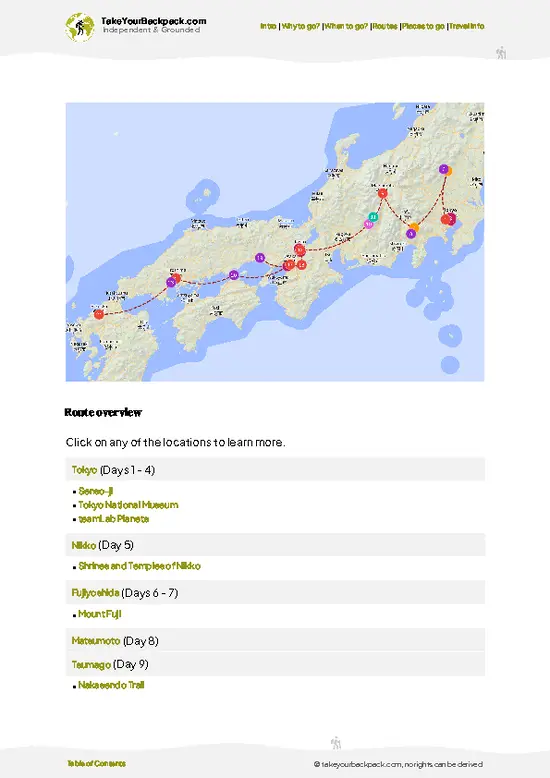
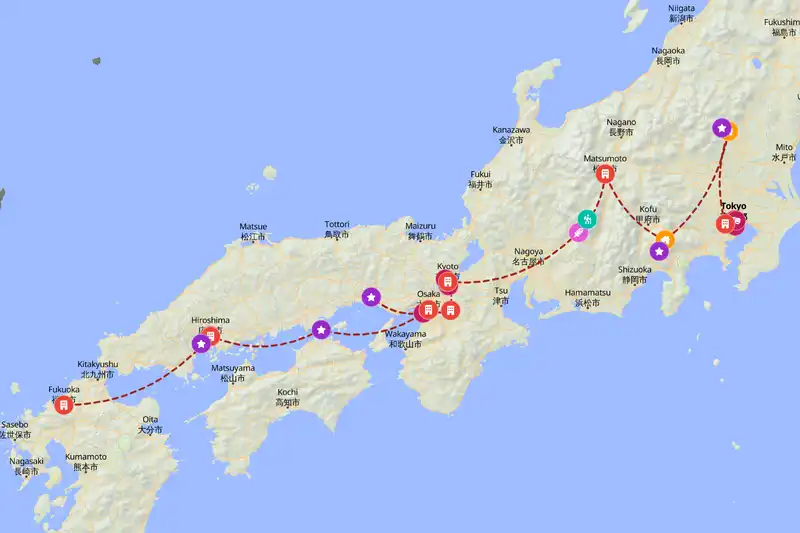
Loading the map 🌍

🛏️ Where to stay?Your Route at a Glance

👉 Click on any of the locations to learn more.
 
Tokyo(Days 1 - 4)
 
Hakone(Days 5 - 6)
 
Takayama(Days 7 - 8)
 
Kanazawa(Days 9 - 10)
 
Kyoto(Days 11 - 13)

⚠️ This itinerary is intended as inspiration, not a fixed travel plan. Suggested routes and travel times may not always be feasible due to transport availability, seasonal conditions or other local factors. Always verify all travel logistics before booking.

✈️ The backpacker research shortcutJapan Travel Guide

An offline-friendly backpacking guide with optimized travel routes, ranked highlights, transport advice, and the best areas to stay.
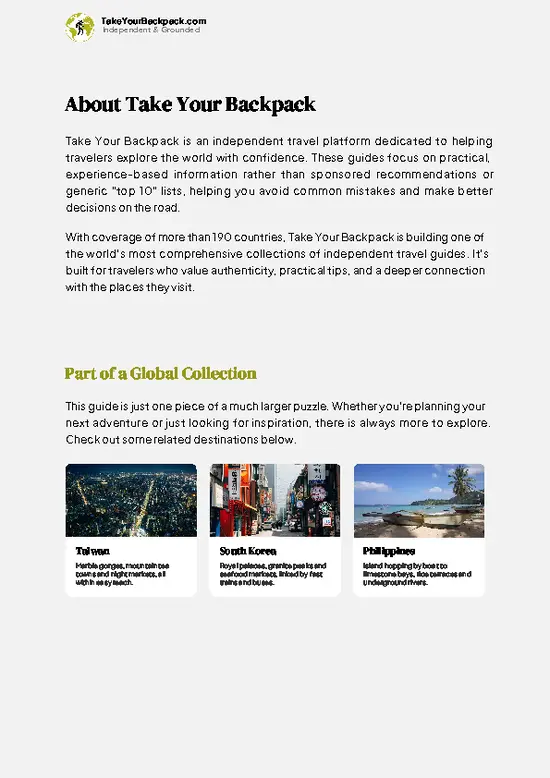
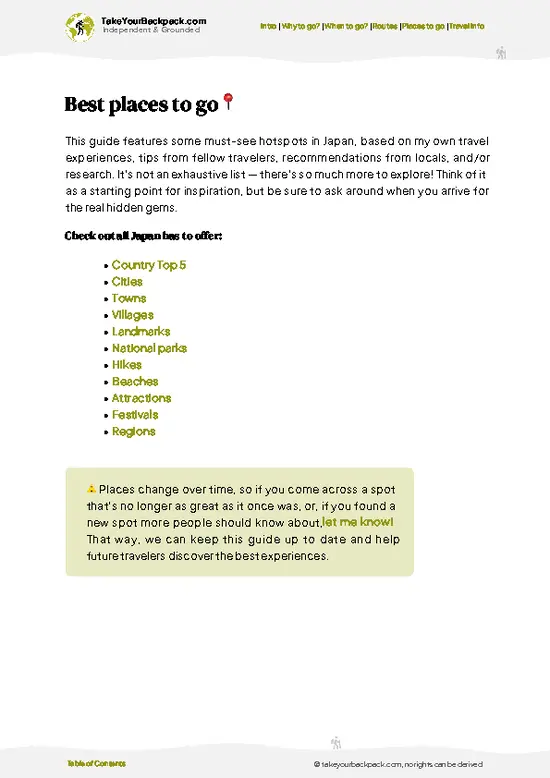
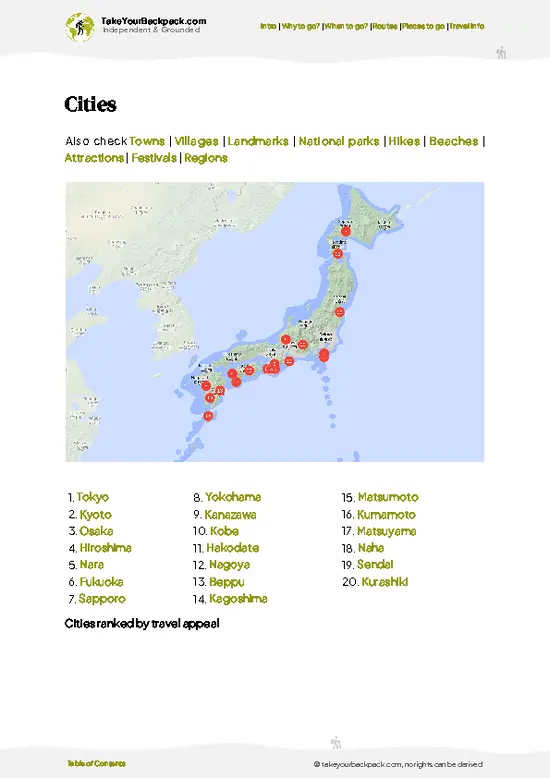
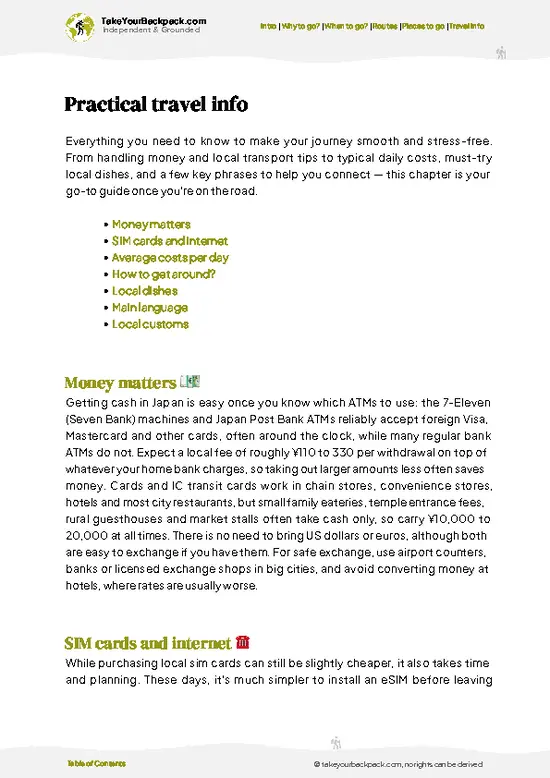
example page 0 from our offline Travel Guide for Japan
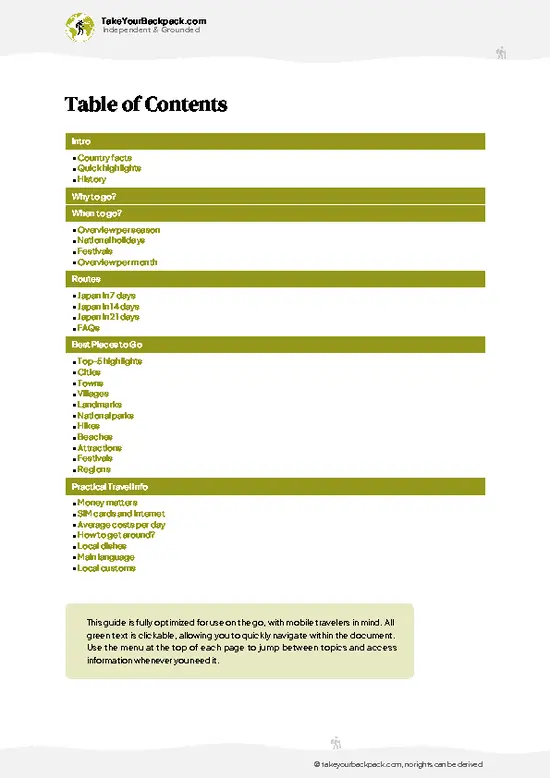
example page 1 from our offline Travel Guide for Japan
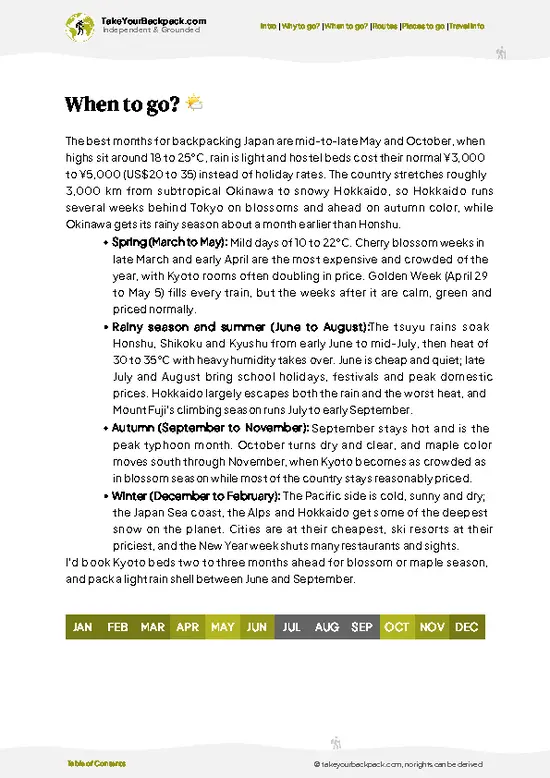
example page 2 from our offline Travel Guide for Japan
example page 3 from our offline Travel Guide for Japan
example page 4 from our offline Travel Guide for Japan
example page 5 from our offline Travel Guide for Japan
example page 6 from our offline Travel Guide for Japan
example page 7 from our offline Travel Guide for Japan
The digital guide (475 pages) contains:
✅ 139 highlights, ranked by travel appeal
✅ Optimized 7, 14 & 21-day travel routes
✅ Cities, national parks, landmarks, beaches
✅ How to get around
✅ Offline-friendly for travel without Wi-Fi
👉 Click to see all 30+ guide features

📅 Plan smarter in minutes, not weeks
✅ Month by month travel advice
✅ Festivals & national holidays
✅ Budget expectations

🗺️ Go to the right places, skip the overrated ones
✅ Honest pros & cons of destinations
✅ Top hikes, parks & viewpoints
✅ Lesser-known places most travelers miss
✅ Clear “worth it vs skip it” guidance

🛏️ Travel smoothly without rookie mistakes
✅ Best areas to stay
✅ Transport systems explained simply
✅ Common scams & safety advice
✅ SIM cards, money & practical tips

🌍 Understand the country, not just visit it
✅ Culture & traditions
✅ 52 Essential phrases & customs
✅ Festivals worth planning around
✅ Traveler-friendly historical context
✅ Insights that make places more meaningful

📱 Built for real travel conditions
✅ Fully downloadable PDF
✅ Works completely offline
✅ Optimized for phone use
✅ Useful in remote areas & buses
✅ Everything in one place
Stop searching, start planning
Get instant access to your full guide. 30‑day money-back guarantee.
+ Add another guide for just

By proceeding you agree to our terms.
Sent to your inbox immediately after payment • 100% Secure Checkout
Best Backpacking Travel Advisor 2025 tourism awardBest Backpacking
Travel Advisor
2025
What others say about Take Your Backpack Guides:
⭐⭐⭐⭐⭐
Fantastic, amazing amount of information!
⭐⭐⭐⭐⭐
My goodness this is amazing, it's what I've been looking for hats off too you!
⭐⭐⭐⭐⭐
I think this is absolutely BRILLIANT
⭐⭐⭐⭐
Very complete and informative. It's still missing places, but I gotta to commend you
⭐⭐⭐⭐⭐
This is truly amazing, thank you, can't wait to explore it with my kids!
⭐⭐⭐⭐⭐
Awesome resource, thank you!
⭐⭐⭐⭐⭐
This is amazing! Can't wait to explore the ones I haven't seen
⭐⭐⭐⭐
I love this! Well done, great idea.
⭐⭐⭐⭐⭐
Thanks for taking the time to make this gem!
⭐⭐⭐⭐⭐
This might be the best website I've ever seen.
⭐⭐⭐⭐⭐
Congratulations, and thank you so much for your work; it's incredibly valuable.
⭐⭐⭐⭐
In all seriousness I think you did a great job pointing out the important spots
⭐⭐⭐⭐⭐
10/10 very good
⭐⭐⭐⭐⭐
As someone who's only just starting to visit regularly this is awesome, thank you.
⭐⭐⭐⭐
Thank you very much! I'm going to visit my dad, it's going to be very useful!
⭐⭐⭐⭐⭐
This is really cool! We'll be travelling for the first time and this definitely come in handy.
⭐⭐⭐⭐⭐
You are now our minister of culture, congratulations 👨‍💼
⭐⭐⭐⭐⭐
Just wanted to tell you that this is a pearl! Going to follow your recommendations.
⭐⭐⭐⭐⭐
This is so cool. I'll definitely be using the resource for my travels soon.
⭐⭐⭐⭐⭐
This is very impressive! Good work.
⭐⭐⭐⭐⭐
This is an amazing and informative site. Very well done!

🧭 RouteAlternative Routes

Travel Japan your way — from a quick highlights trip to a slow-paced adventure. Or build your custom route based on your own interests, time and travel style.
👉 Build your own Japan route

🙋 FAQBackpacking FAQ

Yes, Japan is one of the easiest countries in Asia to backpack on your own, because trains run to the minute and station signs, ticket machines and announcements are in English in every major city.

Budget travelers manage on ¥7,000 to 11,000 (US$45 to 75) a day: hostel dorms cost ¥3,000 to 5,000, and a convenience store or noodle-shop meal runs ¥500 to 1,000. A rechargeable IC card such as Suica or ICOCA covers local trains, buses and even vending machines. English thins out in rural areas like the Kiso Valley or Shirakawa-go, so a translation app helps with menus, but staff are patient and solo travelers face very little hassle.
Two weeks is the ideal length for a first trip to Japan, enough for Tokyo, Kyoto and a mountain stop without rushing.

With 7 days, stay in Kansai: 4 nights in Kyoto with a Nara day trip, then 2 nights in Osaka with a side trip to Himeji. With 14 days, start with 4 nights in Tokyo and add Hakone, Takayama and Kanazawa on the way to Kyoto; Tokyo to Kyoto is 2 hours and 15 minutes by shinkansen. Three weeks lets you continue west to Hiroshima, Naoshima and Fukuoka. Hokkaido and Okinawa each need their own 5 to 7 days plus a flight.
You can travel nearly all of Japan without a car, since bullet trains, limited expresses and buses reach every city and most mountain towns.

Tokyo to Kyoto takes 2 hours and 15 minutes on the Nozomi shinkansen for about ¥14,000 (US$95), while overnight highway buses do the same run in about 8 hours for ¥4,000 to 10,000. A 7-day JR Pass costs ¥50,000 (about US$330) and only pays off if you cover Tokyo to Hiroshima and back within that week. Kyoto to Nara is 45 minutes by local train for under ¥1,000. A rental car only makes sense in rural Hokkaido, such as Shiretoko, or on Okinawa’s main island.
The essential stops in Japan are Tokyo and Kyoto, followed by Hiroshima with Miyajima, Nara and the Mount Fuji area.

Give Tokyo 3 to 4 days for Senso-ji, Meiji Jingu and its neighborhoods, and Kyoto 3 to 4 days for Fushimi Inari Taisha, Kiyomizu-dera and Kinkaku-ji. Nara works as a day trip, 45 minutes from Kyoto. Himeji-jo, the best surviving original castle, is about 1 hour from Osaka by train. Hiroshima needs 2 days, one for the Peace Memorial Museum (¥200) and one for the floating torii on Miyajima, a 10-minute ferry ride. For Fuji views, stay 1 to 2 nights in Hakone or Fujiyoshida.
If your time in Japan is short, skip the theme parks first: Tokyo DisneySea and Universal Studios Japan each eat a full day and ¥8,000 to 11,000 (US$55 to 75) per ticket.

Pass on paid observation decks like Tokyo Skytree as well; the free 45th-floor observatory at the Tokyo Metropolitan Government Building in Shinjuku gives a similar view. Okinawa and Sapporo both require a flight from Tokyo (about 1.5 hours to Sapporo, 2.5 hours to Okinawa), so leave them for a second trip unless beaches or snow are the reason you came. Osaka needs only 1 to 2 nights, since Kyoto is 15 to 30 minutes away, and Nara fits into a single day trip rather than an overnight stay.
Yes, our itinerary-planner does exactly that. Set your trip length in days, give your interests and travel style, optionally give start- and end location and/or some mandatory stops you would like to include and the itinerary planner creates your personalized routes for Japan in seconds. Try it out!


Try the itinerary planner
🇯🇵 JapanMore of Japan

Ready to build a truly unique trip? Predefined routes are perfect for first-time visitors, but there is so much more to discover. Whether you are chasing a city trip, pristine national parks, local food scenes, or quiet beaches, pick a category to design your own path.