Short version: yes, but it’s not a “wing it and hope” country. It’s very doable if you’re organized and comfortable being out of your comfort zone. The big advantages: trains go almost everywhere, hostels are common in major destinations, and people are generally helpful even if you don’t share a language. The main frictions: language barrier, apps, and rules. English is limited outside major tourist zones, so offline tools matter: download Chinese offline maps (with Chinese characters), have your hostel names and addresses written in Chinese, and keep key phrases saved in your phone. Many bookings and payments inside China lean heavily on local apps and mobile payments; as a budget traveler you can still get by with cash plus a bank card, but you’ll want to pre-book some trains and hostels on international-friendly platforms before you arrive. Visas require planning and a rough itinerary; this is not a last-minute border-hop country. Once you’re in, backpacking feels structured rather than wild: think efficient trains, cheap local eateries, and hostel-to-hostel hops instead of spontaneous hitchhiking. If you’ve done Southeast Asia, expect less English and more rules, but better infrastructure and more variety in landscapes and cities. If you’re willing to prep a bit, China is absolutely backpackable on your own.
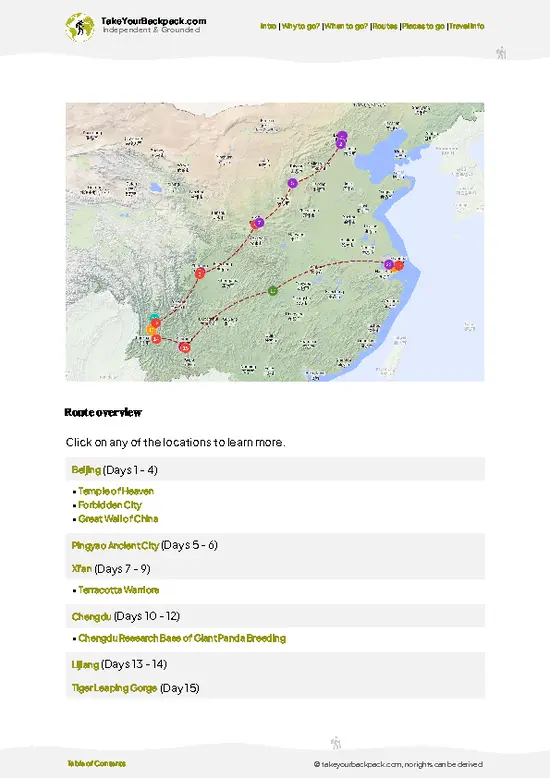
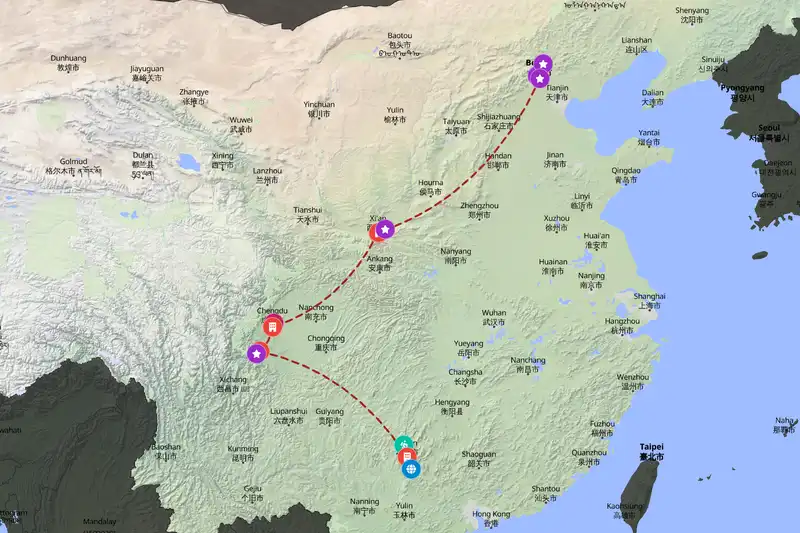
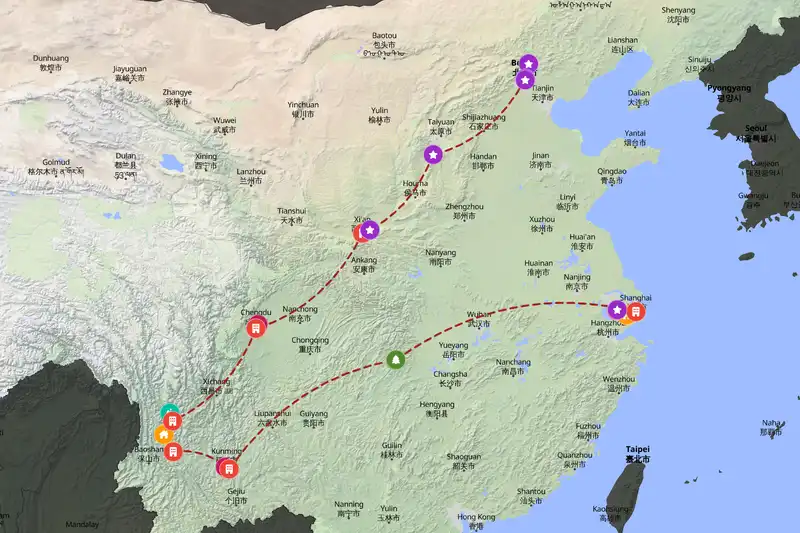
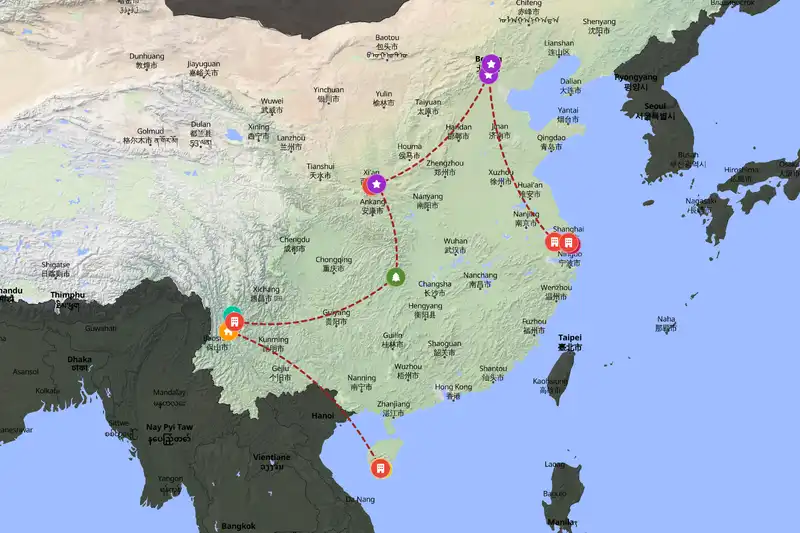
For a first backpacking trip, 2–3 weeks is the sweet spot: long enough to see a mix of megacities, old towns, and nature without burning out on train rides. With about 10 days, focus hard: pick 2–3 regions and ignore the rest. For example: Beijing + Xi’an + one nature stop (Zhangjiajie or Guilin/Yangshuo). With 2–3 weeks, you can do a classic north–central–south arc: Beijing → Datong or Pingyao → Xi’an → Chengdu → Guilin/Yangshuo or Zhangjiajie → Hong Kong or Guangzhou. With a month, you can slow down and add a more offbeat region like Yunnan (Dali, Lijiang, Tiger Leaping Gorge), Gansu (Dunhuang, Zhangye), or Inner Mongolia/Xinjiang if logistics and permits work for you. China is huge; treating it like one country is misleading. Think of it as several big trips: north (history and walls), southwest (mountains and minority cultures), northwest (desert and Silk Road), and east coast (cities and business hubs). For budget travelers, more time usually means better value because you can take slower trains, stay longer in each place, and avoid expensive last-minute flights. If you only have a week, it’s still worth going, but commit to one main hub (Beijing or Shanghai) plus one side trip and don’t try to “do China.”
You can travel almost everywhere you care about as a backpacker without ever touching a steering wheel. The backbone is the rail network: high-speed trains for long hops between major cities, and slower, cheaper trains for budget days and overnight journeys. High-speed trains are clean, fast, and easy once you understand the system; second-class seats are usually the best value. Overnight hard-sleeper bunks on regular trains are a budget traveler’s friend: you save a night of accommodation and meet locals in your compartment. Buses fill in the gaps, especially for smaller towns, national parks, and mountain areas. They’re cheap but can be slower and less comfortable; still, they’re often the only way to reach trailheads or rural spots. Inside cities, metros in big places like Beijing, Shanghai, Chengdu, and Xi’an are cheap, signed in English, and intuitive. In smaller cities, you’ll rely on buses, taxis, and ride-hailing apps. To make life easier, always have your destination written in Chinese characters to show drivers, and screenshot your hostel’s location on a map. Domestic flights are useful for huge distances (for example, Beijing to Yunnan or Xinjiang), but they add cost and airport time; for a budget trip, use them sparingly and lean on trains. You do not need to rent a car, and for most travelers it would add stress rather than freedom.
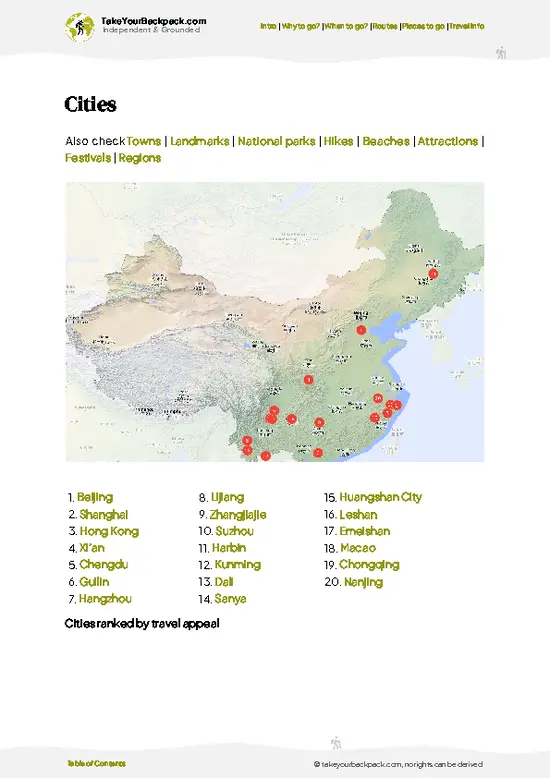
For a first-time backpacker on a budget, think in terms of experiences rather than a checklist of cities. A strong, efficient starter mix looks like this: Beijing for history and scale: the Great Wall (choose a less crowded section like Jinshanling or Gubeikou if possible), the Forbidden City, hutong alleys, and cheap local food. It’s touristy but important context for everything else. Xi’an for the Terracotta Warriors and the old city walls: it’s a compact stop that gives you Silk Road flavor, good street food (Muslim Quarter), and a clear sense of China’s deep timeline. Chengdu for chill city life and pandas: the vibe is slower, food is spicy and cheap, and it’s a good base for side trips to places like Leshan (Giant Buddha) or Emei Shan if you want a temple-and-hiking combo. Guilin and Yangshuo or the Longji rice terraces for landscapes: karst peaks, rivers, and rice terraces give you the postcard side of China, and you can do it on a backpacker budget with hostels and local buses. Yunnan (Dali, Lijiang, Tiger Leaping Gorge) if you have extra time: this is where many backpackers fall in love with China—mountain hikes, old towns, and a mix of cultures. If you’re into more offbeat routes and have longer: Gansu (Zhangye Danxia landforms, Dunhuang desert and caves) for wild colors and Silk Road history; Zhangjiajie for surreal pillar mountains if you don’t mind park fees and crowds; and maybe Hong Kong as a soft landing or exit point with easy flights and a very different city feel. Prioritize places that combine culture, food, and nature so every long train ride feels worth it.
If you’re short on time or cash, skip anything that eats days without giving you a new type of experience. Long, flat industrial cities that are mainly business hubs (for example, many second-tier coastal cities) are easy to cut unless you have a specific reason to be there. You can also safely skip doing both Beijing and Shanghai on a tight trip; pick one big city. Beijing gives you history and the Great Wall; Shanghai gives you a more modern, international city with a flashy skyline. For a backpacker, Beijing usually wins if you can only choose one. Consider skipping multiple similar old towns: if you do Pingyao or Lijiang or Dali, you don’t need a whole string of walled towns that now function mostly as tourist streets. Choose one or two and move on. If you’re not deeply into theme parks or shopping, you can skip big-ticket attractions like Disneyland or luxury malls; they burn money and time without telling you much about the country. Think twice about extremely remote regions (like far western deserts or border areas) on a short trip: they require long travel days, extra permits or checks, and higher costs, which is better suited to a longer, focused journey. Finally, don’t over-stack temples and museums; after a few, they blur together. Pick a couple of well-regarded ones in each region and spend the saved time walking neighborhoods, eating street food, or taking a day hike instead.