×
South Korea🇰🇷 | 21 days itinerary

Your 21-Day South Korea Itinerary

By Johan Kruseman 🇳🇱 | Updated May 4, 2026
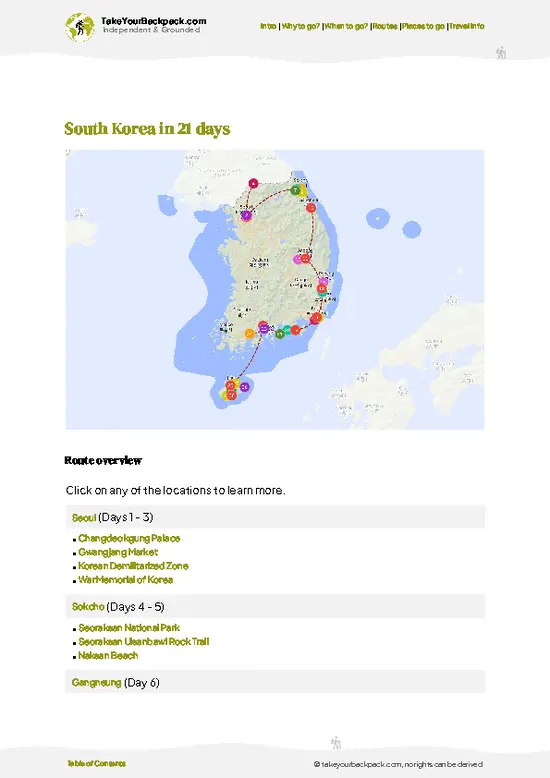
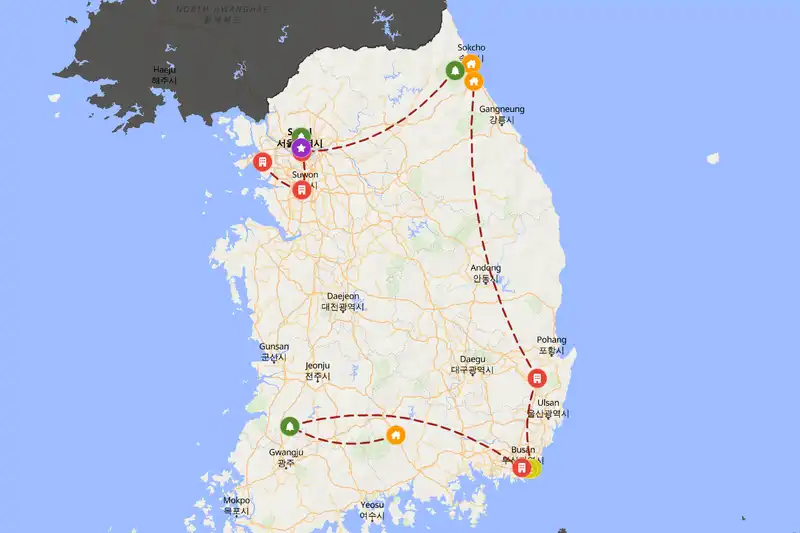
This 21-day route is for travelers who want to go beyond the greatest hits and really feel how Korea changes from palace courtyards to tea fields, temple valleys, and island coastlines; it’s ideal if you’re comfortable with buses and trains, enjoy day hikes, and prefer a steady, exploratory pace over frantic box-ticking. You’ll use KTX trains for the big jumps, intercity buses for mountain and coastal towns, and local transit or taxis for the last-mile hops, with enough two- and three-night stays to keep it sane.

Days 1-4: Seoul’s Depth - Palaces, Peaks, and Neighborhoods

Settle into Seoul for four nights so you can peel back layers instead of just skimming the surface. Start with the royal axis of Gyeongbokgung Palace, Changdeokgung Palace and Huwon Secret Garden, and the wider Changdeokgung Palace Complex, using the garden tour to understand how nature and architecture were woven together in Joseon times. Wander Bukchon Hanok Village Cultural Street and Insadong Cultural Street on another … read more 👉
This 21-day route is for travelers who want to go beyond the greatest hits and really feel how Korea changes from palace courtyards to tea fields, temple valleys, and island coastlines; it’s ideal if you’re comfortable with buses and trains, enjoy day hikes, and prefer a steady, exploratory pace over frantic box-ticking. You’ll use KTX trains for the big jumps, intercity buses for mountain and coastal towns, and local transit or taxis for the last-mile hops, with enough two- and three-night stays to keep it sane.

Days 1-4: Seoul’s Depth - Palaces, Peaks, and Neighborhoods

Settle into Seoul for four nights so you can peel back layers instead of just skimming the surface. Start with the royal axis of Gyeongbokgung Palace, Changdeokgung Palace and Huwon Secret Garden, and the wider Changdeokgung Palace Complex, using the garden tour to understand how nature and architecture were woven together in Joseon times. Wander Bukchon Hanok Village Cultural Street and Insadong Cultural Street on another day, ducking into hanok cafés, galleries, and tea houses to see how traditional spaces are being reused rather than preserved under glass. Balance the history with modern edges at Dongdaemun Design Plaza, where the architecture and design shops show off contemporary Korea’s creative muscle, and spend an evening grazing through Gwangjang Market Food Alley for a crash course in local comfort food. Use one day for the Namsan Mountain Trail and another for a longer hike in Bukhansan, where granite ridges, fortress walls, and forested paths give you a full national-park experience without leaving the city’s orbit.

Days 5-7: War, Division, and Folk Life

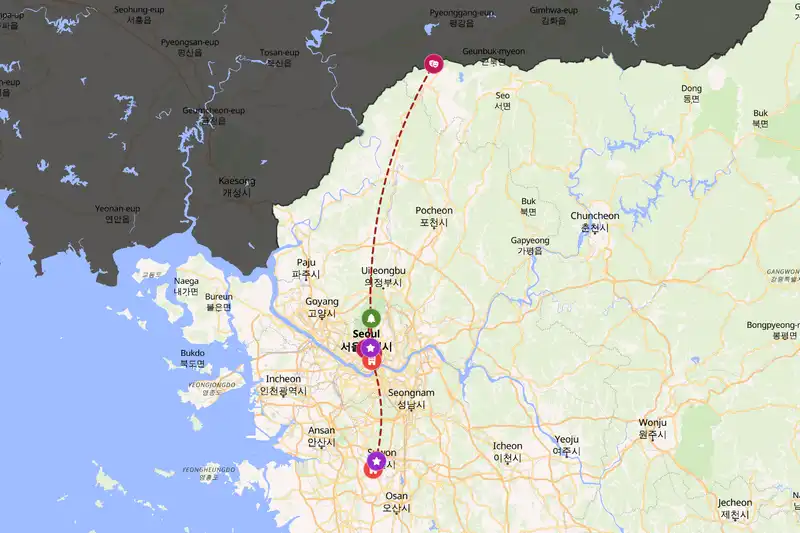
Stay based in Seoul but shift the lens to Korea’s modern history and living traditions. Take a day trip to the Demilitarized Zone Tour Facilities, where observation posts, tunnels, and memorials make the peninsula’s division feel immediate and real; it’s sobering but essential context for everything else you’ll see. On another day, head to the War Memorial of Korea to deepen that understanding with exhibits that walk you through the conflicts that shaped the modern state. Balance the heaviness with a visit to the Korean Folk Village near Suwon, where traditional houses, performances, and crafts show how people actually lived before the skyscrapers, then swing through Suwon itself to walk the walls of Hwaseong Fortress for hilltop views and a different urban rhythm. Evenings back in Seoul can be low-key in Insadong Cultural Street or turned up in Hongdae Street Performance and Club District, depending on your mood and energy.

Days 8-10: Gyeongju’s Ancient Landscapes and Trails

Ride the KTX or intercity bus to Gyeongju and give it three nights so the “museum without walls” nickname actually makes sense. Spend a day exploring Gyeongju National Park, where temple sites, royal tombs, and forested hills are scattered across the landscape, making every walk feel like a time warp. Dedicate another day to the Gyeongju Namsan Mountain Trail, where Buddha carvings, pagoda ruins, and viewpoints are tucked into the slopes, rewarding slow, curious hikers far more than those racing to the top. Use your third day for side trips to nearby sites and to soak up the town’s quieter streets in the evening, when tour buses thin out and you can wander between local restaurants at your own pace.

Days 11-13: Busan’s Beaches and Coastal Temples

Continue on to Busan for three nights to reset by the sea and trade tombs for beaches. Spend a relaxed day at Haeundae Beach, swimming, strolling, and sampling snacks from the boardwalk stalls, then move to Gwangalli Beach for sunset when the bridge lights up and the shoreline cafés and bars fill with locals. Carve out half a day for Busan Gamcheon Culture Village, where steep alleys, murals, and hillside views make for one of the most engaging urban walks in the country, and another half day for Haedong Yonggungsa Temple, perched above the waves so you can hear the sea under the chanting. If you want a quieter nature fix, use a day trip to the Yeongnam Alps or the Yeongnam Alps Yeongnamjeilbong Trail, where rolling ridges and open views give you a very different mountain feel from the granite spikes around Seoul.

Days 14-17: Jeju’s Volcanoes, Trails, and Beaches

Fly from Busan to Jeju and give the island four nights so you can mix big hikes with lazy coastal days. Dedicate one sunrise or early morning to climbing Jeju’s Seongsan Ilchulbong, where the crater rim and sea views make the early alarm worth it. Spend another full day on a section of the Jeju Olle Trail, choosing a coastal route where stone walls, fishing villages, and sea cliffs keep the scenery changing without needing a car. If you’re up for a serious hike, reserve a full day for Hallasan inside Hallasan National Park, where the crater lake, highland forests, and shifting weather make it one of the country’s most rewarding climbs; if not, opt for a shorter route within the park to still feel the volcanic interior. On your softer days, rotate between Hamdeok Beach with its turquoise shallows and cafés and Jungmun Saekdal Beach with its darker sand and more dramatic surf, letting the island’s slower rhythm reset your internal clock.

Days 18-21: Tea Fields, Bamboo Forests, and Southern Wetlands

Fly or ferry back to the mainland and head by bus to Gwangju, using it as a base for three nights to explore the greener, quieter southwest. Take a day trip to Boseong, where rolling tea fields give you a completely different landscape and a chance to walk among the terraces before sampling green tea everything in the cafés. On another day, head to Damyang for bamboo groves and riverside walks, then continue to Mudeungsan National Park near Gwangju, where rocky peaks and forested trails offer one last satisfying hike without the crowds of the more famous parks. If you have the energy for one more big nature day, make a long excursion to Suncheon Bay, where tidal flats, reed beds, and birdlife show off a softer, more contemplative side of Korea’s coastline before you loop back to Gwangju and onward to your departure point.

When you’re ready to go even further off script, pencil in a future side trip to the quiet valleys around Jirisan’s unmarked hermitages, where you can hike all day and meet more monks than tourists.
Loading the map 🌍
film
0
0
0a
Seoul
Pixabay
film
1
1
1a
Namsan Mountain Trail
film
2
2
2a
Suwon
film
3
3
3a
Hwaseong Fortress
film
4
4
4a
Gyeongju
film
5
5
5a
Jeju’s Seongsan Ilchulbong
film
6
6
6a
Hallasan
film
7
7
7a
Jungmun Saekdal Beach
film
8
8
8a
Boseong
film
9
9
9a
Suncheon Bay

✈️ The backpacker research shortcutSouth Korea Travel Guide

An offline-friendly backpacking guide with optimized travel routes, ranked highlights, transport advice, and the best areas to stay.
example page 0 from our offline Travel Guide for South Koreaexample page 1 from our offline Travel Guide for South Koreaexample page 2 from our offline Travel Guide for South Koreaexample page 3 from our offline Travel Guide for South Koreaexample page 4 from our offline Travel Guide for South Koreaexample page 5 from our offline Travel Guide for South Korea
The digital guide (355 pages) contains:
115 highlights, ranked by travel appeal
Optimized 7, 14 & 21-day travel routes
Best neighborhoods to stay
How to get around
Offline-friendly for travel without Wi-Fi
👉 See all 30+ guide features

📅 Plan smarter in minutes, not weeks
Month by month travel advice
Festivals & national holidays
Budget expectations

🗺️ Go to the right places, skip the overrated ones
Honest pros & cons of destinations
Top hikes, parks & viewpoints
Lesser-known places most travelers miss
Clear “worth it vs skip it” guidance

🛏️ Travel smoothly without rookie mistakes
Best areas to stay
Transport systems explained simply
Common scams & safety advice
SIM cards, money & practical tips

🌍 Understand the country, not just visit it
Culture & traditions
52 Essential phrases & customs
Festivals worth planning around
Traveler-friendly historical context
Insights that make places more meaningful

📱 Built for real travel conditions
Fully downloadable PDF
Works completely offline
Optimized for phone use
Useful in remote areas & buses
Everything in one place
Save weeks of stressful planning
Get instant access to the full guide directly. 30-day money-back guarantee.


Sent to your inbox immediately after payment • 100% Secure Checkout
Best Backpacking Travel Advisor 2025 tourism awardBest Backpacking
Travel Advisor
2025
What others say about Take Your Backpack Guides:
⭐⭐⭐⭐⭐
Fantastic, amazing amount of information!
⭐⭐⭐⭐⭐
My goodness this is amazing, it's what I've been looking for hats off too you!
⭐⭐⭐⭐⭐
I think this is absolutely BRILLIANT
⭐⭐⭐⭐
Very complete and informative. It's still missing places, but I gotta to commend you
⭐⭐⭐⭐⭐
This is truly amazing, thank you, can't wait to explore it with my kids!
⭐⭐⭐⭐⭐
Awesome resource, thank you!
⭐⭐⭐⭐⭐
This is amazing! Can't wait to explore the ones I haven't seen
⭐⭐⭐⭐
I love this! Well done, great idea.
⭐⭐⭐⭐⭐
Thanks for taking the time to make this gem!
⭐⭐⭐⭐⭐
This might be the best website I've ever seen.
⭐⭐⭐⭐⭐
Congratulations, and thank you so much for your work; it's incredibly valuable.
⭐⭐⭐⭐
In all seriousness I think you did a great job pointing out the important spots
⭐⭐⭐⭐⭐
10/10 very good
⭐⭐⭐⭐⭐
As someone who's only just starting to visit regularly this is awesome, thank you.
⭐⭐⭐⭐
Thank you very much! I'm going to visit my dad, it's going to be very useful!
⭐⭐⭐⭐⭐
This is really cool! We'll be travelling for the first time and this definitely come in handy.
⭐⭐⭐⭐⭐
You are now our minister of culture, congratulations 👨‍💼
⭐⭐⭐⭐⭐
Just wanted to tell you that this is a pearl! Going to follow your recommendations.
⭐⭐⭐⭐⭐
This is so cool. I'll definitely be using the resource for my travels soon.
⭐⭐⭐⭐⭐
This is very impressive! Good work.
⭐⭐⭐⭐⭐
This is an amazing and informative site. Very well done!

🧭 RouteAdjust Your Pace

Travel South Korea your way — from a quick highlights trip to a slow-paced adventure.

🙋 FAQTraveler FAQ

Short answer: yes, South Korea is one of the easiest countries in Asia to backpack solo, even on a tight budget. The country is safe, transport is efficient, and there is enough English support that you will rarely feel stuck.

What makes it easy:
- Clear transport systems: Metro maps, intercity buses, and trains usually have English signage and announcements. Ticket machines often have an English option.
- High safety level: Violent crime against travelers is rare. You can walk around late, especially in busy areas, with normal street smarts.
- Reliable infrastructure: Fast Wi‑Fi almost everywhere, good 4G/5G coverage, and convenience stores on nearly every corner for cheap snacks and quick meals.
- Hostel scene: Seoul, Busan, and Jeju have plenty of hostels and guesthouses with social common areas, kitchens, and staff used to backpackers.

Challenges to be ready for:
- Language barrier outside big cities: In rural areas and small towns, English drops off fast. Offline translation apps and screenshots of key phrases help a lot.
- Cashless quirks: Korea is card-heavy, but some older guesthouses or countryside restaurants still prefer cash. ATMs that accept foreign cards are common in cities but less so in villages.
- Navigation apps: Google Maps is limited for navigation. Use Naver Map or KakaoMap; both have English interfaces but take a bit of getting used to.

If you are comfortable with basic planning, booking a few key stays ahead, and using apps for translation and maps, backpacking South Korea independently is very straightforward.
For a first-time backpacking trip, 10–14 days is the sweet spot if you want a mix of cities, culture, and a bit of hiking without sprinting. If you have less or more time, here is how to think about it:

5–7 days (quick hit):
- Focus: Seoul + 1 side trip.
- Example: 4–5 nights in Seoul, plus 1–2 nights in either Busan, Gyeongju, or Sokcho/Seoraksan.
- Good if you mainly want food, nightlife, and a taste of history.

10–14 days (ideal first trip):
- Route idea: Seoul → Sokcho/Seoraksan → Gyeongju → Busan.
- This gives you: big-city energy, a national park hike, old capital history, and a coastal city.
- You can travel mostly by bus and train, with no need to rush.

3 weeks (slow and deep):
- Add: Jeju Island for coastal walks and volcanic landscapes, or smaller cities like Jeonju (traditional hanok houses and food) or Andong (folk village and Confucian heritage).
- You can build in rest days, repeat favorite food spots, and do more day hikes.

1 month+ (long backpacking loop):
- You can circle the country, hit multiple national parks (Seoraksan, Jirisan, Hallasan on Jeju), and spend time in smaller towns.
- This is where you can chase festivals, seasonal activities (cherry blossoms, autumn foliage), and really lean into slow travel.

If you are on a tight budget, longer stays in fewer places usually save money because you can cook more, use weekly transit passes in cities, and avoid constant transport costs.
You can absolutely get around South Korea without a car; in fact, for most backpackers, not having a car is easier and cheaper.

Inside cities:
- Subways: Seoul, Busan, Daegu, and a few other cities have clean, frequent metro systems with English signage. A rechargeable T-money or Cashbee card works on most buses and subways nationwide.
- Buses: City buses fill in the gaps where the metro does not reach. They can feel chaotic at first, but stops are usually announced in English in big cities.
- Taxis: Affordable compared to many Western countries, and widely available. Use Kakao T app to avoid miscommunication and to see estimated fares.

Between cities:
- Express and intercity buses: The backbone of budget travel. They are frequent, comfortable, and reach more places than trains. Bus terminals are usually central and easy to navigate.
- Trains: KTX (high-speed) is fast but pricier; good for long hops like Seoul–Busan if you are short on time. Slower trains (ITX, Mugunghwa) are cheaper and still comfortable.
- Ferries: Useful for islands like Jeju or smaller offshore islands, though many travelers fly to Jeju because of frequent budget flights.

For national parks and rural areas:
- Buses usually connect nearby cities to park entrances (for example, Sokcho to Seoraksan). Schedules can be less frequent, so starting early in the day gives you more margin.
- Some trailheads are only reachable by infrequent local buses or short taxi rides from the nearest town, but you still do not need your own car.

If you stick to a typical backpacker route (Seoul, Busan, Gyeongju, Sokcho/Seoraksan, Jeonju, Jeju), public transport plus the occasional taxi is more than enough.
For a budget traveler or backpacker, the must-visits are the places that give you the most culture, food, and nature per won and per hour of transit.

Seoul (4–6 days total, possibly split at the start and end):
- Why it is worth it: Street food, nightlife, palaces, markets, and easy day trips.
- Key areas: Hongdae (youthful, live music, cheap eats), Itaewon (international food, bars), Insadong and Ikseon-dong (traditional meets trendy), Gangnam (modern, polished side of the city).
- Cheap highlights: Gyeongbokgung or Changdeokgung Palace, hiking up Inwangsan or Bukhansan for city views, wandering markets like Gwangjang for food.

Busan (2–3 days):
- Why: Coastal city with beaches, seafood, and a more relaxed vibe than Seoul.
- Cheap highlights: Haeundae and Gwangalli beaches, Gamcheon Culture Village (colorful hillside neighborhood), Jagalchi Fish Market, coastal walks around Taejongdae or Igidae.

Gyeongju (1–2 days):
- Why: Former Silla capital, often called a museum without walls.
- Cheap highlights: Tumuli Park burial mounds, Anapji (Donggung Palace and Wolji Pond), Bulguksa Temple, and night walks around the historic center.

Sokcho & Seoraksan National Park (2–3 days):
- Why: Some of the best hiking in the country, very accessible without a car.
- Cheap highlights: Day hikes like Ulsanbawi, cable car views if you want to splurge a bit, and Sokcho’s harbor and seafood.

Jeju Island (3–4 days, if you have time and can catch a cheap flight):
- Why: Volcanic landscapes, coastal trails, and a different pace from the mainland.
- Cheap highlights: Hallasan day hike (if you are fit), Olle walking trails, lava tubes, and free or low-cost coastal viewpoints.

If your time is tight, prioritize Seoul, one coastal city (Busan or Sokcho), and one historic stop (Gyeongju). That combination gives you a strong sense of modern Korea, old Korea, and outdoor Korea.
If you are short on time or money, skip anything that eats up hours of transit without adding a new side of the country. Here is what is easiest to cut:

Overdoing palaces and museums in Seoul:
- Visiting one or two major palaces (like Gyeongbokgung and Changdeokgung) is enough for most travelers. After that, they start to blur together.
- Same with museums: pick either the National Museum of Korea or the War Memorial, not every museum in town.

Theme parks (Lotte World, Everland):
- They are fun but expensive and time-consuming, and you can find similar parks elsewhere in the world.
- If you are on a backpacker budget, that money usually goes further on food, hikes, or an extra night in a new city.

Too many similar cities:
- Daegu, Daejeon, and some mid-sized inland cities are pleasant but not essential if you are rushing. They feel more like everyday Korea than must-see destinations.
- If you have already done Seoul and Busan, you can safely skip another big city and head to a national park or historic town instead.

Jeju Island on a very short trip:
- Jeju is great, but it costs extra time and money to reach. If you have less than 10 days in Korea, flying there can compress your schedule too much.
- You can get excellent hiking and coastal scenery on the mainland (Seoraksan, Tongyeong, or coastal walks near Busan) without the extra flight.

Overhyped shopping districts:
- Areas like Myeongdong used to be legendary for shopping, but if you are not into cosmetics or brand-name shopping, you can do a quick walk-through and move on.
- Focus instead on markets (Gwangjang, Namdaemun) and neighborhoods with character (Hongdae, Ikseon-dong), which are better for people-watching and cheap eats.

If you are forced to cut hard, keep: Seoul, one historic stop (Gyeongju or a day trip like Suwon), and one nature stop (Seoraksan or Busan’s coastal trails). Everything else is optional layering, not the core experience.

🇰🇷 South KoreaSee More of South Korea

Ready to build a truly unique trip? Predefined routes are perfect for first-time visitors, but there is so much more to discover. Whether you are chasing a city trip, pristine national parks, local food scenes, or quiet beaches, pick a category to design your own path.