×
Indonesia🇮🇩 | 30 days itinerary

Backpacking Indonesia: A 30-Day Guide

By Johan Kruseman 🇳🇱 | Updated May 7, 2026
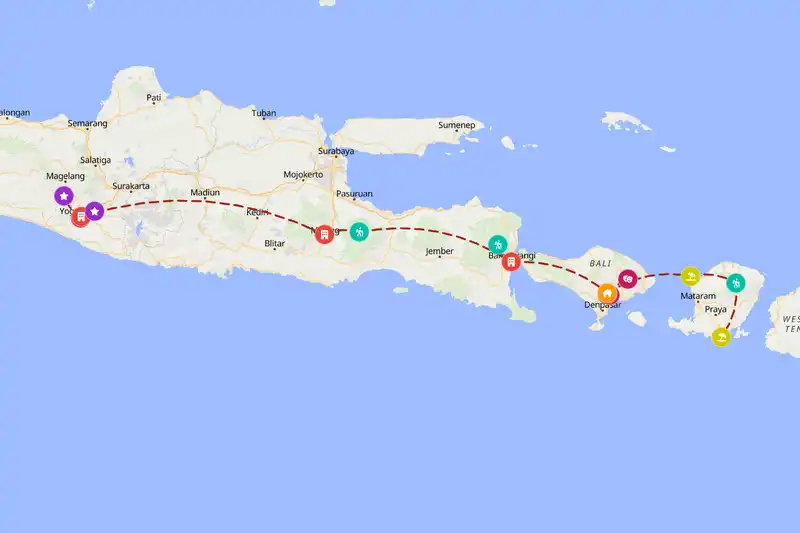
This 30-day route is for travelers who want to go all-in on Indonesia: a month-long, moderately paced adventure that stitches together big cities, classic temples, volcano hikes, and serious island time across Java, Bali, Lombok, Flores, and Komodo. You’ll use a mix of trains, domestic flights, ferries, and private cars, with the pace designed to alternate between demanding days (like pre-dawn hikes) and slower stretches in coastal towns and islands where you can actually catch your breath.

Days 1-4: Jakarta, History, and West Java Warm-Up

Land in Jakarta and give yourself a couple of days to adjust and understand the country’s modern heartbeat before you scatter to islands and volcanoes. Spend time at the National Museum of Indonesia to get a handle on the archipelago’s cultures, then wander Kota Tua Jakarta for colonial streets, coffee, and a sense of how the city has reinvented itself. Add an evening performance at Gedung Kesenian Jakarta or a visit to Taman Ismail Marzuki Arts Centerread more 👉
This 30-day route is for travelers who want to go all-in on Indonesia: a month-long, moderately paced adventure that stitches together big cities, classic temples, volcano hikes, and serious island time across Java, Bali, Lombok, Flores, and Komodo. You’ll use a mix of trains, domestic flights, ferries, and private cars, with the pace designed to alternate between demanding days (like pre-dawn hikes) and slower stretches in coastal towns and islands where you can actually catch your breath.

Days 1-4: Jakarta, History, and West Java Warm-Up

Land in Jakarta and give yourself a couple of days to adjust and understand the country’s modern heartbeat before you scatter to islands and volcanoes. Spend time at the National Museum of Indonesia to get a handle on the archipelago’s cultures, then wander Kota Tua Jakarta for colonial streets, coffee, and a sense of how the city has reinvented itself. Add an evening performance at Gedung Kesenian Jakarta or a visit to Taman Ismail Marzuki Arts Center if you want to see how contemporary arts and traditional forms collide. Use a day at Taman Mini Indonesia Indah as a fast-forward preview of the regions you’ll later visit for real, then ride the train to Bandung for cooler air and volcanic scenery.

Days 5-8: Bandung Craters to Central Java Temples

Base in Bandung and take a day trip to Kawah Putih, where the pale turquoise crater lake and sulfur smell remind you that Java’s calm surface hides a lot of fire. If you’re keen on hiking, add a day in Gunung Gede Pangrango, sticking to moderate trails to keep your legs fresh for later volcano days. Then travel by train to Yogyakarta, settling in for a deeper cultural phase. Use one dawn for Borobudur Temple Compounds and a separate visit to the Borobodur unique site to see how guides and viewpoints change your understanding of the monument, then dedicate another afternoon to Prambanan Temple Compounds with its intricate Hindu reliefs. In the city, walk through Yogyakarta Palace, cool off at Taman Sari Water Castle, and drop into Fort Vredeburg Museum for independence-era history, leaving at least one evening free just to eat and wander Malioboro’s chaos.

Days 9-12: East Java Volcano Trilogy

From Yogyakarta, continue east by train toward Probolinggo, your launchpad for Bromo Tengger Semeru National Park. Wake early for sunrise over Mount Bromo, then descend to walk the sea of sand and feel how small you are in that ash-filled amphitheater. Move on toward the Ijen region and spend a night nearby so you can reach Ijen Crater in the early morning, when the turquoise lake glows and sulfur miners are already hauling loads up the steep paths. If your legs are still game and you want a more demanding challenge, add a day to approach Gunung Semeru from accessible viewpoints rather than a full summit, appreciating the scale of Java’s highest peak without turning the trip into a single-objective expedition. After this run of early mornings and sulfur, give yourself a quieter evening in East Java before crossing to Bali.

Days 13-17: Ubud, North Bali, and Sacred Peaks

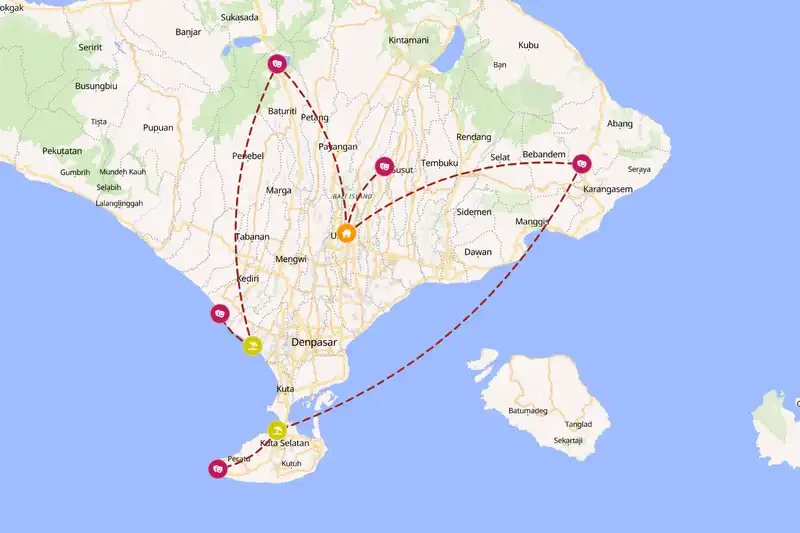
Take the ferry or a short flight into Denpasar and head straight to Ubud, where rice terraces, temples, and cafes give you a softer landing after the volcano circuit. Start with the Sacred Monkey Forest Sanctuary to ease into Balinese temple architecture wrapped in jungle, then spend a day at Tirta Empul Temple watching or joining purification rituals in the holy springs. Add a visit to Goa Gajah for its carved cave entrance and compact complex, then take a full-day loop north to Ulun Danu Bratan, where the lakeside temple and cool air feel worlds away from the coast. If you’re up for a serious mountain day, plan a guided hike on Gunung Agung, timing it for sunrise if conditions allow, or at least get close enough to feel how central this volcano is to Balinese spirituality. Evenings in Ubud are for dance performances, cooking classes, or just sitting on a balcony listening to frogs and distant gamelan.

Days 18-21: South Bali Beaches and Lombok Gateway

Shift down to the coast and base in Kuta or nearby, giving yourself time to enjoy Kuta Beach and Seminyak Beach for surf lessons, long shoreline walks, and big-sky sunsets. Use one afternoon to visit Tanah Lot Temple, timing your arrival for late afternoon when the rock island and crashing waves feel most dramatic, and another evening for Uluwatu Temple, perched on its cliff with the option of kecak fire dance as the sky goes orange. If you want a quieter stretch of sand and seafood dinners on the beach, add an evening at Jimbaran Beach before you hop across to Lombok. Travel by fast boat or short flight to Senggigi, a laid-back coastal town that makes a perfect base for the next island phase.

Days 22-25: Lombok Peaks and Gili Islands

From Senggigi, you’re perfectly placed to tackle Lombok’s big landscapes and nearby islands. If you’re fit and keen on a serious trek, plan a multi-day hike on Mount Rinjani, giving yourself enough time for acclimatization and recovery rather than trying to rush the summit; if that feels too intense, stick to day hikes around the foothills and waterfalls while still soaking in the volcano’s presence. Once your legs have had their workout, shift gears with boat trips to Gili Trawangan and Gili Air, where you can snorkel over reefs, bike around car-free islands, and watch sunsets with your feet in the sand. Use Senggigi as your comfortable base between island hops, making sure you build in at least one true rest day where the biggest decision is which warung to eat at.

Days 26-30: Flores Coast and Komodo Dragons

Fly east to Maumere on Flores to start your final chapter in a quieter, more rugged part of Indonesia. Spend a day exploring the coast and local villages, then travel overland to Ruteng, where cooler air and rice-field landscapes give you a different rhythm from Bali and Lombok. Continue on to Labuan Bajo Beach near the town of Labuan Bajo, your jumping-off point for Komodo National Park. Over the next couple of days, take boat trips into the park to see Komodo dragons on the islands and snorkel or dive in clear water, pairing the wildlife encounters with time on nearby Pink Beach for that surreal rose-tinted sand. Use your final evening back in Labuan Bajo to watch the sun drop behind the islands and reflect on how far you’ve traveled across the archipelago before catching your onward flight.

The part of this route that hooked me for life was drifting off a boat in Komodo National Park after a long month on the road, watching the sun burn down over the islands and realizing I still wasn’t ready to leave.
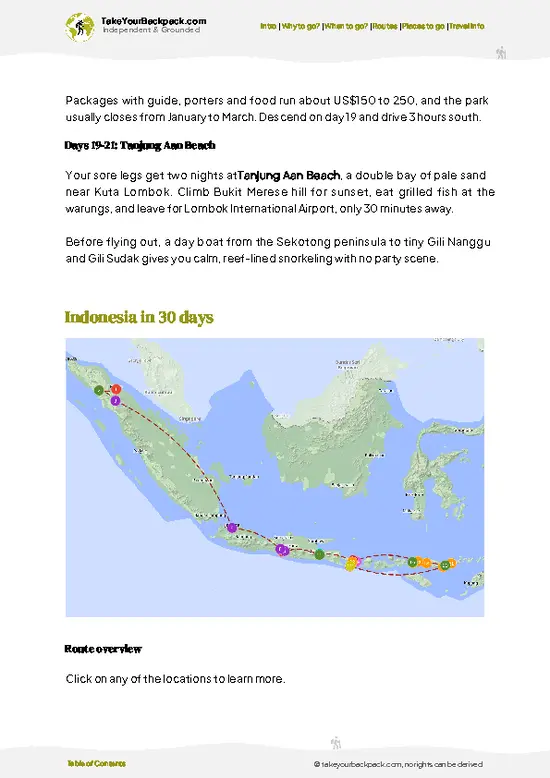
Loading the map 🌍
film
0
0
0a
Jakarta
film
1
1
1a
Borobodur
Pixabay
film
2
2
2a
Bromo Tengger Semeru
film
3
3
3a
Mount Bromo
film
4
4
4a
Ijen Crater
film
5
5
5a
Komodo

✈️ The backpacker research shortcutIndonesia Travel Guide

An offline-friendly backpacking guide with optimized travel routes, ranked highlights, transport advice, and the best areas to stay.
example page 0 from our offline Travel Guide for Indonesiaexample page 1 from our offline Travel Guide for Indonesiaexample page 2 from our offline Travel Guide for Indonesiaexample page 3 from our offline Travel Guide for Indonesiaexample page 4 from our offline Travel Guide for Indonesiaexample page 5 from our offline Travel Guide for Indonesia
The digital guide (471 pages) contains:
155 highlights, ranked by travel appeal
Optimized 14, 21 & 30-day travel routes
Best neighborhoods to stay
How to get around
Offline-friendly for travel without Wi-Fi
👉 See all 30+ guide features

📅 Plan smarter in minutes, not weeks
Month by month travel advice
Festivals & national holidays
Budget expectations

🗺️ Go to the right places, skip the overrated ones
Honest pros & cons of destinations
Top hikes, parks & viewpoints
Lesser-known places most travelers miss
Clear “worth it vs skip it” guidance

🛏️ Travel smoothly without rookie mistakes
Best areas to stay
Transport systems explained simply
Common scams & safety advice
SIM cards, money & practical tips

🌍 Understand the country, not just visit it
Culture & traditions
52 Essential phrases & customs
Festivals worth planning around
Traveler-friendly historical context
Insights that make places more meaningful

📱 Built for real travel conditions
Fully downloadable PDF
Works completely offline
Optimized for phone use
Useful in remote areas & buses
Everything in one place
Save weeks of stressful planning
Get instant access to the full guide directly. 30-day money-back guarantee.


Sent to your inbox immediately after payment • 100% Secure Checkout
Best Backpacking Travel Advisor 2025 tourism awardBest Backpacking
Travel Advisor
2025
What others say about Take Your Backpack Guides:
⭐⭐⭐⭐⭐
Fantastic, amazing amount of information!
⭐⭐⭐⭐⭐
My goodness this is amazing, it's what I've been looking for hats off too you!
⭐⭐⭐⭐⭐
I think this is absolutely BRILLIANT
⭐⭐⭐⭐
Very complete and informative. It's still missing places, but I gotta to commend you
⭐⭐⭐⭐⭐
This is truly amazing, thank you, can't wait to explore it with my kids!
⭐⭐⭐⭐⭐
Awesome resource, thank you!
⭐⭐⭐⭐⭐
This is amazing! Can't wait to explore the ones I haven't seen
⭐⭐⭐⭐
I love this! Well done, great idea.
⭐⭐⭐⭐⭐
Thanks for taking the time to make this gem!
⭐⭐⭐⭐⭐
This might be the best website I've ever seen.
⭐⭐⭐⭐⭐
Congratulations, and thank you so much for your work; it's incredibly valuable.
⭐⭐⭐⭐
In all seriousness I think you did a great job pointing out the important spots
⭐⭐⭐⭐⭐
10/10 very good
⭐⭐⭐⭐⭐
As someone who's only just starting to visit regularly this is awesome, thank you.
⭐⭐⭐⭐
Thank you very much! I'm going to visit my dad, it's going to be very useful!
⭐⭐⭐⭐⭐
This is really cool! We'll be travelling for the first time and this definitely come in handy.
⭐⭐⭐⭐⭐
You are now our minister of culture, congratulations 👨‍💼
⭐⭐⭐⭐⭐
Just wanted to tell you that this is a pearl! Going to follow your recommendations.
⭐⭐⭐⭐⭐
This is so cool. I'll definitely be using the resource for my travels soon.
⭐⭐⭐⭐⭐
This is very impressive! Good work.
⭐⭐⭐⭐⭐
This is an amazing and informative site. Very well done!

🧭 RouteMore Ways to Explore

Travel Indonesia your way — from a quick highlights trip to a slow-paced adventure.

🙋 FAQGood to Know

Short version: yes, Indonesia is very doable to backpack independently, even on a tight budget, as long as you’re flexible and patient.

The backpacker infrastructure is strongest in Bali, Lombok, Java, Flores, and Sumatra. You’ll find hostels, homestays, scooter rentals, and tour desks on every busy street in places like Canggu, Ubud, Kuta (Lombok), Yogyakarta, Labuan Bajo, and Bukit Lawang. English is common in tourist areas and among younger people, and locals are generally helpful if you get stuck.

Where it’s easy:
- Bali and Lombok: Tons of hostels, cheap food, scooter rentals, and shuttles. Great for first-timers.
- Java: Good trains and buses, plenty of budget rooms, lots of local food options.
- Flores and Komodo area: Simple but growing backpacker scene, easy to join shared boat trips.
- Sumatra (Bukit Lawang, Lake Toba): Classic backpacker trail, very used to independent travelers.

Where it’s more challenging:
- Remote islands (Maluku, Papua, some of Nusa Tenggara): Fewer ATMs, limited English, irregular transport, basic accommodation. Rewarding but better if you already have some travel experience.

Key things that make it manageable:
- Visas: Many nationalities can get a visa on arrival or short-stay options; always check current rules before flying.
- Costs: Street food, homestays, and local buses are cheap; organized tours, alcohol, and fast island-hopping add up.
- Safety: Petty theft and scooter accidents are the main risks. Violent crime against tourists is rare. Use a money belt or hidden pouch, lock your bag on buses, and wear a helmet.
- Culture: Indonesia is majority Muslim outside Bali, so dress modestly on Java, Sumatra, and smaller islands, especially in villages. This earns you a lot of goodwill.

If you can handle basic negotiation, occasional chaos at bus terminals, and the odd cold shower, Indonesia is one of the easiest big, exotic-feeling countries to backpack solo.
If you want a number: 3–4 weeks is a sweet spot for a first backpacking trip to Indonesia. You can do less, but you’ll be making trade-offs.

Rough guidelines:
- 1 week: Pick one base only. Example: Bali OR Yogyakarta + Borobudur/Prambanan. Anything more is just airport-hopping.
- 2 weeks: Two main regions. Example: 7–9 days Bali + Nusa Islands, then 4–6 days in Yogyakarta and Mount Bromo. Or Bali + Lombok. You’ll still be moving fast.
- 3–4 weeks: Ideal for a first-timer. You can link Java, Bali, and Lombok, or Bali, Lombok, and Flores, without feeling like you’re in a race.
- 6+ weeks: You can start adding Sumatra, Sulawesi, or more remote islands and actually sit still sometimes.

Sample 3–4 week backpacker-friendly route:
- Java (6–8 days): Jakarta (optional), Yogyakarta, Borobudur, Prambanan, Mount Bromo or Ijen.
- Bali (8–10 days): Ubud, north Bali (Amed/Lovina), and a beach area (Canggu/Uluwatu).
- Nusa Islands or Lombok (5–7 days): Nusa Penida/Lembongan OR Gili Islands + a bit of mainland Lombok.

Why you want more time than you think:
- Ferries and buses are slow and often late.
- Volcano hikes, boat trips, and long bus rides eat whole days.
- You’ll want rest days to enjoy cheap food, surf, or just hammock time.

If you only have 10–14 days, focus hard: two islands max, and fly between distant points instead of trying to cross half the country overland.
You can absolutely get around Indonesia without a car, and most backpackers do. The trick is mixing local transport with the occasional strategic flight or shuttle.

Main options:
- Trains (Java): Comfortable, cheap, and reliable between big cities like Jakarta, Bandung, Yogyakarta, and Surabaya. Book ahead for popular routes.
- Long-distance buses and minibuses: Connect most towns on Java, Sumatra, Sulawesi, and parts of Flores. They’re cheap but can be slow, crowded, and confusing at first. Ask your guesthouse which company and station to use.
- Shared tourist shuttles: Common in Bali, Lombok, and Flores. More expensive than local buses but still budget-friendly and much simpler.
- Ferries: Essential for island-hopping. Short hops like Bali–Lombok are frequent. Longer routes can be rough and delayed, so avoid tight connections.
- Domestic flights: Indonesia is huge. For big jumps (e.g., Jakarta to Bali, Bali to Flores, Java to Sumatra), flying saves days and is often worth the money.

Scooters and motorbikes:
- In many areas (especially Bali, Lombok, Flores), renting a scooter is the easiest way to explore locally.
- It’s cheap, but traffic can be chaotic and road rules are loose. Only ride if you’re confident and have an appropriate license and travel insurance that covers motorbikes.

City transport:
- Jakarta: Has decent public transport (MRT, buses), but traffic is still heavy. Ride-hailing apps are very useful.
- Other cities and towns: You’ll rely on angkot (local minibuses), ojeks (motorbike taxis), and ride-hailing apps where available.

You do not need to drive a car yourself. Between trains, buses, ferries, scooters, and cheap flights, you can reach almost everywhere you care about as a backpacker, as long as you’re okay with some long, bumpy days.
Indonesia is huge, so “must-visit” really depends on your interests, but for a first or second backpacking trip on a budget, these places give you a strong mix of culture, nature, and easy logistics.

Java:
- Yogyakarta: Cultural capital with cheap guesthouses, street food, and access to Borobudur and Prambanan. Great intro to Java.
- Borobudur and Prambanan: Two of Southeast Asia’s most impressive temple complexes. Go early morning or late afternoon to dodge heat and crowds.
- Mount Bromo or Ijen: Classic volcano experiences. Bromo for the surreal crater landscape, Ijen for the blue fire and sulfur miners. Both can be done on backpacker budgets via shared tours or DIY combos of buses and local transport.

Bali:
- Ubud: Rice terraces, temples, yoga, cheap warungs, and a big backpacker scene. Good base for day trips around central Bali.
- Canggu or Uluwatu: Surf, sunsets, and social hostels. Canggu is busier and more digital-nomad, Uluwatu is more about cliffs and waves.
- North/East Bali (Amed, Lovina, Munduk): Slower pace, cheaper rooms, good snorkeling and diving, waterfalls, and cooler temperatures.

Lombok and nearby islands:
- Gili Trawangan / Gili Air / Gili Meno: Tiny islands with no cars, good snorkeling, and plenty of budget rooms. Gili T is the party island, Gili Air is more chilled, Gili Meno is very quiet.
- South Lombok (Kuta Lombok): Beaches, surf, and a more relaxed, less built-up feel than Bali.

Flores and Komodo area:
- Labuan Bajo: Jumping-off point for Komodo National Park. Backpacker-friendly with hostels and cheap eateries.
- Komodo National Park: For budget travelers, the draw is shared boat trips to see Komodo dragons, snorkel with manta rays, and visit islands like Padar. Not the cheapest part of Indonesia, but worth prioritizing if you love the ocean.

Sumatra (if you have extra time):
- Bukit Lawang: Jungle trekking to see wild orangutans on a budget.
- Lake Toba: Huge volcanic lake with laid-back guesthouses and a slow, social vibe.

If you’re short on time, a very strong first-timer combo is: Yogyakarta + Bromo/Ijen + Bali + one island add-on (Nusa Islands, Gilis, or Komodo).
If you’re short on time or cash, you want to cut places that are either too far, too similar to somewhere else you’re already going, or too tour-bus-heavy for the payoff.

Easy skips for a first short trip:
- Jakarta: Great for urban explorers, but most backpackers find it chaotic, spread out, and not worth more than a transit night. Fly in, move on.
- Kuta (Bali): Unless you specifically want cheap bars and package-tour nightlife, you can get better beaches and atmosphere in Canggu, Uluwatu, or the Nusa/Gili islands.
- Overdeveloped “Instagram stops” in Bali: Places where you queue and pay just to take a swing or a staged photo. If your time is tight, focus on real hikes, temples, and local food instead.

Places to postpone to a longer trip:
- Papua and West Papua: Spectacular but remote, expensive, and logistically tricky. Better when you have more time, money, and patience.
- Maluku and very remote islands: Beautiful but slow to reach, with limited transport and basic infrastructure.
- Deep Sulawesi itineraries (e.g., Togean Islands plus Toraja plus more): Each area is great, but the travel time between them is huge.

Situational skips:
- Doing both Bromo and Ijen if you’re very short on time: Pick one volcano experience and do it well instead of rushing both.
- Too many similar beach towns: If you’re already doing Bali + one island group (Nusa or Gilis), you don’t need three more generic beach stops.

If you only have 10–14 days, a smart skip strategy is: skip Jakarta, skip far-flung islands, skip one of the volcanoes, and skip the most overhyped photo-op spots. Focus on one cultural hub (Yogyakarta or Ubud), one volcano, and one or two beach/island areas you can actually relax in.

🇮🇩 IndonesiaDiscover the Country

Ready to build a truly unique trip? Predefined routes are perfect for first-time visitors, but there is so much more to discover. Whether you are chasing a city trip, pristine national parks, local food scenes, or quiet beaches, pick a category to design your own path.